Law enforcement committee approves three-year jail medical contract, authorizes radio tower bid amid jail-capacity concerns
February 24, 2026 | County Building Committee Meetings, Trousdale County, Tennessee
This article was created by AI summarizing key points discussed. AI makes mistakes, so for full details and context, please refer to the video of the full meeting. Please report any errors so we can fix them. Report an error »
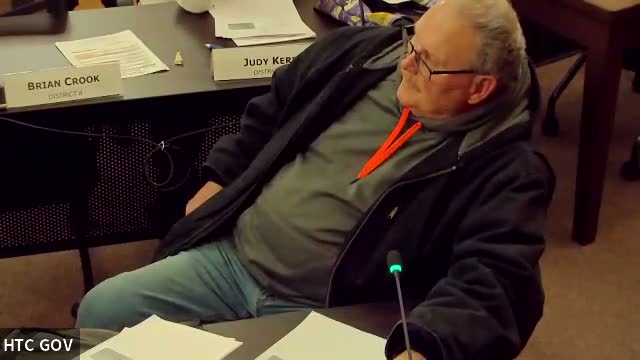
The law enforcement committee met and approved a three-year medical services contract for jail healthcare, authorized sending a public-safety radio-tower project to bid and recorded concern about mounting caseloads and segregation limits at the county jail.
Sheriff (speaking to the committee) summarized the patrol and detention statistics for the last report period, saying, "We worked 3 accidents...we wrote 86 citations...we had 53 arrest. Adult, 1 juvenile," and that the office had "1,582 complaints come in." He told members the jail admitted 61 and released 59 during the period and that warrants were being processed actively: "We entered a 132 warrants and served a 143." These figures framed the committee's discussions about staffing and capacity.
The sheriff also recommended continuing a locally provided medical-services arrangement at the jail, which the transcript records as a multi-year relationship dating to the provider's family practice ("his father started...Jack Junior is doing it"). The contract described to the committee runs three years through June 30, includes a 5% annual increase to cover inflation and covers most on-site care, though the sheriff noted some high-cost medications (HIV and certain antiviral treatments) are not covered by the provider. Members asked about response times for on-call nursing and billing cadence; the sheriff said the provider commonly responds to calls and bills monthly and that the arrangement has reduced transfers to the emergency department.
After discussion, the committee voted to approve the medical contract (no formal roll-call tally was provided in the transcript). The chair declared the motion passed.
Committee members then spent substantial time on a long-delayed radio-tower project intended to improve field radio coverage. The sheriff said the engineering study has been completed and gave preliminary cost estimates: "It's about $300,000" to acquire the tower location and additional equipment and repeaters could push total costs higher (the transcript references roughly a half million for repeaters/antenna/equipment). Members proposed authorizing the committee to send the project to bid and to forward funding requests to the budget and finance process. One member moved to authorize going to bid; the motion carried on a voice vote after the chair asked "All in favor? Anyone opposed?" and declared approval.
The sheriff raised staffing and caseload pressures as a driver of both policy choices and infrastructure needs. He reported recent indictments and told the committee an investigator estimated the office has on the order of several hundred pending cases (the transcript records this figure imprecisely but the sheriff characterized the backlog as multi-hundred cases and said, "it take us 5 years to clean up what we got" if indictments continue at current rates). He also said the jail passed an inspection but remains under a plan of action because the facility cannot effectively segregate certain offender classes, warning that decertification could remove state training and funding support.
Other routine business included a brief update that negotiations on a vendor contract (referenced in the transcript as "Brisbane") are ongoing and a scheduling note: members discussed starting future law enforcement committee meetings at 05:30 to avoid time conflicts. The chair adjourned the meeting.
Votes at a glance: minutes approved (voice vote); medical services contract approved (voice vote; no named tallies in the transcript); authorization to send the radio-tower project to bid approved (voice vote; no named tallies in the transcript).
The committee recorded no formal amendments during the meeting. The next procedural steps noted in the discussion: (1) the medical contract will be communicated to the full commission for awareness/processing as appropriate; (2) bids for the radio-tower project will be solicited and returned to budget and finance for funding consideration; and (3) the sheriff will continue to report on caseloads and capacity issues.
Sheriff (speaking to the committee) summarized the patrol and detention statistics for the last report period, saying, "We worked 3 accidents...we wrote 86 citations...we had 53 arrest. Adult, 1 juvenile," and that the office had "1,582 complaints come in." He told members the jail admitted 61 and released 59 during the period and that warrants were being processed actively: "We entered a 132 warrants and served a 143." These figures framed the committee's discussions about staffing and capacity.
The sheriff also recommended continuing a locally provided medical-services arrangement at the jail, which the transcript records as a multi-year relationship dating to the provider's family practice ("his father started...Jack Junior is doing it"). The contract described to the committee runs three years through June 30, includes a 5% annual increase to cover inflation and covers most on-site care, though the sheriff noted some high-cost medications (HIV and certain antiviral treatments) are not covered by the provider. Members asked about response times for on-call nursing and billing cadence; the sheriff said the provider commonly responds to calls and bills monthly and that the arrangement has reduced transfers to the emergency department.
After discussion, the committee voted to approve the medical contract (no formal roll-call tally was provided in the transcript). The chair declared the motion passed.
Committee members then spent substantial time on a long-delayed radio-tower project intended to improve field radio coverage. The sheriff said the engineering study has been completed and gave preliminary cost estimates: "It's about $300,000" to acquire the tower location and additional equipment and repeaters could push total costs higher (the transcript references roughly a half million for repeaters/antenna/equipment). Members proposed authorizing the committee to send the project to bid and to forward funding requests to the budget and finance process. One member moved to authorize going to bid; the motion carried on a voice vote after the chair asked "All in favor? Anyone opposed?" and declared approval.
The sheriff raised staffing and caseload pressures as a driver of both policy choices and infrastructure needs. He reported recent indictments and told the committee an investigator estimated the office has on the order of several hundred pending cases (the transcript records this figure imprecisely but the sheriff characterized the backlog as multi-hundred cases and said, "it take us 5 years to clean up what we got" if indictments continue at current rates). He also said the jail passed an inspection but remains under a plan of action because the facility cannot effectively segregate certain offender classes, warning that decertification could remove state training and funding support.
Other routine business included a brief update that negotiations on a vendor contract (referenced in the transcript as "Brisbane") are ongoing and a scheduling note: members discussed starting future law enforcement committee meetings at 05:30 to avoid time conflicts. The chair adjourned the meeting.
Votes at a glance: minutes approved (voice vote); medical services contract approved (voice vote; no named tallies in the transcript); authorization to send the radio-tower project to bid approved (voice vote; no named tallies in the transcript).
The committee recorded no formal amendments during the meeting. The next procedural steps noted in the discussion: (1) the medical contract will be communicated to the full commission for awareness/processing as appropriate; (2) bids for the radio-tower project will be solicited and returned to budget and finance for funding consideration; and (3) the sheriff will continue to report on caseloads and capacity issues.
View the Full Meeting & All Its Details
This article offers just a summary. Unlock complete video, transcripts, and insights as a Founder Member.
✓
Watch full, unedited meeting videos
✓
Search every word spoken in unlimited transcripts
✓
AI summaries & real-time alerts (all government levels)
✓
Permanent access to expanding government content
30-day money-back guarantee
