Flagler County 911 dispatch details training, life-saving calls and public outreach
February 24, 2026 | Flagler County, Florida
This article was created by AI summarizing key points discussed. AI makes mistakes, so for full details and context, please refer to the video of the full meeting. Please report any errors so we can fix them. Report an error »
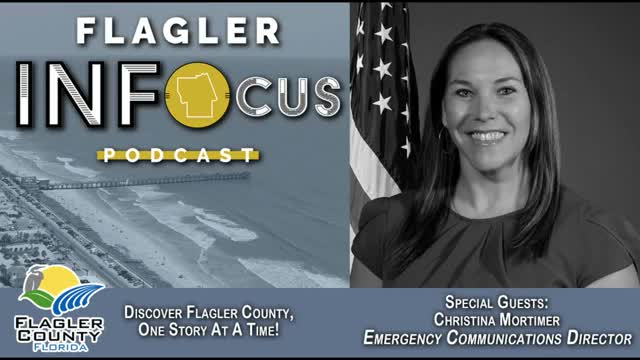
Christina Mortimer, director of Flagler County's emergency communications center, described how the county's consolidated dispatch center handles all 911 calls and supports local police and fire agencies while outlining training, life-saving incidents and public outreach.
Mortimer said the center, transferred from under the Flagler Sheriff's Office to the Flagler Board of County Commissioners in fiscal 2025, is the single consolidated 911 dispatch for the county. "We answer all 911 calls in Flagler County," she said, and the center also takes nonemergency calls that result in dispatches to law enforcement or fire rescue.
Why it matters: the center is the first point of contact in every emergency across the county. Mortimer said the operation fields about "400 to 500" calls a day, works 24/7 on four rotating shifts and dispatches for the Flagler County Sheriff's Office, Bunnell Police Department, Flagler Beach Police Department, Flagler County Fire Rescue, Flagler Beach Fire Rescue and Palm Coast Fire Department.
Mortimer highlighted how dispatchers can provide life-saving instructions. She recounted one off-duty dispatcher, Samantha, who witnessed a motorcycle crash and began CPR, helping restore breathing until responders arrived. "She did CPR until he started breathing again," Mortimer said. In a separate case, she said, a dispatcher walked parents through CPR for an infant who was not breathing; Mortimer said she followed up with paramedics and the baby survived.
On staffing and training, Mortimer said it takes about a year for a recruit to complete training before handling 911 calls alone and that training continues thereafter. "Part of that training is crisis negotiations," she said, adding that dispatchers must learn to calm callers and extract critical information under stress.
Mortimer also addressed misinformation and caller safety. Asked about reports of code words such as ordering a pizza, she called the idea a social-media myth but said dispatchers are "trained to recognize when something's not right" and must treat suspicious cues seriously. For callers in domestic-violence or other constrained situations, she recommended texting 911 using Flagler Connect and silencing the phone's ringer so a reply does not alert nearby threats.
The center uses Alert Flagler (Everbridge) for reverse-911 messages and encourages residents to sign up at the county website to receive location-targeted notices about dangerous incidents or missing persons. Mortimer also urged residents to create emergency health profiles via RapidSOS so dispatchers can see medical information associated with a phone number during a call.
Mortimer spoke about the emotional demands of dispatch work and the center's support systems. She described a critical incident stress management team and peer follow-up for staff after difficult calls, and said many dispatchers have long tenures and strong mutual support.
For nonemergencies, Mortimer gave the county's nonemergency line as (386) 313-4911. She encouraged residents to follow the center's Facebook page, Flagler County Emergency Communication Center, for public-education posts and dispatcher spotlights. "We're real people," Mortimer said. "We're part of every emergency response that happens in the county."
The interview closed with Mortimer advising prospective dispatchers to bring compassion and a strong work-life balance, and with reminders to use 911 for life-or-death situations and Alert Flagler for community alerts.
Mortimer said the center, transferred from under the Flagler Sheriff's Office to the Flagler Board of County Commissioners in fiscal 2025, is the single consolidated 911 dispatch for the county. "We answer all 911 calls in Flagler County," she said, and the center also takes nonemergency calls that result in dispatches to law enforcement or fire rescue.
Why it matters: the center is the first point of contact in every emergency across the county. Mortimer said the operation fields about "400 to 500" calls a day, works 24/7 on four rotating shifts and dispatches for the Flagler County Sheriff's Office, Bunnell Police Department, Flagler Beach Police Department, Flagler County Fire Rescue, Flagler Beach Fire Rescue and Palm Coast Fire Department.
Mortimer highlighted how dispatchers can provide life-saving instructions. She recounted one off-duty dispatcher, Samantha, who witnessed a motorcycle crash and began CPR, helping restore breathing until responders arrived. "She did CPR until he started breathing again," Mortimer said. In a separate case, she said, a dispatcher walked parents through CPR for an infant who was not breathing; Mortimer said she followed up with paramedics and the baby survived.
On staffing and training, Mortimer said it takes about a year for a recruit to complete training before handling 911 calls alone and that training continues thereafter. "Part of that training is crisis negotiations," she said, adding that dispatchers must learn to calm callers and extract critical information under stress.
Mortimer also addressed misinformation and caller safety. Asked about reports of code words such as ordering a pizza, she called the idea a social-media myth but said dispatchers are "trained to recognize when something's not right" and must treat suspicious cues seriously. For callers in domestic-violence or other constrained situations, she recommended texting 911 using Flagler Connect and silencing the phone's ringer so a reply does not alert nearby threats.
The center uses Alert Flagler (Everbridge) for reverse-911 messages and encourages residents to sign up at the county website to receive location-targeted notices about dangerous incidents or missing persons. Mortimer also urged residents to create emergency health profiles via RapidSOS so dispatchers can see medical information associated with a phone number during a call.
Mortimer spoke about the emotional demands of dispatch work and the center's support systems. She described a critical incident stress management team and peer follow-up for staff after difficult calls, and said many dispatchers have long tenures and strong mutual support.
For nonemergencies, Mortimer gave the county's nonemergency line as (386) 313-4911. She encouraged residents to follow the center's Facebook page, Flagler County Emergency Communication Center, for public-education posts and dispatcher spotlights. "We're real people," Mortimer said. "We're part of every emergency response that happens in the county."
The interview closed with Mortimer advising prospective dispatchers to bring compassion and a strong work-life balance, and with reminders to use 911 for life-or-death situations and Alert Flagler for community alerts.
Don't Miss a Word: See the Full Meeting!
Go beyond summaries. Unlock every video, transcript, and key insight with a Founder Membership.
✓
Get instant access to full meeting videos
✓
Search and clip any phrase from complete transcripts
✓
Receive AI-powered summaries & custom alerts
✓
Enjoy lifetime, unrestricted access to government data
30-day money-back guarantee
