House approves 'Granite Act' after extended debate over international jurisdiction and damages
February 23, 2026 | House of Representative, Committees, Legislative, Wyoming
This article was created by AI summarizing key points discussed. AI makes mistakes, so for full details and context, please refer to the video of the full meeting. Please report any errors so we can fix them. Report an error »
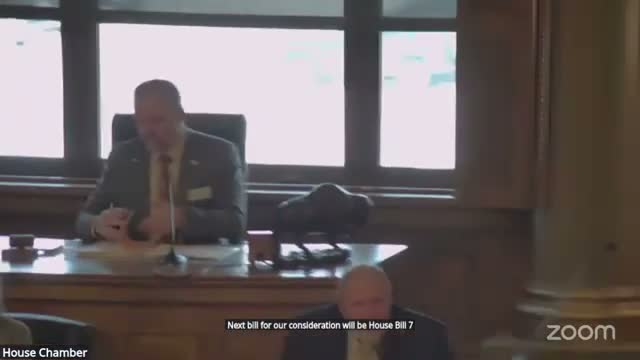
The House on third reading approved House Bill 70, commonly referred to in floor debate as the “Granite Act,” after an extended debate about what the bill would do and how it would interact with federal and international law. Supporters described the measure as a response to foreign governments that seek to chill speech and to impose fines on Americans for online speech; critics said the bill raises jurisdictional, preemption and enforcement questions.
Why it matters: HB70 would create civil remedies designed to protect Wyoming speakers from some foreign legal actions and to make it harder for foreign governments to enforce fines or penalties against people and platforms for speech. Lawmakers disagreed about whether a state law can or should create causes of action affecting foreign sovereigns and whether the statute could survive judicial review.
What legislators said: Representative Chestick, who questioned the bill’s legal foundations, warned that the measure might not withstand federal foreign‑relations preemption: “We’re gonna allow people in Wyoming to sue a foreign government, and have the foreign government obey the courts of Wyoming,” he said, urging more study and international‑law expertise. Other members shared concerns about broad damages provisions that could create incentives for forum‑shopping. Representative Singh, a bill backer, urged the House to act, saying the bill aims to protect Americans who receive threats or fines from foreign governments and described it as a tool against “international tyranny and extortion.”
Amendments and process: Representative Chestick moved an amendment, then withdrew it after discussion; multiple members asked for the bill to be considered in the interim for additional study but supporters pressed the urgency of protecting speakers and platform users. The full House recorded final passage by roll call (46 aye, 12 no, 4 excused).
Formal actions and outcome: An amendment offered during debate was withdrawn by the mover. House Bill 70 was passed on third reading; the chief clerk recorded the roll call and the Speaker announced passage. The bill will move to the Senate for consideration.
What to watch next: Legal scholars and counsel in the other chamber or the governor’s office may weigh in on interstate and international implications; opponents urged further vetting in an interim study before final enactment.
Why it matters: HB70 would create civil remedies designed to protect Wyoming speakers from some foreign legal actions and to make it harder for foreign governments to enforce fines or penalties against people and platforms for speech. Lawmakers disagreed about whether a state law can or should create causes of action affecting foreign sovereigns and whether the statute could survive judicial review.
What legislators said: Representative Chestick, who questioned the bill’s legal foundations, warned that the measure might not withstand federal foreign‑relations preemption: “We’re gonna allow people in Wyoming to sue a foreign government, and have the foreign government obey the courts of Wyoming,” he said, urging more study and international‑law expertise. Other members shared concerns about broad damages provisions that could create incentives for forum‑shopping. Representative Singh, a bill backer, urged the House to act, saying the bill aims to protect Americans who receive threats or fines from foreign governments and described it as a tool against “international tyranny and extortion.”
Amendments and process: Representative Chestick moved an amendment, then withdrew it after discussion; multiple members asked for the bill to be considered in the interim for additional study but supporters pressed the urgency of protecting speakers and platform users. The full House recorded final passage by roll call (46 aye, 12 no, 4 excused).
Formal actions and outcome: An amendment offered during debate was withdrawn by the mover. House Bill 70 was passed on third reading; the chief clerk recorded the roll call and the Speaker announced passage. The bill will move to the Senate for consideration.
What to watch next: Legal scholars and counsel in the other chamber or the governor’s office may weigh in on interstate and international implications; opponents urged further vetting in an interim study before final enactment.
View the Full Meeting & All Its Details
This article offers just a summary. Unlock complete video, transcripts, and insights as a Founder Member.
✓
Watch full, unedited meeting videos
✓
Search every word spoken in unlimited transcripts
✓
AI summaries & real-time alerts (all government levels)
✓
Permanent access to expanding government content
30-day money-back guarantee
