Nye County suspends two cultivation licenses after show‑cause hearing
April 16, 2024 | Nye County , Nevada
This article was created by AI summarizing key points discussed. AI makes mistakes, so for full details and context, please refer to the video of the full meeting. Please report any errors so we can fix them. Report an error »
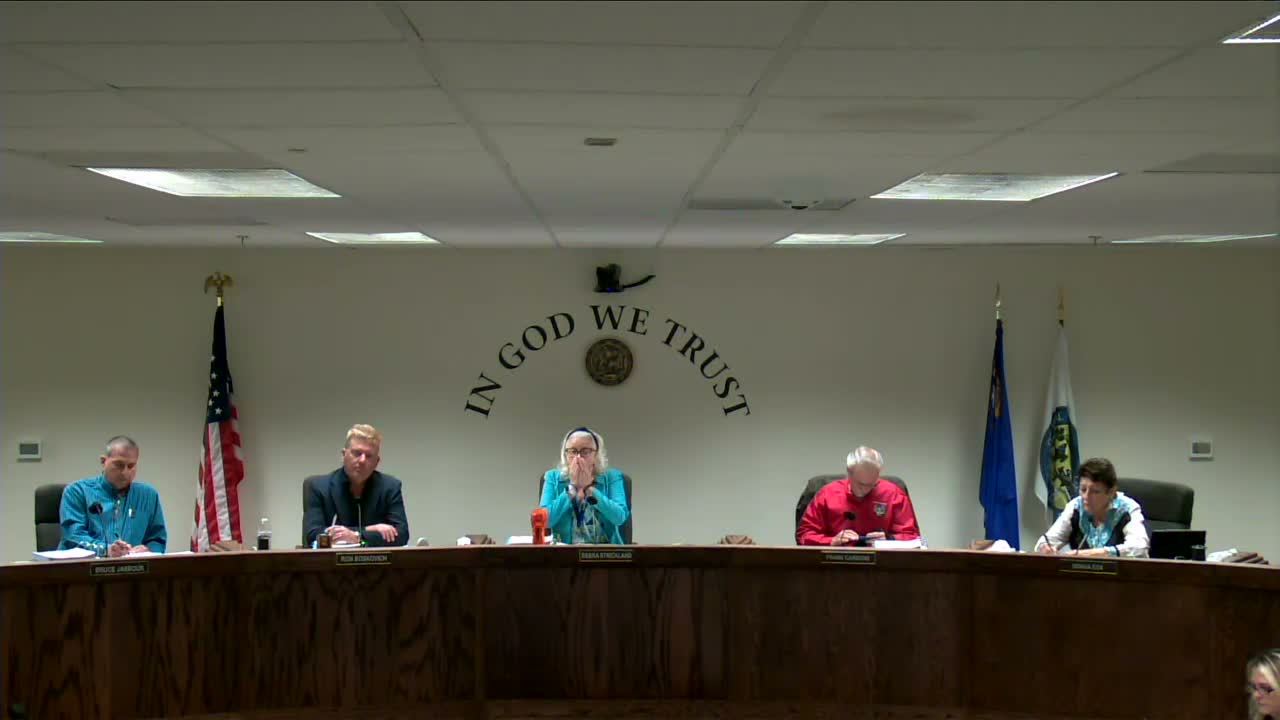
The Nye County Board of Commissioners suspended two local cannabis cultivation licenses held by Nye Farm Tech Limited on April 16 after a show‑cause hearing examining the facility’s operational status. The board voted 5‑0 to suspend adult‑use license CBL23‑30 and medical license CBL23‑31 pending the outcome of related litigation and the payment of outstanding county taxes.
The county’s planning director told commissioners no sales had been reported and that a December report remained outstanding, triggering the show‑cause process. Director Wagner said the code allows review when a licensed facility reports no revenue for six months and that planning had not been granted access for a required inspection.
Licensee representative Rick Saga told the board he has completed filings and worked with state regulators but said delays came from partners who had not renewed required agent cards and from an unresolved ownership transfer now in court. "I have tried everything," Saga said. "I'm at your mercy, guys." He asked the board for leniency, saying he had paid millions into the project and that state audits and partner disputes had held operations back.
Commissioners said the decision balanced the county’s interest in enforcing local code and the practical realities of pending court action. Commissioner Jabbour moved to suspend the licenses until the court resolves the ownership dispute and taxes were paid; Commissioner Carbone amended to include all licenses tied to the site. The motion carried unanimously.
The county attorney advised suspension or continuance was consistent with Nye County Code and would allow the board to reconsider as court outcomes or compliance events change. Planning staff also noted outstanding tax and reporting obligations that must be resolved before operations can resume.
The action leaves the state provisional licenses intact but prevents local operations until the county’s conditions are satisfied. The board said it will review developments and consider lifting the suspension only when reporting obligations are current and the litigation no longer prevents required operational approvals.
The county’s planning director told commissioners no sales had been reported and that a December report remained outstanding, triggering the show‑cause process. Director Wagner said the code allows review when a licensed facility reports no revenue for six months and that planning had not been granted access for a required inspection.
Licensee representative Rick Saga told the board he has completed filings and worked with state regulators but said delays came from partners who had not renewed required agent cards and from an unresolved ownership transfer now in court. "I have tried everything," Saga said. "I'm at your mercy, guys." He asked the board for leniency, saying he had paid millions into the project and that state audits and partner disputes had held operations back.
Commissioners said the decision balanced the county’s interest in enforcing local code and the practical realities of pending court action. Commissioner Jabbour moved to suspend the licenses until the court resolves the ownership dispute and taxes were paid; Commissioner Carbone amended to include all licenses tied to the site. The motion carried unanimously.
The county attorney advised suspension or continuance was consistent with Nye County Code and would allow the board to reconsider as court outcomes or compliance events change. Planning staff also noted outstanding tax and reporting obligations that must be resolved before operations can resume.
The action leaves the state provisional licenses intact but prevents local operations until the county’s conditions are satisfied. The board said it will review developments and consider lifting the suspension only when reporting obligations are current and the litigation no longer prevents required operational approvals.
View the Full Meeting & All Its Details
This article offers just a summary. Unlock complete video, transcripts, and insights as a Founder Member.
✓
Watch full, unedited meeting videos
✓
Search every word spoken in unlimited transcripts
✓
AI summaries & real-time alerts (all government levels)
✓
Permanent access to expanding government content
30-day money-back guarantee
