Senate passes 'Desiree' prosecution bill allowing follow‑up homicide charges after later death
February 23, 2026 | 2026 Utah Legislature, Utah Legislature, Utah Legislative Branch, Utah
This article was created by AI summarizing key points discussed. AI makes mistakes, so for full details and context, please refer to the video of the full meeting. Please report any errors so we can fix them. Report an error »
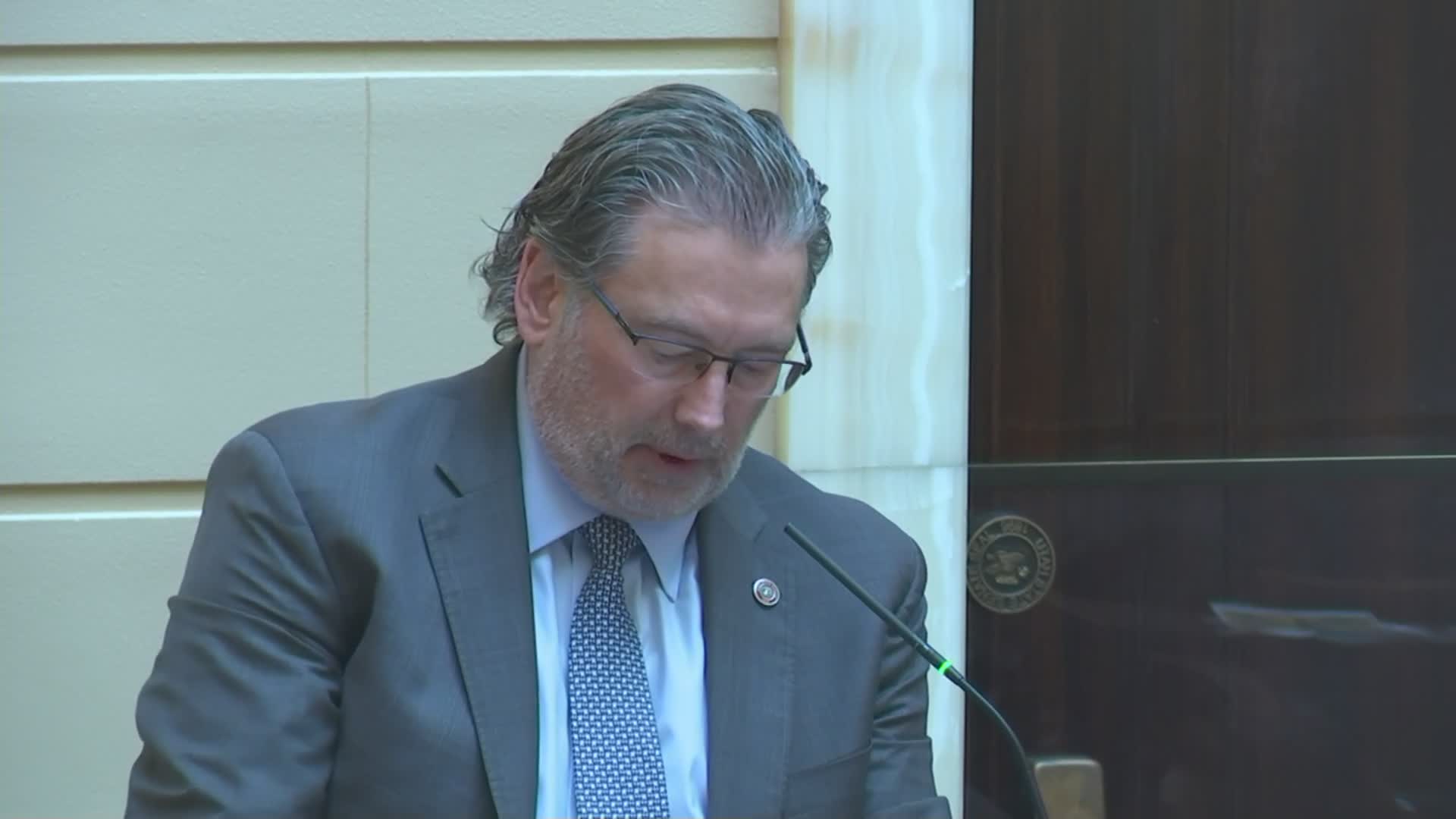
Senators voted to pass First Substitute Senate Bill 92, commonly referred to on the floor as the "Desiree law," which creates an avenue for subsequent prosecution if a victim dies after an earlier prosecution concluded without prejudice for a serious bodily injury.
Sponsor and mover Senator Mike Wilson framed the bill as the product of a broad collaborative effort involving the Attorney General’s Office, county attorneys, the sentencing commission, the parole board, prosecutors, defense attorneys and the Turner family. He described the factual background motivating the bill: a Utah case in which a 14‑year‑old, Desiree Turner Buck, survived an attack but later died in 2025 from complications linked to those injuries.
The bill’s core change allows prosecutors to pursue a subsequent prosecution for death where an earlier prosecution for serious bodily injury had been resolved without prejudice and the later death is attributable to that injury. Wilson called it a consensus remedy to honor the victim and to address a narrow procedural gap.
On the floor: After presentation and no extended discussion, Senator Wilson moved for passage. A roll‑call vote followed; the President announced the bill had passed on the floor and would be transmitted to the House for further consideration. (Floor report announced: 22 yea votes, 0 nay, 7 absent.)
What it does: The statutory change creates a limited prosecutorial avenue when a death occurs after earlier proceedings; it does not create a new crime but adjusts when prosecution may be re‑commenced under the described factual circumstances.
Next steps: The bill was sent to the Utah House for consideration.
Attribution: Quotes and floor summaries in this article are drawn from the sponsor’s floor presentation and the Senate roll‑call as recorded in the Senate transcript.
Sponsor and mover Senator Mike Wilson framed the bill as the product of a broad collaborative effort involving the Attorney General’s Office, county attorneys, the sentencing commission, the parole board, prosecutors, defense attorneys and the Turner family. He described the factual background motivating the bill: a Utah case in which a 14‑year‑old, Desiree Turner Buck, survived an attack but later died in 2025 from complications linked to those injuries.
The bill’s core change allows prosecutors to pursue a subsequent prosecution for death where an earlier prosecution for serious bodily injury had been resolved without prejudice and the later death is attributable to that injury. Wilson called it a consensus remedy to honor the victim and to address a narrow procedural gap.
On the floor: After presentation and no extended discussion, Senator Wilson moved for passage. A roll‑call vote followed; the President announced the bill had passed on the floor and would be transmitted to the House for further consideration. (Floor report announced: 22 yea votes, 0 nay, 7 absent.)
What it does: The statutory change creates a limited prosecutorial avenue when a death occurs after earlier proceedings; it does not create a new crime but adjusts when prosecution may be re‑commenced under the described factual circumstances.
Next steps: The bill was sent to the Utah House for consideration.
Attribution: Quotes and floor summaries in this article are drawn from the sponsor’s floor presentation and the Senate roll‑call as recorded in the Senate transcript.
Don't Miss a Word: See the Full Meeting!
Go beyond summaries. Unlock every video, transcript, and key insight with a Founder Membership.
✓
Get instant access to full meeting videos
✓
Search and clip any phrase from complete transcripts
✓
Receive AI-powered summaries & custom alerts
✓
Enjoy lifetime, unrestricted access to government data
30-day money-back guarantee
