CESA leaders ask House committee to raise special-education service rate to cover rising need and inflation
February 23, 2026 | 2026 Legislature Alaska, Alaska
This article was created by AI summarizing key points discussed. AI makes mistakes, so for full details and context, please refer to the video of the full meeting. Please report any errors so we can fix them. Report an error »
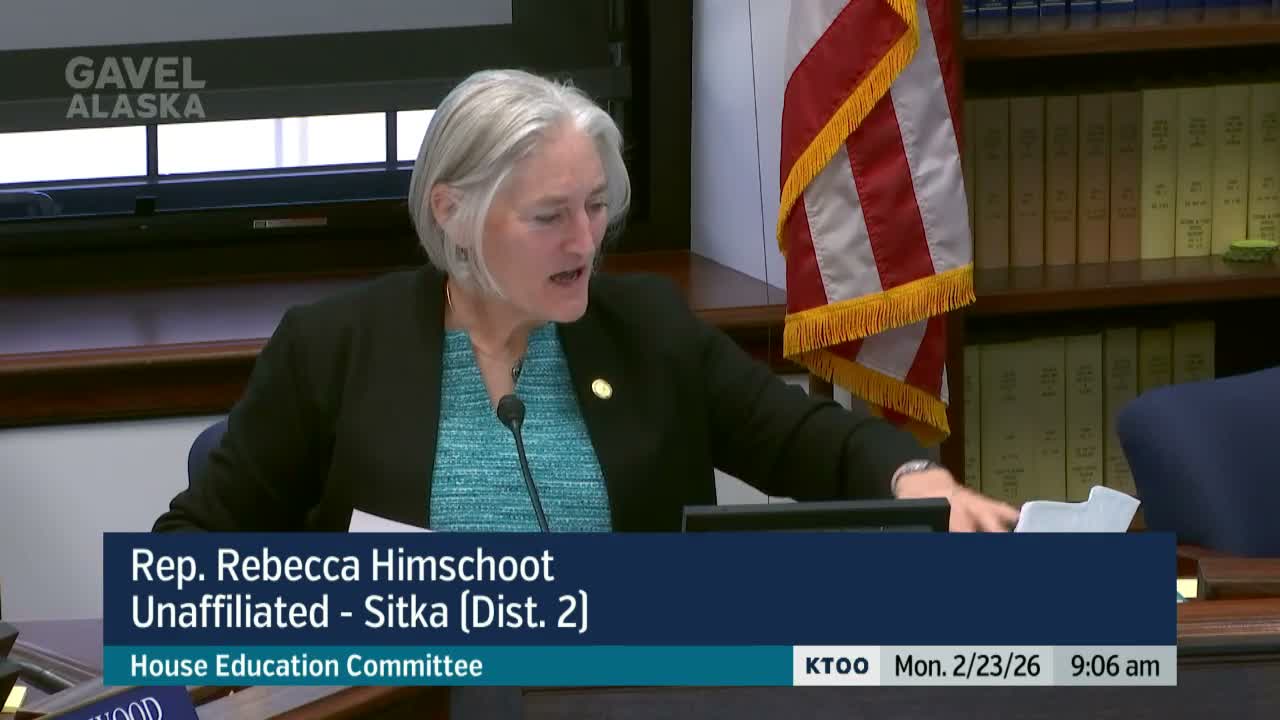
Representative Andy Josephson introduced House Bill 246 on Feb. 23, proposing an increase to the statutory funding rate for the Special Education Service Agency (CESA) to address higher referrals for low-incidence disabilities and inflationary cost pressures.
Olivia Yancey, CESA executive director, told the House Education Committee that CESA provides itinerant, consultative and capacity-building services statewide, serving 2,661 participants this fiscal year across 49 districts and operating programs including the Alaska Autism Resource Center and the Alaska Deaf Blind Project. Yancey said current funding tied to average daily membership has not kept pace with rising referrals and costs; she requested changing the rate to $26.89 per the fiscal note to expand specialist capacity and cover inflation-related cost increases.
Yancey described program caseloads by service area (autism, multiple disabilities, emotional disabilities, vision impairment, deaf/hard of hearing and deafblindness) and said CESA’s lending library and specialist coaching save district funds. She reported CESA lost $35,700 last year due to ADM changes and that specialists are at or near capacity in many areas.
Jean Gerhardt Cyrus, CESA board chair and parent from Kiana, gave a personal account of her daughter’s experience before CESA support and urged the committee to maintain and strengthen the agency’s capacity to meet legally required special education services, particularly in rural and remote communities.
Committee members acknowledged the mismatch between declining overall ADM and rising low-incidence referrals and set an amendment deadline for HB 246: submit amendments by noon, Friday, Feb. 27, 2026. The committee set the bill aside for further consideration.
Olivia Yancey, CESA executive director, told the House Education Committee that CESA provides itinerant, consultative and capacity-building services statewide, serving 2,661 participants this fiscal year across 49 districts and operating programs including the Alaska Autism Resource Center and the Alaska Deaf Blind Project. Yancey said current funding tied to average daily membership has not kept pace with rising referrals and costs; she requested changing the rate to $26.89 per the fiscal note to expand specialist capacity and cover inflation-related cost increases.
Yancey described program caseloads by service area (autism, multiple disabilities, emotional disabilities, vision impairment, deaf/hard of hearing and deafblindness) and said CESA’s lending library and specialist coaching save district funds. She reported CESA lost $35,700 last year due to ADM changes and that specialists are at or near capacity in many areas.
Jean Gerhardt Cyrus, CESA board chair and parent from Kiana, gave a personal account of her daughter’s experience before CESA support and urged the committee to maintain and strengthen the agency’s capacity to meet legally required special education services, particularly in rural and remote communities.
Committee members acknowledged the mismatch between declining overall ADM and rising low-incidence referrals and set an amendment deadline for HB 246: submit amendments by noon, Friday, Feb. 27, 2026. The committee set the bill aside for further consideration.
View the Full Meeting & All Its Details
This article offers just a summary. Unlock complete video, transcripts, and insights as a Founder Member.
✓
Watch full, unedited meeting videos
✓
Search every word spoken in unlimited transcripts
✓
AI summaries & real-time alerts (all government levels)
✓
Permanent access to expanding government content
30-day money-back guarantee
