Alaska trucking group tells lawmakers trucks deliver nearly all consumer goods, urges investment in ports and roads
February 23, 2026 | 2026 Legislature Alaska, Alaska
This article was created by AI summarizing key points discussed. AI makes mistakes, so for full details and context, please refer to the video of the full meeting. Please report any errors so we can fix them. Report an error »
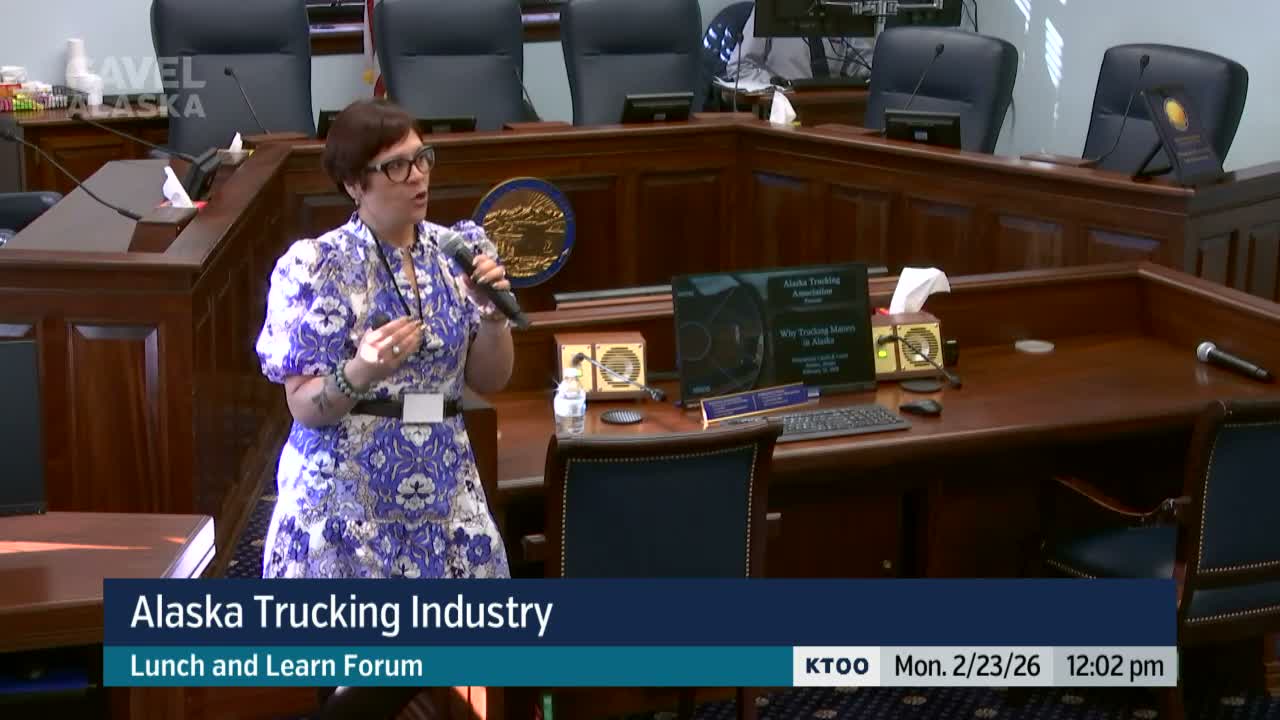
Jamie Benson, president and CEO of the Alaska Trucking Association, told a Juneau audience hosted by Senator Myers that Alaska depends on trucking to supply communities statewide and urged lawmakers and agencies to support ports, freight corridors and safety training. "So we rely on trucking," Benson said, adding that trucks are the state's last-mile delivery network.
Benson outlined the logistics that make Alaska different from the Lower 48: limited road networks, long distances between communities and extreme weather that increases operating and maintenance costs. She singled out the Dalton Highway as a critical industrial freight corridor to the North Slope that contains long, remote stretches and mixed public use, and said trucking supports energy, mining, construction and fisheries across the state.
Benson provided several industry figures during the presentation, saying the sector supports roughly "12,800 trucking industry jobs statewide" with about "3,240 truck drivers" and that trucking moves roughly "13,000 tons per day." She also reported that a typical tractor-semitrailer pays about "$11,351 annually in federal and state fees" and said the industry pays 48% of roadway taxes while accounting for 7% of vehicle miles traveled, figures she presented as part of an argument for equitable infrastructure funding.
On infrastructure vulnerability, Benson warned that port funding and maintenance are critical. She said that during the 2018 earthquake the Port of Alaska was "about 12 seconds" from catastrophic failure and urged continued support for port resiliency. Benson said the association works with the Alaska Department of Transportation and the Federal Motor Carrier Safety Administration to advocate for road and freight investments.
Benson framed safety as the industry's top priority and described Arctic operating conditions where limited pullouts and severe cold can create life-or-death situations for drivers. She said the association's emphasis on safety, training and communication helps members maintain lower crash and violation rates.
The presentation closed with Benson urging lawmakers and agency partners to consider trucking's central role in supply chains when setting transportation priorities. The group opened the floor to questions and closed after a short audience exchange about different pay structures in long-haul and last-mile operations.
Benson outlined the logistics that make Alaska different from the Lower 48: limited road networks, long distances between communities and extreme weather that increases operating and maintenance costs. She singled out the Dalton Highway as a critical industrial freight corridor to the North Slope that contains long, remote stretches and mixed public use, and said trucking supports energy, mining, construction and fisheries across the state.
Benson provided several industry figures during the presentation, saying the sector supports roughly "12,800 trucking industry jobs statewide" with about "3,240 truck drivers" and that trucking moves roughly "13,000 tons per day." She also reported that a typical tractor-semitrailer pays about "$11,351 annually in federal and state fees" and said the industry pays 48% of roadway taxes while accounting for 7% of vehicle miles traveled, figures she presented as part of an argument for equitable infrastructure funding.
On infrastructure vulnerability, Benson warned that port funding and maintenance are critical. She said that during the 2018 earthquake the Port of Alaska was "about 12 seconds" from catastrophic failure and urged continued support for port resiliency. Benson said the association works with the Alaska Department of Transportation and the Federal Motor Carrier Safety Administration to advocate for road and freight investments.
Benson framed safety as the industry's top priority and described Arctic operating conditions where limited pullouts and severe cold can create life-or-death situations for drivers. She said the association's emphasis on safety, training and communication helps members maintain lower crash and violation rates.
The presentation closed with Benson urging lawmakers and agency partners to consider trucking's central role in supply chains when setting transportation priorities. The group opened the floor to questions and closed after a short audience exchange about different pay structures in long-haul and last-mile operations.
Don't Miss a Word: See the Full Meeting!
Go beyond summaries. Unlock every video, transcript, and key insight with a Founder Membership.
✓
Get instant access to full meeting videos
✓
Search and clip any phrase from complete transcripts
✓
Receive AI-powered summaries & custom alerts
✓
Enjoy lifetime, unrestricted access to government data
30-day money-back guarantee
