Committee hears recap and fiscal note for highly digitized tax bill; revenue estimate spans tens of millions
February 23, 2026 | 2026 Legislature Alaska, Alaska
This article was created by AI summarizing key points discussed. AI makes mistakes, so for full details and context, please refer to the video of the full meeting. Please report any errors so we can fix them. Report an error »
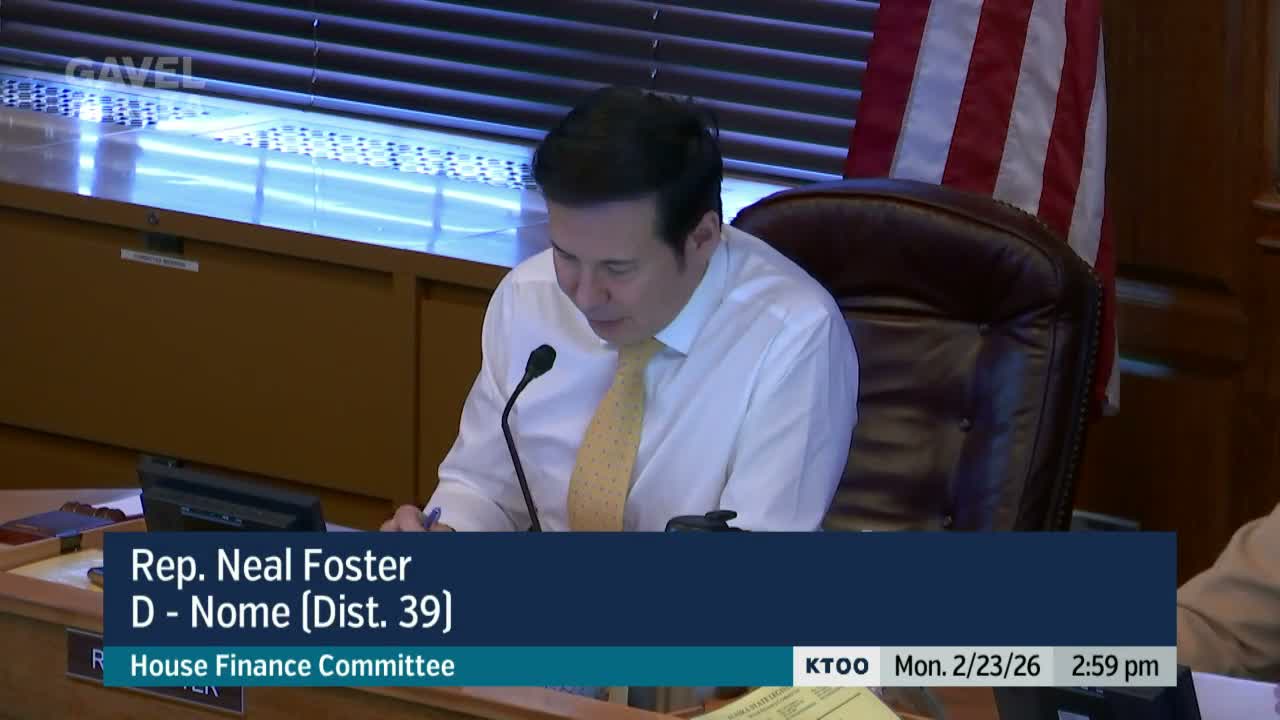
Committee staff summarized House Bill 280 on Feb. 23, 2026, describing two statutory changes: amendment of the multistate tax compact to adopt market-based sourcing, and a new definition of “highly digitized businesses” that would shift those taxpayers to a single-sales-factor apportionment instead of the existing three-factor formula. Staff noted the bill contains a retroactive clause and that interested industries (motion picture, banking, telecommunications) have circulated proposed language for possible amendments.
Bridal Anderson, committee staff, walked the committee through the fiscal note (OMB code JWVKW) prepared by the Department of Revenue. The fiscal note lists a first-year operating cost of $321,700 (personal services $280,900; travel $5,000; services $27,800; commodities $8,000) and two new full-time positions to support implementation and auditing. The Department of Revenue’s internal workup estimated a potential annual revenue change in a wide range — $25 million to $65 million — and the fiscal note used a midpoint estimate of about $30 million per year.
Acting Tax Division Director Brandon Spanos told the committee the department requested two auditor positions to support outreach and audits for entities newly subject to tax; outreach could be performed temporarily by existing staff until the positions are created in FY27. Spanos also said the corporate return due dates give the department time to implement changes and that because the agency would not need a new tax type, major system rework was not anticipated.
“We did ask for two new positions ... The outreach we could do with whether or not we hired those positions right away,” Spanos said, answering member questions about hiring timelines and current vacancy levels.
Members asked for written documentation of past legislative cuts to tax-auditor positions; Spanos said the division had lost positions over the last decade and agreed to provide a formal accounting of recent cuts by email to the committee chairs. The committee set the item aside for the next meeting so Department of Revenue staff could return with additional detail.
Bridal Anderson, committee staff, walked the committee through the fiscal note (OMB code JWVKW) prepared by the Department of Revenue. The fiscal note lists a first-year operating cost of $321,700 (personal services $280,900; travel $5,000; services $27,800; commodities $8,000) and two new full-time positions to support implementation and auditing. The Department of Revenue’s internal workup estimated a potential annual revenue change in a wide range — $25 million to $65 million — and the fiscal note used a midpoint estimate of about $30 million per year.
Acting Tax Division Director Brandon Spanos told the committee the department requested two auditor positions to support outreach and audits for entities newly subject to tax; outreach could be performed temporarily by existing staff until the positions are created in FY27. Spanos also said the corporate return due dates give the department time to implement changes and that because the agency would not need a new tax type, major system rework was not anticipated.
“We did ask for two new positions ... The outreach we could do with whether or not we hired those positions right away,” Spanos said, answering member questions about hiring timelines and current vacancy levels.
Members asked for written documentation of past legislative cuts to tax-auditor positions; Spanos said the division had lost positions over the last decade and agreed to provide a formal accounting of recent cuts by email to the committee chairs. The committee set the item aside for the next meeting so Department of Revenue staff could return with additional detail.
View the Full Meeting & All Its Details
This article offers just a summary. Unlock complete video, transcripts, and insights as a Founder Member.
✓
Watch full, unedited meeting videos
✓
Search every word spoken in unlimited transcripts
✓
AI summaries & real-time alerts (all government levels)
✓
Permanent access to expanding government content
30-day money-back guarantee
