Utah committee advances HB 295 after sponsor adds treatment requirement to Good Samaritan defense
February 23, 2026 | 2026 Utah Legislature, Utah Legislature, Utah Legislative Branch, Utah
This article was created by AI summarizing key points discussed. AI makes mistakes, so for full details and context, please refer to the video of the full meeting. Please report any errors so we can fix them. Report an error »
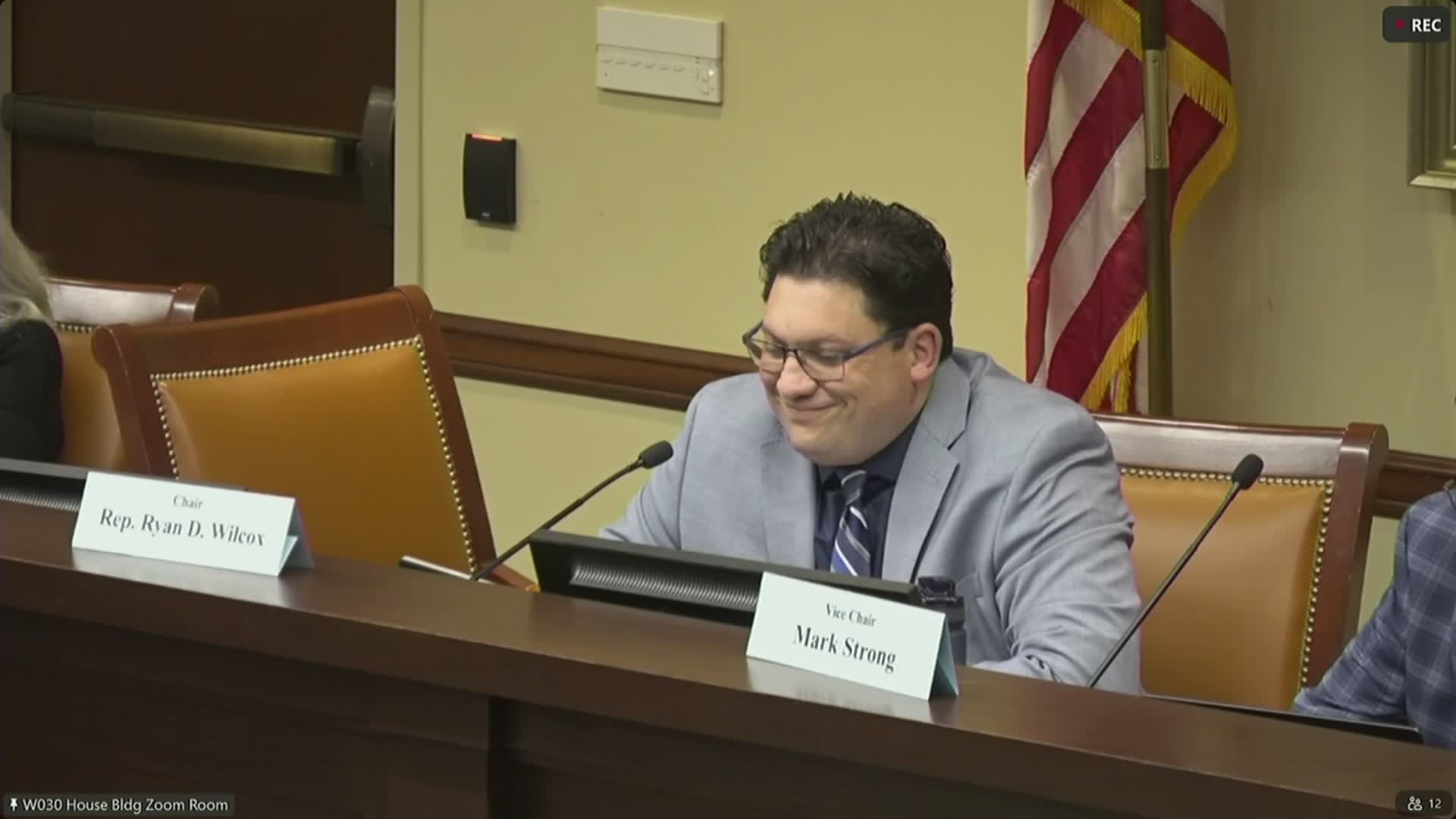
Representative Moss urged the committee to advance the first substitute to HB 295, describing the measure as an update to Utah’s Good Samaritan framework first enacted in 2014 and aimed at saving lives while steering people into treatment.
The substitute removes an automatic dismissal on first contact and instead makes an affirmative defense available to the person experiencing the overdose if they show proof that they have enrolled in a treatment program and are given reasonable time to complete it, Representative Moss said. Moss also said the bill excludes persons whose possession appears at a dealer level (more than small personal-use quantities) from receiving the affirmative defense.
Evan Doan, advocacy and public policy director at Utah Support Advocates for Recovery Awareness, told the committee that naloxone access and earlier Good Samaritan protections have helped keep Utah’s overdose rate from surging relative to other states. “We want to make sure that an overdose is a medical emergency,” Doan said, urging people to call 911 without hesitation.
Moss cited state data and the law’s legislative history, saying the state previously expanded naloxone access (including allowing distribution through public-health channels and libraries). Committee members questioned naloxone availability and effectiveness against fentanyl; witnesses and the sponsor answered that multiple naloxone doses are sometimes required but that naloxone continues to save lives.
Several legal stakeholders spoke in support. Carl Holland of the Statewide Association of Prosecutors and Brett Robinson of the Salt Lake County District Attorney’s Office said the substitute preserves prosecutorial discretion while encouraging treatment. Mark Moff of the Defense Lawyers Association and Dan Strong of the Sentencing Commission said expanding an affirmative defense for overdose victims reduces the risk that bystanders will be chilled from calling for help.
The committee adopted the first substitute by unanimous voice vote and then voted unanimously to pass HB 295 out of committee with a favorable recommendation. The bill will go to the House floor for further consideration.
The sponsor said the bill’s central purpose is to both save lives and increase linkage to treatment: “We want people to get treatment, save lives and get people into treatment,” Representative Moss said.
Next steps: HB 295 was reported favorably out of committee and will be scheduled for floor action in the House.
The substitute removes an automatic dismissal on first contact and instead makes an affirmative defense available to the person experiencing the overdose if they show proof that they have enrolled in a treatment program and are given reasonable time to complete it, Representative Moss said. Moss also said the bill excludes persons whose possession appears at a dealer level (more than small personal-use quantities) from receiving the affirmative defense.
Evan Doan, advocacy and public policy director at Utah Support Advocates for Recovery Awareness, told the committee that naloxone access and earlier Good Samaritan protections have helped keep Utah’s overdose rate from surging relative to other states. “We want to make sure that an overdose is a medical emergency,” Doan said, urging people to call 911 without hesitation.
Moss cited state data and the law’s legislative history, saying the state previously expanded naloxone access (including allowing distribution through public-health channels and libraries). Committee members questioned naloxone availability and effectiveness against fentanyl; witnesses and the sponsor answered that multiple naloxone doses are sometimes required but that naloxone continues to save lives.
Several legal stakeholders spoke in support. Carl Holland of the Statewide Association of Prosecutors and Brett Robinson of the Salt Lake County District Attorney’s Office said the substitute preserves prosecutorial discretion while encouraging treatment. Mark Moff of the Defense Lawyers Association and Dan Strong of the Sentencing Commission said expanding an affirmative defense for overdose victims reduces the risk that bystanders will be chilled from calling for help.
The committee adopted the first substitute by unanimous voice vote and then voted unanimously to pass HB 295 out of committee with a favorable recommendation. The bill will go to the House floor for further consideration.
The sponsor said the bill’s central purpose is to both save lives and increase linkage to treatment: “We want people to get treatment, save lives and get people into treatment,” Representative Moss said.
Next steps: HB 295 was reported favorably out of committee and will be scheduled for floor action in the House.
Don't Miss a Word: See the Full Meeting!
Go beyond summaries. Unlock every video, transcript, and key insight with a Founder Membership.
✓
Get instant access to full meeting videos
✓
Search and clip any phrase from complete transcripts
✓
Receive AI-powered summaries & custom alerts
✓
Enjoy lifetime, unrestricted access to government data
30-day money-back guarantee
