Committee backs HJR 26 to set evidentiary standards for machine-generated evidence
February 23, 2026 | 2026 Utah Legislature, Utah Legislature, Utah Legislative Branch, Utah
This article was created by AI summarizing key points discussed. AI makes mistakes, so for full details and context, please refer to the video of the full meeting. Please report any errors so we can fix them. Report an error »
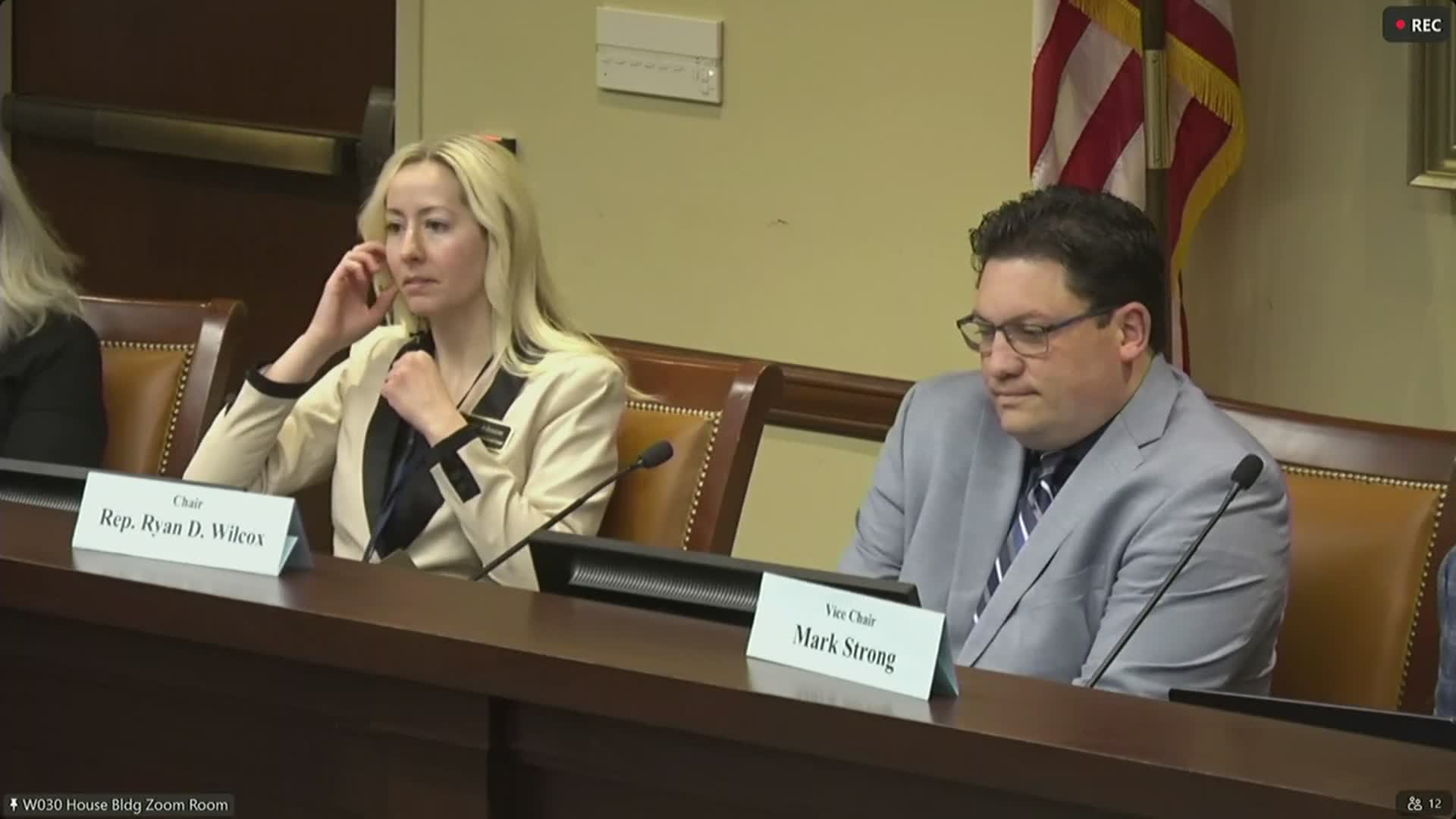
Representative Ballard introduced HJR 26 as a legislative response to evolving uses of machine-generated analysis in criminal investigations and court proceedings. Ballard said the measure would ensure that conclusions produced by algorithms meet reliability and data-disclosure standards before admissibility.
Stuart Young, criminal deputy attorney general, told the committee that Rule 702 typically governs expert testimony and explained a perceived gap: if machine analysis is offered directly (for example, by a lay operator authenticating output) it might avoid the reliability scrutiny Rule 702 requires. Young and co-presenters argued HJR 26 would close that gap and mirror a similar federal rule under consideration.
Walter Bockholt, co-founder of the Children's International Rescue Foundation, said machine-generated leads help investigators triage large-scale online exploitation patterns but must meet the same reliability standards as human experts. “When machines are used, they're held to the same standards as human experts,” he said.
Michael Drexel, assistant state court administrator, urged caution: he said the Supreme Court’s advisory committee on rules of evidence has been reviewing related proposals and warned of constitutional questions if the legislature unilaterally creates evidentiary rules traditionally governed by the courts.
Committee debate centered on speed versus deference. Supporters argued that state-level action is appropriate and that federal developments increase the urgency; members who opposed or expressed caution urged relying on the judiciary’s rulemaking process.
Representative Strong moved to report HJR 26 favorably; the motion carried 6–1. The bill will go to the floor with a favorable recommendation.
Next steps: HJR 26 advances to the House floor; court and rulemaking stakeholders may continue to engage as the bill proceeds.
Stuart Young, criminal deputy attorney general, told the committee that Rule 702 typically governs expert testimony and explained a perceived gap: if machine analysis is offered directly (for example, by a lay operator authenticating output) it might avoid the reliability scrutiny Rule 702 requires. Young and co-presenters argued HJR 26 would close that gap and mirror a similar federal rule under consideration.
Walter Bockholt, co-founder of the Children's International Rescue Foundation, said machine-generated leads help investigators triage large-scale online exploitation patterns but must meet the same reliability standards as human experts. “When machines are used, they're held to the same standards as human experts,” he said.
Michael Drexel, assistant state court administrator, urged caution: he said the Supreme Court’s advisory committee on rules of evidence has been reviewing related proposals and warned of constitutional questions if the legislature unilaterally creates evidentiary rules traditionally governed by the courts.
Committee debate centered on speed versus deference. Supporters argued that state-level action is appropriate and that federal developments increase the urgency; members who opposed or expressed caution urged relying on the judiciary’s rulemaking process.
Representative Strong moved to report HJR 26 favorably; the motion carried 6–1. The bill will go to the floor with a favorable recommendation.
Next steps: HJR 26 advances to the House floor; court and rulemaking stakeholders may continue to engage as the bill proceeds.
View the Full Meeting & All Its Details
This article offers just a summary. Unlock complete video, transcripts, and insights as a Founder Member.
✓
Watch full, unedited meeting videos
✓
Search every word spoken in unlimited transcripts
✓
AI summaries & real-time alerts (all government levels)
✓
Permanent access to expanding government content
30-day money-back guarantee
