Senate committee advances fee on older heavy‑duty trucks over industry objections
February 23, 2026 | 2026 Utah Legislature, Utah Legislature, Utah Legislative Branch, Utah
This article was created by AI summarizing key points discussed. AI makes mistakes, so for full details and context, please refer to the video of the full meeting. Please report any errors so we can fix them. Report an error »
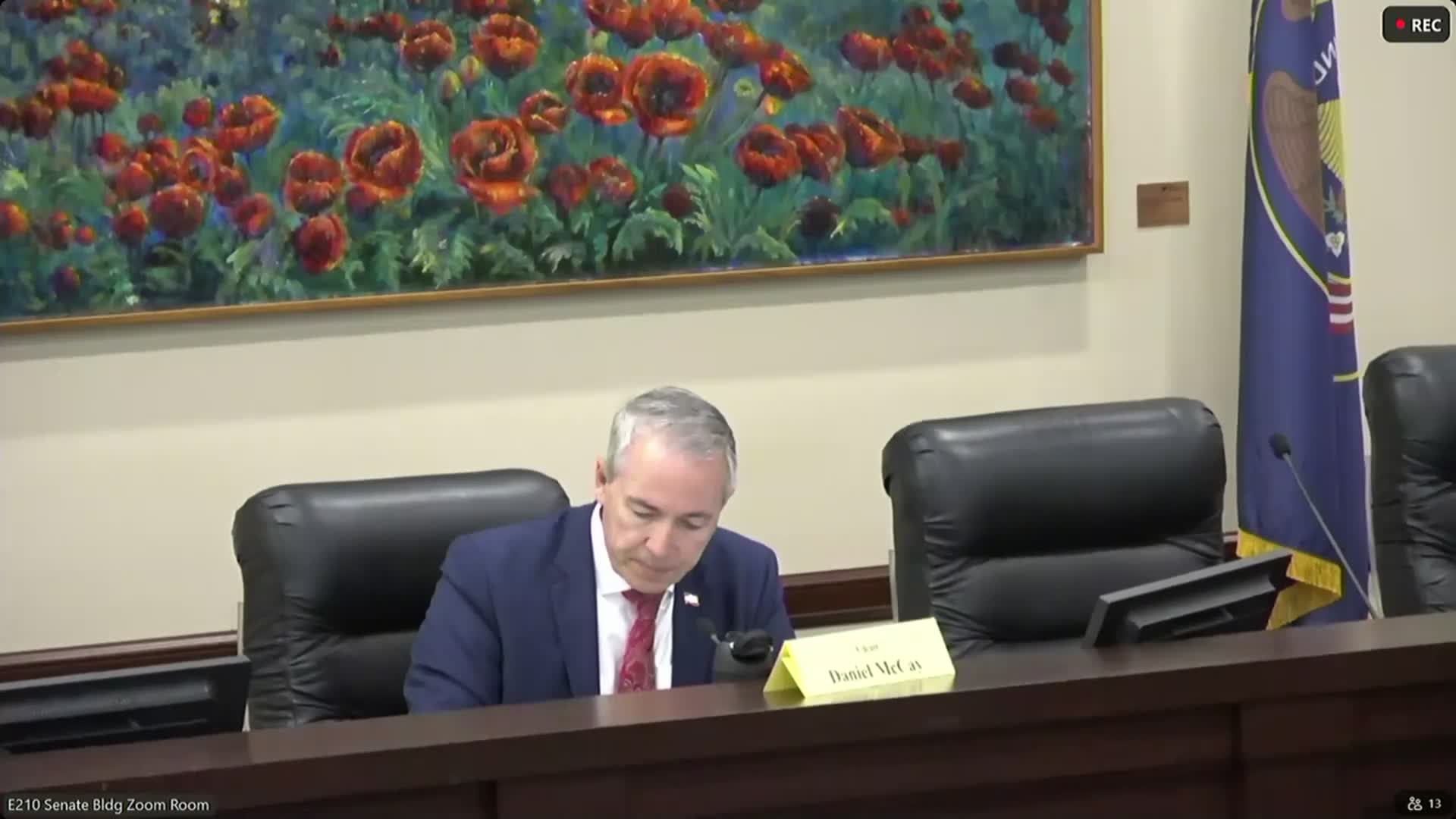
Rep. Clancy told the committee HB 263 responds to continued air‑quality problems exacerbated when older, higher‑emitting heavy‑duty trucks operate on the Wasatch Front. The bill adds a $175 registration fee for pre‑2009 heavy‑duty trucks entering Utah, with exemptions for agriculture and government fleets, and an estimated revenue of roughly $3 million in the fiscal note.
Supporters urged action to reduce particulate and NOx contributions to winter inversion pollution. Carter Norris, a University of Utah student, said older heavy‑duty trucks contribute disproportionately to the valley’s pollution and called the fee a ‘‘practical step forward’’ that balances emissions concerns and workforce needs.
Opponents — including owner‑operators and small fleet representatives — said the bill would unfairly penalize small businesses and questioned the fee’s design and exemptions. Katie Walton, an operator of a fleet of pre‑2009 trucks, told lawmakers that post‑2009 emission control systems are sometimes unreliable and that total lifecycle impacts and replacement costs were not fully considered. Douglas Smith of the Owner‑Operator Independent Drivers Association warned the fee may be applied without proper IRP (apportionment) treatment and urged protections for single‑truck operators.
Committee members acknowledged tradeoffs: some said the measure may not eliminate cross‑border truck traffic but argued it moves policy forward on disproportionate emissions. Sen. Escamilla moved the favorable recommendation; the committee voted to recommend HB 263 3–2, with Sen. Brammer and Sen. Dan McKay recorded as voting no.
The bill directs collected fees to a transportation or environmental fund in prior drafts; sponsors noted the fee could decline if the policy succeeds in reducing older truck arrivals. Several implementation questions remain, including whether the fee will be apportioned for interstate fleets under IRP, how agricultural exemptions are determined, and how collections will be administered.
Next steps include floor consideration and potential drafting to clarify apportionment, exemptions and how fee revenue will be allocated.
Supporters urged action to reduce particulate and NOx contributions to winter inversion pollution. Carter Norris, a University of Utah student, said older heavy‑duty trucks contribute disproportionately to the valley’s pollution and called the fee a ‘‘practical step forward’’ that balances emissions concerns and workforce needs.
Opponents — including owner‑operators and small fleet representatives — said the bill would unfairly penalize small businesses and questioned the fee’s design and exemptions. Katie Walton, an operator of a fleet of pre‑2009 trucks, told lawmakers that post‑2009 emission control systems are sometimes unreliable and that total lifecycle impacts and replacement costs were not fully considered. Douglas Smith of the Owner‑Operator Independent Drivers Association warned the fee may be applied without proper IRP (apportionment) treatment and urged protections for single‑truck operators.
Committee members acknowledged tradeoffs: some said the measure may not eliminate cross‑border truck traffic but argued it moves policy forward on disproportionate emissions. Sen. Escamilla moved the favorable recommendation; the committee voted to recommend HB 263 3–2, with Sen. Brammer and Sen. Dan McKay recorded as voting no.
The bill directs collected fees to a transportation or environmental fund in prior drafts; sponsors noted the fee could decline if the policy succeeds in reducing older truck arrivals. Several implementation questions remain, including whether the fee will be apportioned for interstate fleets under IRP, how agricultural exemptions are determined, and how collections will be administered.
Next steps include floor consideration and potential drafting to clarify apportionment, exemptions and how fee revenue will be allocated.
Don't Miss a Word: See the Full Meeting!
Go beyond summaries. Unlock every video, transcript, and key insight with a Founder Membership.
✓
Get instant access to full meeting videos
✓
Search and clip any phrase from complete transcripts
✓
Receive AI-powered summaries & custom alerts
✓
Enjoy lifetime, unrestricted access to government data
30-day money-back guarantee
