Monroe County NAACP urges revival of Freedom Schools and circulates steering committee sign-up
February 23, 2026 | Monroe County, Indiana
This article was created by AI summarizing key points discussed. AI makes mistakes, so for full details and context, please refer to the video of the full meeting. Please report any errors so we can fix them. Report an error »
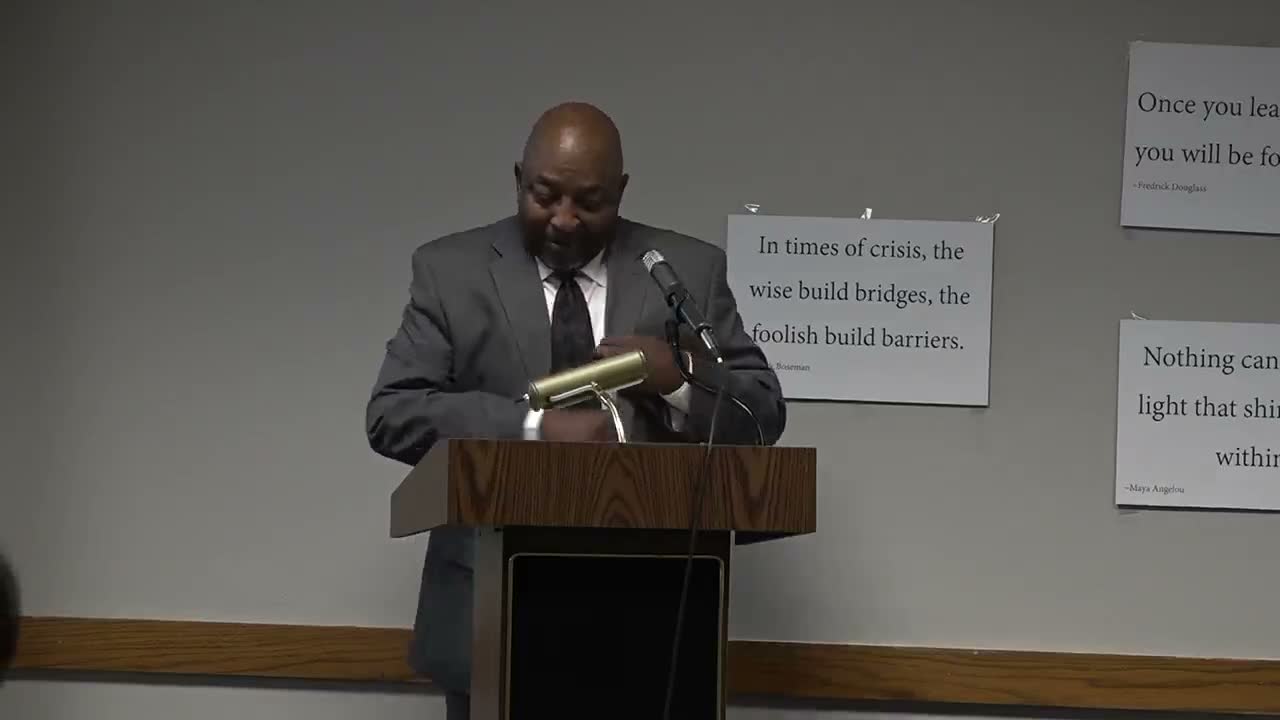
MONROE COUNTY — The Monroe County chapter of the NAACP urged residents on Sunday to revive local “Freedom Schools,” emphasizing literacy, honest Black history and civic education as tools to confront ongoing racial and educational inequities.
“I contend that education — preschool through 16 — was and still is a mechanism used to perpetuate false theories of racial superiority,” said Dr. Charles Nams, a professor emeritus in Indiana University’s Office of Educational Leadership and Policy Studies, in a keynote that traced Freedom Schools to the 1964 Freedom Summer campaign. “Once you learn to read, you will forever be free,” he said, drawing applause.
The nut graf: Speakers at the NAACP’s third Brown v. Board of Education session said Freedom Schools were born from civil-rights organizing that combined intensive literacy instruction with civic and citizenship education. They urged Monroe County residents to lead a local program rather than wait for institutional change, and circulated sign-up sheets for a community steering committee.
Dr. Nams outlined Freedom Schools’ origins and methods, saying the programs were part of the 1964 organizing by groups such as the Student Nonviolent Coordinating Committee (SNCC) and the Congress of Racial Equality. He described Freedom Schools as community-based supplements focused on intensive reading and critical civic inquiry rather than comprehensive replacements for public schools.
“Freedom schools were not designed as comprehensive schools,” Dr. Nams said. “The curriculum was focused on subjects that inspired students to become agents of change.” He described three emphasis areas — academic, citizenship and recreational — and said many Freedom School teachers historically were volunteer college students who lived with local families while teaching.
Anaya Boon, a junior at Bloomington High School South and president of the NAACP Bloomington youth council, gave a youth perspective, calling Freedom Schools “acts of resistance” that educated students about power, voter suppression and organizing. She said the schools trained students to analyze injustice and to organize rather than merely memorize facts.
Speakers tied the work to ongoing debates about curriculum and book bans. Dr. Nams warned of contemporary efforts to restrict teaching and cited actions in other states that he said had targeted advanced courses or DEI-related instruction. He also urged four specific steps for attendees: stop relying on outside fixes, share historically accurate reading materials with young people, speak up when history is distorted, and advocate for complete education for all children.
Event organizers said that while the Monroe County NAACP education subcommittee will provide administrative support, the effort should be community led. “We are here to walk alongside it,” Jim Sims, president of the Monroe County chapter of the NAACP, said, as sign-up sheets for a local Freedom School steering committee were circulated.
Historical context and numbers cited during the program included references to the Brown v. Board of Education decisions (the speaker noted five consolidated cases decided in 1954), the 1964 Freedom Summer murders of civil-rights activists James Chaney, Andrew Goodman and Michael Schwerner, and the rise of private “white academies” after desegregation attempts. Dr. Nams said some districts resisted desegregation for decades; he said his own locality did not desegregate until the 1970s and that by 1975 there were more than 3,500 private church academies operating in the South.
Organizers encouraged attendees to sign up for the steering committee; they described the committee as exploratory and not a binding commitment. The NAACP representative said the group has a “very strong partnership” with the administration and the superintendent of Monroe County Community Schools and expected to coordinate with local educators while emphasizing that the program would be community driven.
The session closed with thanks to presenters and volunteers and an invitation to continued involvement. No formal votes or policy changes were recorded at the meeting; the immediate next step announced was collecting names for the steering committee and follow-up outreach by the NAACP education subcommittee.
“I contend that education — preschool through 16 — was and still is a mechanism used to perpetuate false theories of racial superiority,” said Dr. Charles Nams, a professor emeritus in Indiana University’s Office of Educational Leadership and Policy Studies, in a keynote that traced Freedom Schools to the 1964 Freedom Summer campaign. “Once you learn to read, you will forever be free,” he said, drawing applause.
The nut graf: Speakers at the NAACP’s third Brown v. Board of Education session said Freedom Schools were born from civil-rights organizing that combined intensive literacy instruction with civic and citizenship education. They urged Monroe County residents to lead a local program rather than wait for institutional change, and circulated sign-up sheets for a community steering committee.
Dr. Nams outlined Freedom Schools’ origins and methods, saying the programs were part of the 1964 organizing by groups such as the Student Nonviolent Coordinating Committee (SNCC) and the Congress of Racial Equality. He described Freedom Schools as community-based supplements focused on intensive reading and critical civic inquiry rather than comprehensive replacements for public schools.
“Freedom schools were not designed as comprehensive schools,” Dr. Nams said. “The curriculum was focused on subjects that inspired students to become agents of change.” He described three emphasis areas — academic, citizenship and recreational — and said many Freedom School teachers historically were volunteer college students who lived with local families while teaching.
Anaya Boon, a junior at Bloomington High School South and president of the NAACP Bloomington youth council, gave a youth perspective, calling Freedom Schools “acts of resistance” that educated students about power, voter suppression and organizing. She said the schools trained students to analyze injustice and to organize rather than merely memorize facts.
Speakers tied the work to ongoing debates about curriculum and book bans. Dr. Nams warned of contemporary efforts to restrict teaching and cited actions in other states that he said had targeted advanced courses or DEI-related instruction. He also urged four specific steps for attendees: stop relying on outside fixes, share historically accurate reading materials with young people, speak up when history is distorted, and advocate for complete education for all children.
Event organizers said that while the Monroe County NAACP education subcommittee will provide administrative support, the effort should be community led. “We are here to walk alongside it,” Jim Sims, president of the Monroe County chapter of the NAACP, said, as sign-up sheets for a local Freedom School steering committee were circulated.
Historical context and numbers cited during the program included references to the Brown v. Board of Education decisions (the speaker noted five consolidated cases decided in 1954), the 1964 Freedom Summer murders of civil-rights activists James Chaney, Andrew Goodman and Michael Schwerner, and the rise of private “white academies” after desegregation attempts. Dr. Nams said some districts resisted desegregation for decades; he said his own locality did not desegregate until the 1970s and that by 1975 there were more than 3,500 private church academies operating in the South.
Organizers encouraged attendees to sign up for the steering committee; they described the committee as exploratory and not a binding commitment. The NAACP representative said the group has a “very strong partnership” with the administration and the superintendent of Monroe County Community Schools and expected to coordinate with local educators while emphasizing that the program would be community driven.
The session closed with thanks to presenters and volunteers and an invitation to continued involvement. No formal votes or policy changes were recorded at the meeting; the immediate next step announced was collecting names for the steering committee and follow-up outreach by the NAACP education subcommittee.
View the Full Meeting & All Its Details
This article offers just a summary. Unlock complete video, transcripts, and insights as a Founder Member.
✓
Watch full, unedited meeting videos
✓
Search every word spoken in unlimited transcripts
✓
AI summaries & real-time alerts (all government levels)
✓
Permanent access to expanding government content
30-day money-back guarantee
