Ropula project expands running water to Matwe Village, officials say production rose and diarrheal cases fell
February 24, 2026 | United Nations, International
This article was created by AI summarizing key points discussed. AI makes mistakes, so for full details and context, please refer to the video of the full meeting. Please report any errors so we can fix them. Report an error »
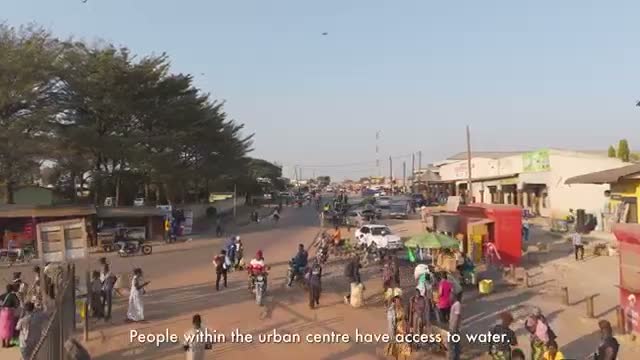
A representative of Ropula Water, Supply and Sensation Company said this week that infrastructure upgrades and small-works interventions have expanded safe, running water to Matwe Village and restored more reliable service across parts of the company's service area.
"You can imagine someone, covering for about 5 kilometers just to find water," Speaker 2 said, describing residents who once carried buckets from Maiteneke and Namande. Company representatives said drought had reduced production to about 600 cubic meters, but rehabilitation of transmission lines, construction of a clear well and new boreholes raised output to about 5,500 cubic meters and enabled round-the-clock service for customers.
The company's mandate, Speaker 4 said, is to serve 12 districts in the province, though it was operating in only five districts prior to the recent expansions. "So through the partnership, we're able to improve our efficiencies to extend supply to that particular village, and now they've got clean running water," Speaker 4 said of Matwe Village.
Officials credited a mix of measures for the increase. Speaker 5 described rehabilitation of the transmission network and a small canal that adds raw water to the treatment plant, and reported a "jump from 600 to 5,000 meter cubic," which is reported here as about 5,000'5,500 cubic meters. Company speakers also said the plant produces on-site power and gas and that at least one local customer is now connected to the plant's gas supply.
Public-health outcomes were raised during a recent data review meeting. Speakers 6 and 7 said the review showed very few diarrhea deaths and an overall reduction in cases of waterborne disease since supply improved. Speaker 3 had earlier said water taken from some wells previously caused stomach aches and other illnesses.
Presenters framed the work as contributing to SDG 6, the United Nations' Sustainable Development Goal for clean water and sanitation. No formal votes or policy actions were recorded in the transcript; the remarks were descriptive of operational changes and health-monitoring results.
Next steps were not specified in the transcript. Speakers did not provide detailed funding sources, long-term maintenance plans, or a timeline to extend service to all 12 mandated districts.
"You can imagine someone, covering for about 5 kilometers just to find water," Speaker 2 said, describing residents who once carried buckets from Maiteneke and Namande. Company representatives said drought had reduced production to about 600 cubic meters, but rehabilitation of transmission lines, construction of a clear well and new boreholes raised output to about 5,500 cubic meters and enabled round-the-clock service for customers.
The company's mandate, Speaker 4 said, is to serve 12 districts in the province, though it was operating in only five districts prior to the recent expansions. "So through the partnership, we're able to improve our efficiencies to extend supply to that particular village, and now they've got clean running water," Speaker 4 said of Matwe Village.
Officials credited a mix of measures for the increase. Speaker 5 described rehabilitation of the transmission network and a small canal that adds raw water to the treatment plant, and reported a "jump from 600 to 5,000 meter cubic," which is reported here as about 5,000'5,500 cubic meters. Company speakers also said the plant produces on-site power and gas and that at least one local customer is now connected to the plant's gas supply.
Public-health outcomes were raised during a recent data review meeting. Speakers 6 and 7 said the review showed very few diarrhea deaths and an overall reduction in cases of waterborne disease since supply improved. Speaker 3 had earlier said water taken from some wells previously caused stomach aches and other illnesses.
Presenters framed the work as contributing to SDG 6, the United Nations' Sustainable Development Goal for clean water and sanitation. No formal votes or policy actions were recorded in the transcript; the remarks were descriptive of operational changes and health-monitoring results.
Next steps were not specified in the transcript. Speakers did not provide detailed funding sources, long-term maintenance plans, or a timeline to extend service to all 12 mandated districts.
Don't Miss a Word: See the Full Meeting!
Go beyond summaries. Unlock every video, transcript, and key insight with a Founder Membership.
✓
Get instant access to full meeting videos
✓
Search and clip any phrase from complete transcripts
✓
Receive AI-powered summaries & custom alerts
✓
Enjoy lifetime, unrestricted access to government data
30-day money-back guarantee
