Senate panel advances bill requiring proof of lawful presence for some Real IDs
February 23, 2026 | 2026 Legislature OK, Oklahoma
This article was created by AI summarizing key points discussed. AI makes mistakes, so for full details and context, please refer to the video of the full meeting. Please report any errors so we can fix them. Report an error »
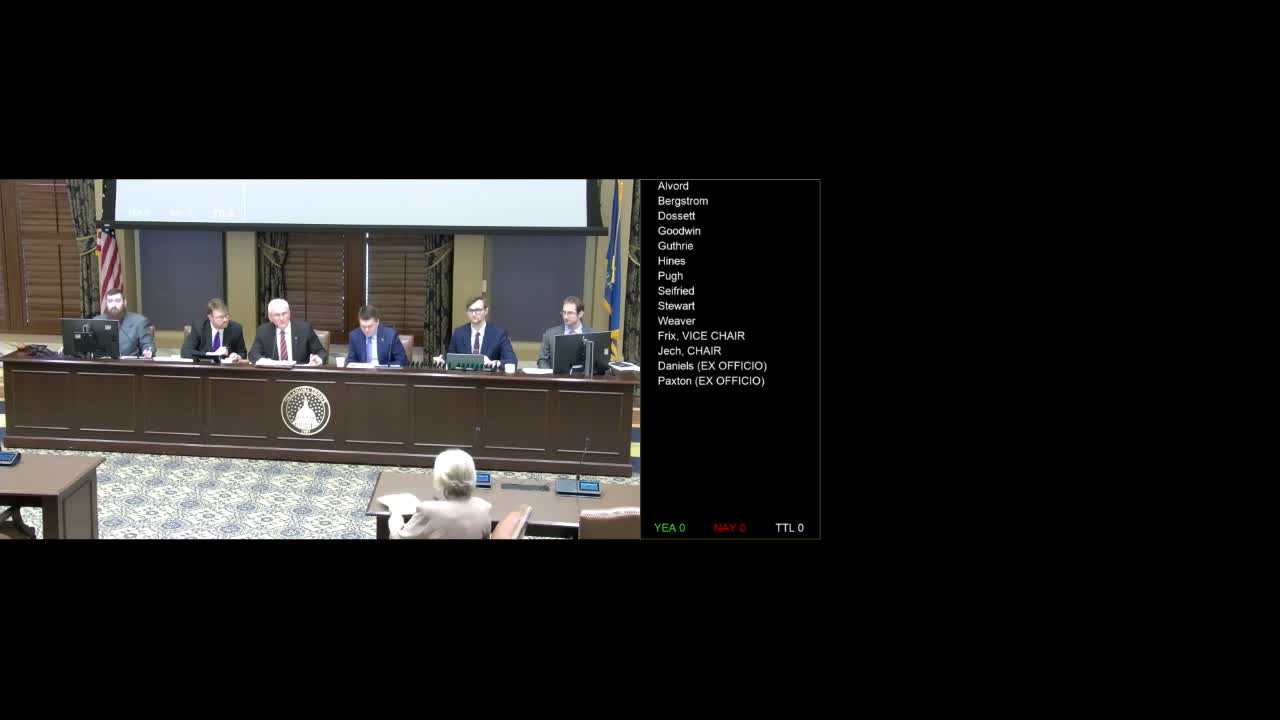
Senator Stanley, the bill’s author, told the Senate Aeronautics and Transportation Committee that Senate Bill 20 10 would require noncitizen applicants to provide proof of lawful presence, require limited-term Real IDs to display their limited status prominently, and produce an annual report aligning immigration-paper expiration dates with driver's licenses. "We're trying to align immigration papers with driver's license dates," Stanley said, adding the goal is to "prevent illegal drivers in Oklahoma."
Committee members pressed for specific definitions and implementation details. Senator Goodwin asked what the bill means by "lawful presence" and whether the bill’s language as drafted accomplishes the stated intent; Stanley responded the proof would be "lawful immigration papers" and said he would “work together to make sure this is right before it comes to the floor." Senator Guthrie and others asked whether Service Oklahoma could accept alternate documents (for example, utility bills) as primary proof; Stanley said Service Oklahoma is "already very diligent" and that the bill was meant to codify current practice aligning immigration expiration dates with Real ID expirations.
Senator Weaver raised concerns that prominently labeled limited-term IDs could be misunderstood as providing a pathway to voting, asking whether the measure could create an unintended route to vote. "Is it possible through that, once they receive that identification, that now it's a pathway to possibly vote?" Weaver asked. Stanley replied the intent is to prevent illegal voting and to ensure only registered citizens can vote.
Multiple senators urged clearer statutory definitions and asked the author to change permissive language to mandatory where appropriate; Stanley agreed to strike the bill title for drafting changes and said he would work with colleagues on precise language, including changing "may" to "shall" where necessary. After debate and assurances the bill’s language will be refined, the committee recorded a roll-call vote of 11 ayes and 1 nay and advanced SB 2010 to the next stage.
The committee did not finalize statutory definitions at this hearing; the author committed to follow up with exact language and to consult Service Oklahoma and other stakeholders before the bill appears on the Senate floor. The committee advanced the bill 11–1; the author said he will return with clarified language before floor consideration.
Committee members pressed for specific definitions and implementation details. Senator Goodwin asked what the bill means by "lawful presence" and whether the bill’s language as drafted accomplishes the stated intent; Stanley responded the proof would be "lawful immigration papers" and said he would “work together to make sure this is right before it comes to the floor." Senator Guthrie and others asked whether Service Oklahoma could accept alternate documents (for example, utility bills) as primary proof; Stanley said Service Oklahoma is "already very diligent" and that the bill was meant to codify current practice aligning immigration expiration dates with Real ID expirations.
Senator Weaver raised concerns that prominently labeled limited-term IDs could be misunderstood as providing a pathway to voting, asking whether the measure could create an unintended route to vote. "Is it possible through that, once they receive that identification, that now it's a pathway to possibly vote?" Weaver asked. Stanley replied the intent is to prevent illegal voting and to ensure only registered citizens can vote.
Multiple senators urged clearer statutory definitions and asked the author to change permissive language to mandatory where appropriate; Stanley agreed to strike the bill title for drafting changes and said he would work with colleagues on precise language, including changing "may" to "shall" where necessary. After debate and assurances the bill’s language will be refined, the committee recorded a roll-call vote of 11 ayes and 1 nay and advanced SB 2010 to the next stage.
The committee did not finalize statutory definitions at this hearing; the author committed to follow up with exact language and to consult Service Oklahoma and other stakeholders before the bill appears on the Senate floor. The committee advanced the bill 11–1; the author said he will return with clarified language before floor consideration.
View the Full Meeting & All Its Details
This article offers just a summary. Unlock complete video, transcripts, and insights as a Founder Member.
✓
Watch full, unedited meeting videos
✓
Search every word spoken in unlimited transcripts
✓
AI summaries & real-time alerts (all government levels)
✓
Permanent access to expanding government content
30-day money-back guarantee
