TBR highlights TCAT expansion and correctional-education gains, asks for predictable funding
February 23, 2026 | 2026 Legislature TN, Tennessee
This article was created by AI summarizing key points discussed. AI makes mistakes, so for full details and context, please refer to the video of the full meeting. Please report any errors so we can fix them. Report an error »
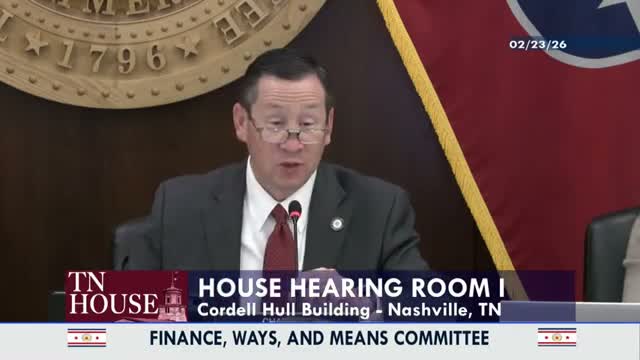
Chancellor Tydings told the House Financial Aids and Means Committee that the Tennessee Board of Regents has seen enrollment and completion gains across its institutions and described priorities for workforce training and deferred maintenance. "We are up 7% at our community colleges, 14.2% at our technical colleges, and overall 7%," she said, and reported system awards at a record level ("we are at our highest level at 23166 for 2025").
Tydings outlined four strategic workforce targets—aviation, artificial intelligence, ceramic tile, and nuclear energy—and highlighted initiatives including a "Foster Youth Forward" pilot at TCAT Knoxville, a correctional education investment (CEI) delivering programs across prisons, and a rural healthcare alliance to expand nursing and surgical-technologist training. She also briefed the committee on a $1.5 billion TCAT master plan funded in recent years and said that, systemwide, these facilities are on time and on budget. "We estimate that it'll give us an additional capacity of over 30,000 across the state," she said of the master-plan investments.
Tydings and other TBR speakers pressed for predictable funding for non-formula (specialized) units—medical schools, extension, and other health-science enterprises—and asked that salary and operating shortfalls be addressed rather than handled year-to-year. She also flagged cybersecurity as a high priority, telling the committee that the multi-campus system needs ongoing investment to prevent and respond to cyber incidents.
Members asked for further breakdowns of capacity, program-level expansions, and the number of programs affected; Tydings agreed to provide additional detail on programs and noted that the system is working closely with the Department of Economic and Community Development on workforce alignment.
Tydings outlined four strategic workforce targets—aviation, artificial intelligence, ceramic tile, and nuclear energy—and highlighted initiatives including a "Foster Youth Forward" pilot at TCAT Knoxville, a correctional education investment (CEI) delivering programs across prisons, and a rural healthcare alliance to expand nursing and surgical-technologist training. She also briefed the committee on a $1.5 billion TCAT master plan funded in recent years and said that, systemwide, these facilities are on time and on budget. "We estimate that it'll give us an additional capacity of over 30,000 across the state," she said of the master-plan investments.
Tydings and other TBR speakers pressed for predictable funding for non-formula (specialized) units—medical schools, extension, and other health-science enterprises—and asked that salary and operating shortfalls be addressed rather than handled year-to-year. She also flagged cybersecurity as a high priority, telling the committee that the multi-campus system needs ongoing investment to prevent and respond to cyber incidents.
Members asked for further breakdowns of capacity, program-level expansions, and the number of programs affected; Tydings agreed to provide additional detail on programs and noted that the system is working closely with the Department of Economic and Community Development on workforce alignment.
View the Full Meeting & All Its Details
This article offers just a summary. Unlock complete video, transcripts, and insights as a Founder Member.
✓
Watch full, unedited meeting videos
✓
Search every word spoken in unlimited transcripts
✓
AI summaries & real-time alerts (all government levels)
✓
Permanent access to expanding government content
30-day money-back guarantee
