University of Tennessee spotlights enrollment gains, health workforce and research priorities
February 23, 2026 | 2026 Legislature TN, Tennessee
This article was created by AI summarizing key points discussed. AI makes mistakes, so for full details and context, please refer to the video of the full meeting. Please report any errors so we can fix them. Report an error »
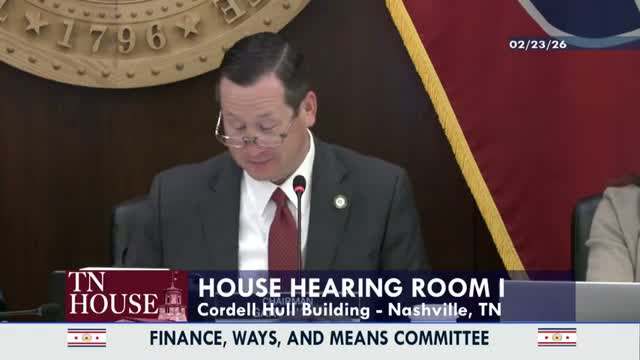
Randy Boyd, president of the University of Tennessee system, presented systemwide performance and budget priorities to the House Financial Aids and Means Committee on Feb. 23. Boyd said the system has grown from 52,000 students to 65,000 and set a goal of 84,000 by 2030. He highlighted improved retention and graduation outcomes, research-funding growth, and measures to limit tuition pressures. "Tuition has increased by an average of just 1.4% over the last five years," Boyd said, and he noted that 55% of last year’s graduates left with no debt.
Boyd described UT Promise, an institutional program that offers free tuition and fees for families under a specified income threshold (he cited "family income of under 75,000"). He also thanked legislators for supporting financial aid that contributed to that result. On research and workforce, Boyd tied growth to large private investment (cited example: nuclear-related investment in East Tennessee) and said the system seeks to expand research in quantum science, advanced materials, and AI.
On capital and specialized requests, Boyd told the committee that the governor’s proposed budget includes funding for a new College of Medicine at the UT Health Science Center and said the project would increase the number of health professionals produced in early years (projected first-five-year increases were provided). He also asked for additional allocations to cover specialized units’ salary shortfalls and requested funds for UT Martin health-clinic needs and precision-agriculture research to support the state’s agriculture industry. "Over the first 5 years after we build this, we'll produce over 1,450 additional health care professionals," Boyd said of the proposed medical facility.
The committee heard questions on specialized-unit funding, capital projects, and an enterprise resource planning rollout; Boyd and his CFO David Miller said the system is working with LGIs and other stakeholders on ERP implementation and collaborative planning.
Boyd described UT Promise, an institutional program that offers free tuition and fees for families under a specified income threshold (he cited "family income of under 75,000"). He also thanked legislators for supporting financial aid that contributed to that result. On research and workforce, Boyd tied growth to large private investment (cited example: nuclear-related investment in East Tennessee) and said the system seeks to expand research in quantum science, advanced materials, and AI.
On capital and specialized requests, Boyd told the committee that the governor’s proposed budget includes funding for a new College of Medicine at the UT Health Science Center and said the project would increase the number of health professionals produced in early years (projected first-five-year increases were provided). He also asked for additional allocations to cover specialized units’ salary shortfalls and requested funds for UT Martin health-clinic needs and precision-agriculture research to support the state’s agriculture industry. "Over the first 5 years after we build this, we'll produce over 1,450 additional health care professionals," Boyd said of the proposed medical facility.
The committee heard questions on specialized-unit funding, capital projects, and an enterprise resource planning rollout; Boyd and his CFO David Miller said the system is working with LGIs and other stakeholders on ERP implementation and collaborative planning.
Don't Miss a Word: See the Full Meeting!
Go beyond summaries. Unlock every video, transcript, and key insight with a Founder Membership.
✓
Get instant access to full meeting videos
✓
Search and clip any phrase from complete transcripts
✓
Receive AI-powered summaries & custom alerts
✓
Enjoy lifetime, unrestricted access to government data
30-day money-back guarantee
