Committee recommends against Tennessee Retirement Savings Plan Act after testimony on enrollment and implementation
February 23, 2026 | 2026 Legislature TN, Tennessee
This article was created by AI summarizing key points discussed. AI makes mistakes, so for full details and context, please refer to the video of the full meeting. Please report any errors so we can fix them. Report an error »
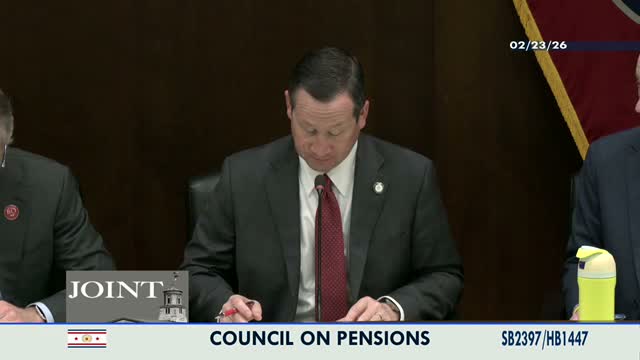
Senator Yarbrough, sponsor of Senate Bill 2,397 (also carried as House Bill 14‑47), described a proposal to establish the Tennessee Retirement Savings Plan, a state‑facilitated defined contribution program to expand access to workplace retirement savings for private‑sector workers who lack employer plans. "More than almost 60% of employees that work full time in Tennessee don't have a mechanism to save for retirement offered at their place of employment," the sponsor said, adding an estimate that about 1,200,000 Tennesseans currently lack employer‑offered retirement access and that long‑term fiscal impacts could be large.
Department staff provided the plan design and implementation timeline. Mr. Weiman said the legislation would create a seven‑member board chaired by the state treasurer, establish automatic payroll deduction with a 5% default employee contribution, and require employers with five or more employees to facilitate participation unless they already offer a qualified retirement plan. Implementation would be phased from 2029 through 2031 by employer size, with reporting requirements and a feasibility review; staff noted the program would not proceed if a legal determination found it to be governed by the Employee Retirement Income Security Act (ERISA).
Committee members asked whether individuals can already open Roth IRAs and whether the proposed mandate would be burdensome to employers. The sponsor and staff said individuals can open IRAs independently but that many workers do not, and they described the plan as a relatively light employer requirement limited to payroll facilitation and reporting. After discussion the committee entertained a motion and recorded a 9–2 vote in favor of a negative recommendation; the chair announced that HB 14‑47/SB 23‑97 is recommended against passage to its respective standing committees.
The transcript contains program details and projected rollout dates but does not include an enacted fiscal note or external stakeholder testimony on employer burden or worker uptake.
Department staff provided the plan design and implementation timeline. Mr. Weiman said the legislation would create a seven‑member board chaired by the state treasurer, establish automatic payroll deduction with a 5% default employee contribution, and require employers with five or more employees to facilitate participation unless they already offer a qualified retirement plan. Implementation would be phased from 2029 through 2031 by employer size, with reporting requirements and a feasibility review; staff noted the program would not proceed if a legal determination found it to be governed by the Employee Retirement Income Security Act (ERISA).
Committee members asked whether individuals can already open Roth IRAs and whether the proposed mandate would be burdensome to employers. The sponsor and staff said individuals can open IRAs independently but that many workers do not, and they described the plan as a relatively light employer requirement limited to payroll facilitation and reporting. After discussion the committee entertained a motion and recorded a 9–2 vote in favor of a negative recommendation; the chair announced that HB 14‑47/SB 23‑97 is recommended against passage to its respective standing committees.
The transcript contains program details and projected rollout dates but does not include an enacted fiscal note or external stakeholder testimony on employer burden or worker uptake.
View the Full Meeting & All Its Details
This article offers just a summary. Unlock complete video, transcripts, and insights as a Founder Member.
✓
Watch full, unedited meeting videos
✓
Search every word spoken in unlimited transcripts
✓
AI summaries & real-time alerts (all government levels)
✓
Permanent access to expanding government content
30-day money-back guarantee
