Senate Transportation hears testimony on S.235 after driver says vehicle‑history reports omitted prior catastrophic repairs
February 21, 2026 | Senate Transportation, SENATE, Committees, Legislative , Vermont
This article was created by AI summarizing key points discussed. AI makes mistakes, so for full details and context, please refer to the video of the full meeting. Please report any errors so we can fix them. Report an error »
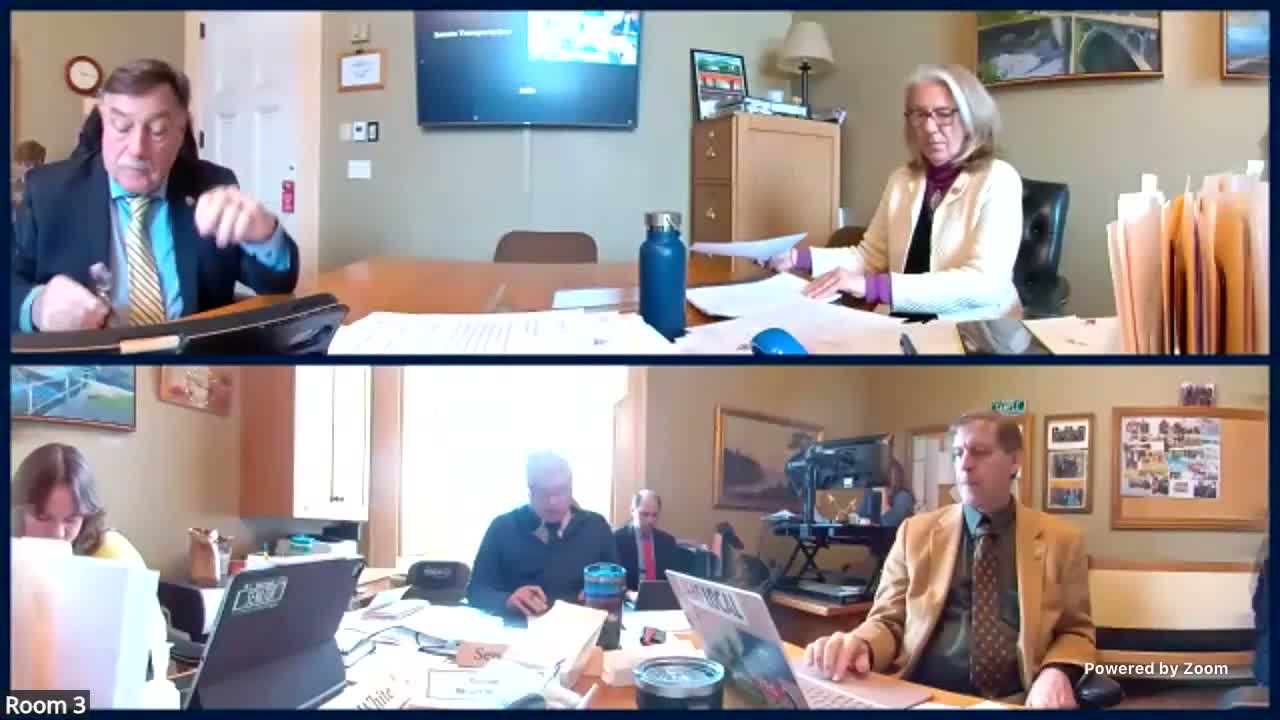
Julie, an attorney from Morristown and the constituent who prompted S.235, told the Senate Transportation committee she nearly died when a vehicle she bought experienced a catastrophic power‑steering failure on Interstate 89 and later required about $12,000 in repairs.
“ I could have died,” Julie said, describing a failure while driving in construction traffic at roughly 70 miles an hour. She told the committee a dealership technician later disclosed an earlier power‑steering failure at about 31,000 miles that did not appear in the vehicle‑history report she purchased from CARFAX.
Julie framed the matter as a consumer‑protection and public‑safety issue, saying repair shops, dealers and vehicle‑history services can omit diagnostic details and use vague entries such as “system checked” rather than reporting mechanical failures. She said she had confirmed similar stories among car‑club members and repair professionals and offered to compile Vermont examples if legislators wanted data.
The testimony cited two regulatory touchpoints. Julie said she submitted a California “cars” rule as an exhibit and referenced Federal Trade Commission guidance on deceptive practices; she told the committee the FTC rules, as she read them, have not required the broader diagnostic disclosures she wants to see in vehicle‑history services.
A committee member asked whether the proposal mirrors California’s approach; Julie said it does and described the change as “not overly burdensome” but predicted industry opposition. Another member asked why federal law did not already prevent the omission; Julie said reporting services and dealers have narrowed compliance to certain disclosures (for example, whether a vehicle has been in an accident), leaving other diagnostic history unreported.
Committee members said they would pursue follow‑up. A member said the first step would be to ask the Vermont Department of Motor Vehicles for information about salvage/rebuilt title practices and to seek examples; another member said the committee would discuss next steps internally and follow up with Julie if there is continued interest.
No formal motion or vote on S.235 was recorded in the transcript. The committee did not adopt legislation during this session; committee members directed staff to consult the DMV and indicated they may return to the matter after receiving that information.
Details noted in testimony included the cited repair cost (about $12,000), the claimed prior failure at about 31,000 miles, a purchase made relying on a paid CARFAX report (Julie cited a $50 report fee), and the vehicle problem occurring on Interstate 89 at highway speed. Julie also raised concerns that salvage titles can be removed or altered through DMV processes after repair, potentially obscuring prior total‑loss or transport damage from buyers.
The committee’s next procedural action, as stated in the hearing, is to request information from the DMV; no legislative deadline or formal referral was stated in the transcript.
“ I could have died,” Julie said, describing a failure while driving in construction traffic at roughly 70 miles an hour. She told the committee a dealership technician later disclosed an earlier power‑steering failure at about 31,000 miles that did not appear in the vehicle‑history report she purchased from CARFAX.
Julie framed the matter as a consumer‑protection and public‑safety issue, saying repair shops, dealers and vehicle‑history services can omit diagnostic details and use vague entries such as “system checked” rather than reporting mechanical failures. She said she had confirmed similar stories among car‑club members and repair professionals and offered to compile Vermont examples if legislators wanted data.
The testimony cited two regulatory touchpoints. Julie said she submitted a California “cars” rule as an exhibit and referenced Federal Trade Commission guidance on deceptive practices; she told the committee the FTC rules, as she read them, have not required the broader diagnostic disclosures she wants to see in vehicle‑history services.
A committee member asked whether the proposal mirrors California’s approach; Julie said it does and described the change as “not overly burdensome” but predicted industry opposition. Another member asked why federal law did not already prevent the omission; Julie said reporting services and dealers have narrowed compliance to certain disclosures (for example, whether a vehicle has been in an accident), leaving other diagnostic history unreported.
Committee members said they would pursue follow‑up. A member said the first step would be to ask the Vermont Department of Motor Vehicles for information about salvage/rebuilt title practices and to seek examples; another member said the committee would discuss next steps internally and follow up with Julie if there is continued interest.
No formal motion or vote on S.235 was recorded in the transcript. The committee did not adopt legislation during this session; committee members directed staff to consult the DMV and indicated they may return to the matter after receiving that information.
Details noted in testimony included the cited repair cost (about $12,000), the claimed prior failure at about 31,000 miles, a purchase made relying on a paid CARFAX report (Julie cited a $50 report fee), and the vehicle problem occurring on Interstate 89 at highway speed. Julie also raised concerns that salvage titles can be removed or altered through DMV processes after repair, potentially obscuring prior total‑loss or transport damage from buyers.
The committee’s next procedural action, as stated in the hearing, is to request information from the DMV; no legislative deadline or formal referral was stated in the transcript.
View the Full Meeting & All Its Details
This article offers just a summary. Unlock complete video, transcripts, and insights as a Founder Member.
✓
Watch full, unedited meeting videos
✓
Search every word spoken in unlimited transcripts
✓
AI summaries & real-time alerts (all government levels)
✓
Permanent access to expanding government content
30-day money-back guarantee
