Providers and advocates urge careful oversight to protect access as DHS tightens EIDBI rules
February 23, 2026 | 2026 Legislature MN, Minnesota
This article was created by AI summarizing key points discussed. AI makes mistakes, so for full details and context, please refer to the video of the full meeting. Please report any errors so we can fix them. Report an error »
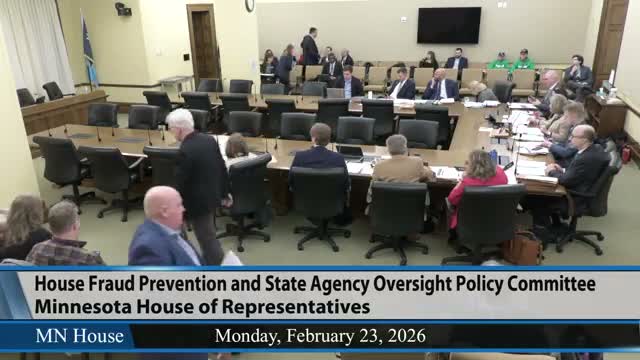
Multiple providers and clinical experts testified to the committee that while they support DHS efforts to prevent fraud, the department should balance enforcement with measures that preserve access to high‑quality, individualized care.
James O'Neil, representing the Autism Treatment Association of Minnesota and a provider, said member agencies follow DHS documentation requirements, submit provider agreements and background checks, and welcome audits that provide constructive feedback. "ATAM is committed to fraud prevention, and we respectfully ask DHS and legislators to engage with trusted providers as partners in designing strategies that can both protect taxpayer dollars and ensure children's timely access to care," O'Neil said.
Dr. Eric Larson, a licensed psychologist and behavior analyst, told the committee that aggressive screening can produce false positives that reduce appropriate supervision. He recommended licensed behavior analysts perform direct observations during site inspections and interview parents as part of quality reviews. "This would be done by skilled licensed behavior analysts rather than regulators who do not have the skills to understand what they're seeing during the site visits," Larson said.
Parent advocate Brad Trahan urged accountability and transparency, saying families bear the consequences of oversight failures. "This fraud undermines years of bipartisan work and risks harming the very individuals the system was designed to protect," Trahan said.
Providers asked DHS to calibrate analytics to avoid unnecessarily restricting legitimate services and to share non‑sensitive findings that will help providers meet requirements without giving investigators a roadmap to conceal misconduct.
What’s next: Witnesses asked for continued DHS engagement with provider associations, clarified inspection protocols that use clinical expertise, and timely communication with families about changes that affect service delivery.
James O'Neil, representing the Autism Treatment Association of Minnesota and a provider, said member agencies follow DHS documentation requirements, submit provider agreements and background checks, and welcome audits that provide constructive feedback. "ATAM is committed to fraud prevention, and we respectfully ask DHS and legislators to engage with trusted providers as partners in designing strategies that can both protect taxpayer dollars and ensure children's timely access to care," O'Neil said.
Dr. Eric Larson, a licensed psychologist and behavior analyst, told the committee that aggressive screening can produce false positives that reduce appropriate supervision. He recommended licensed behavior analysts perform direct observations during site inspections and interview parents as part of quality reviews. "This would be done by skilled licensed behavior analysts rather than regulators who do not have the skills to understand what they're seeing during the site visits," Larson said.
Parent advocate Brad Trahan urged accountability and transparency, saying families bear the consequences of oversight failures. "This fraud undermines years of bipartisan work and risks harming the very individuals the system was designed to protect," Trahan said.
Providers asked DHS to calibrate analytics to avoid unnecessarily restricting legitimate services and to share non‑sensitive findings that will help providers meet requirements without giving investigators a roadmap to conceal misconduct.
What’s next: Witnesses asked for continued DHS engagement with provider associations, clarified inspection protocols that use clinical expertise, and timely communication with families about changes that affect service delivery.
Don't Miss a Word: See the Full Meeting!
Go beyond summaries. Unlock every video, transcript, and key insight with a Founder Membership.
✓
Get instant access to full meeting videos
✓
Search and clip any phrase from complete transcripts
✓
Receive AI-powered summaries & custom alerts
✓
Enjoy lifetime, unrestricted access to government data
30-day money-back guarantee
