Proposal to expand speed‑camera pilot faces divided committee and fails to clear referrals after tied votes
February 23, 2026 | 2026 Legislature MN, Minnesota
This article was created by AI summarizing key points discussed. AI makes mistakes, so for full details and context, please refer to the video of the full meeting. Please report any errors so we can fix them. Report an error »
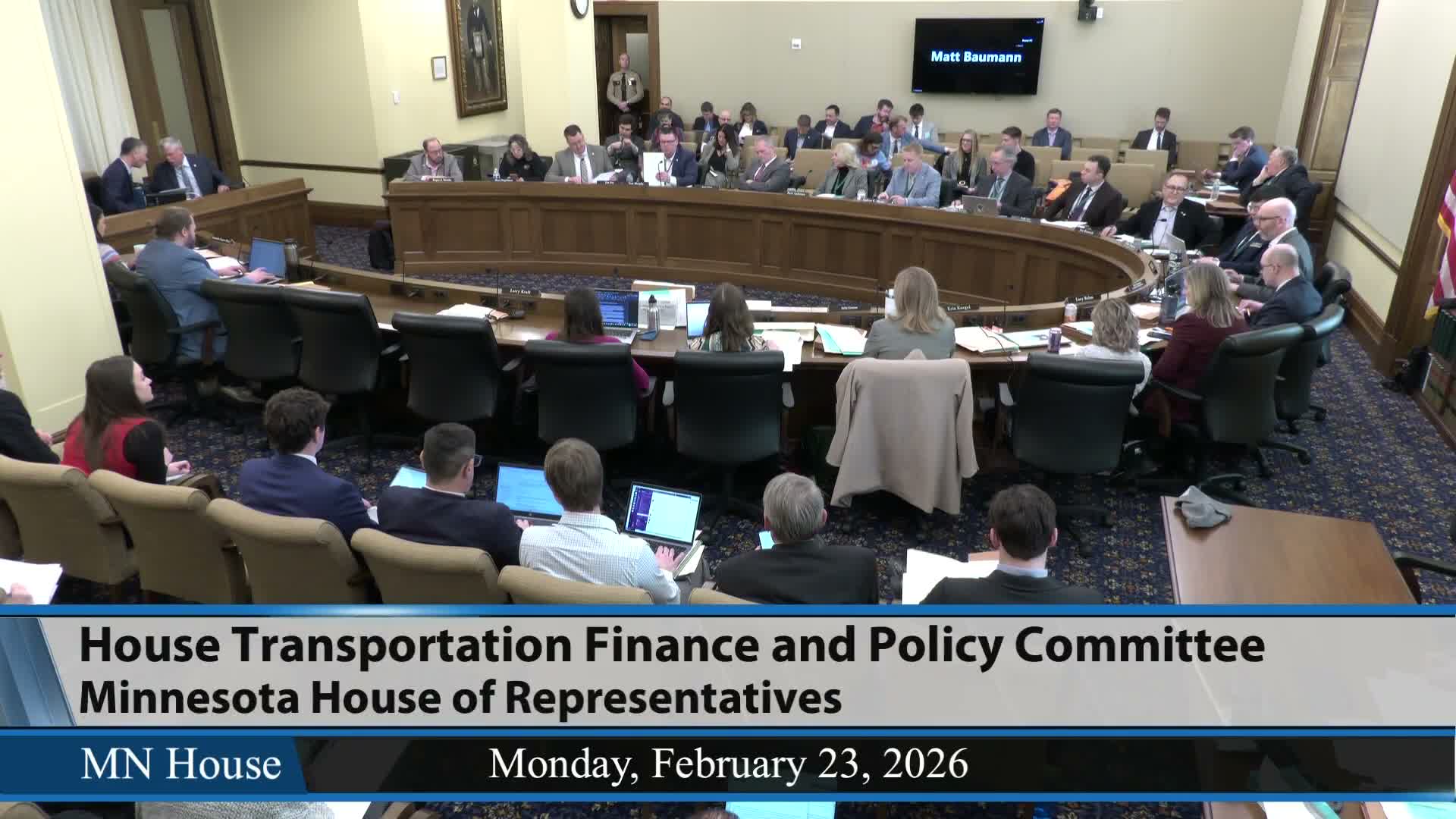
Representative Sensenmir introduced House File 3431 on Feb. 23 to lift the sunset and allow jurisdictions statewide to use automated speed‑safety cameras, extending a 2024 pilot in Minneapolis and Mendota Heights. Supporters, including Minneapolis transportation manager Ethan Folley and the League of Minnesota Cities, described early pilot results and municipal interest. Folley said the city's pilot (launched Oct. 1) saw an initial 51% reduction in drivers recorded 10+ mph over the limit at camera sites and a 58% reduction in 20+ mph cases in the first three months.
Local officials and industry groups — including Minneapolis and Saint Paul leaders and the Minnesota Asphalt Pavement Association — argued cameras improve safety in school zones and work zones and provide consistent enforcement without placing officers in dangerous roadside conditions. "This is about safety," Saint Paul Mayor Khali Kerr said, urging local implementation with privacy safeguards.
Opponents raised surveillance and civil‑liberties concerns and urged more time to evaluate the pilot. Representative Anderson and others questioned the expansion timeline and whether the pilot should be allowed more runway before statewide authorization.
Representative Feldman moved to lay the bill over (table it) and requested a roll call. The roll call on the layover motion resulted in an 8–8 tie and the motion did not prevail. A subsequent roll call on the bill also produced an 8–8 split and the motion did not prevail; the transcript shows tied votes and no referral recorded at the end of the hearing.
The committee debate reflected a split between municipalities seeking the option for their local streets and members concerned about surveillance, long‑term effects and the short Minnesota pilot timeline. Proponents said that protections in the bill — limits on camera density, modest fines and privacy safeguards — address revenue and equity concerns, while opponents said more data and time are needed before broadening the program.
Next steps: Committee members indicated they will continue discussions; HF3431 was not referred during this session meeting due to the tied votes recorded in committee.
Local officials and industry groups — including Minneapolis and Saint Paul leaders and the Minnesota Asphalt Pavement Association — argued cameras improve safety in school zones and work zones and provide consistent enforcement without placing officers in dangerous roadside conditions. "This is about safety," Saint Paul Mayor Khali Kerr said, urging local implementation with privacy safeguards.
Opponents raised surveillance and civil‑liberties concerns and urged more time to evaluate the pilot. Representative Anderson and others questioned the expansion timeline and whether the pilot should be allowed more runway before statewide authorization.
Representative Feldman moved to lay the bill over (table it) and requested a roll call. The roll call on the layover motion resulted in an 8–8 tie and the motion did not prevail. A subsequent roll call on the bill also produced an 8–8 split and the motion did not prevail; the transcript shows tied votes and no referral recorded at the end of the hearing.
The committee debate reflected a split between municipalities seeking the option for their local streets and members concerned about surveillance, long‑term effects and the short Minnesota pilot timeline. Proponents said that protections in the bill — limits on camera density, modest fines and privacy safeguards — address revenue and equity concerns, while opponents said more data and time are needed before broadening the program.
Next steps: Committee members indicated they will continue discussions; HF3431 was not referred during this session meeting due to the tied votes recorded in committee.
View the Full Meeting & All Its Details
This article offers just a summary. Unlock complete video, transcripts, and insights as a Founder Member.
✓
Watch full, unedited meeting videos
✓
Search every word spoken in unlimited transcripts
✓
AI summaries & real-time alerts (all government levels)
✓
Permanent access to expanding government content
30-day money-back guarantee
