Committee holds bill to rewrite criminal rules on harming law‑enforcement animals after heated debate
February 21, 2026 | Judicial Proceedings Committee, SENATE, SENATE, Committees, Legislative, Maryland
This article was created by AI summarizing key points discussed. AI makes mistakes, so for full details and context, please refer to the video of the full meeting. Please report any errors so we can fix them. Report an error »
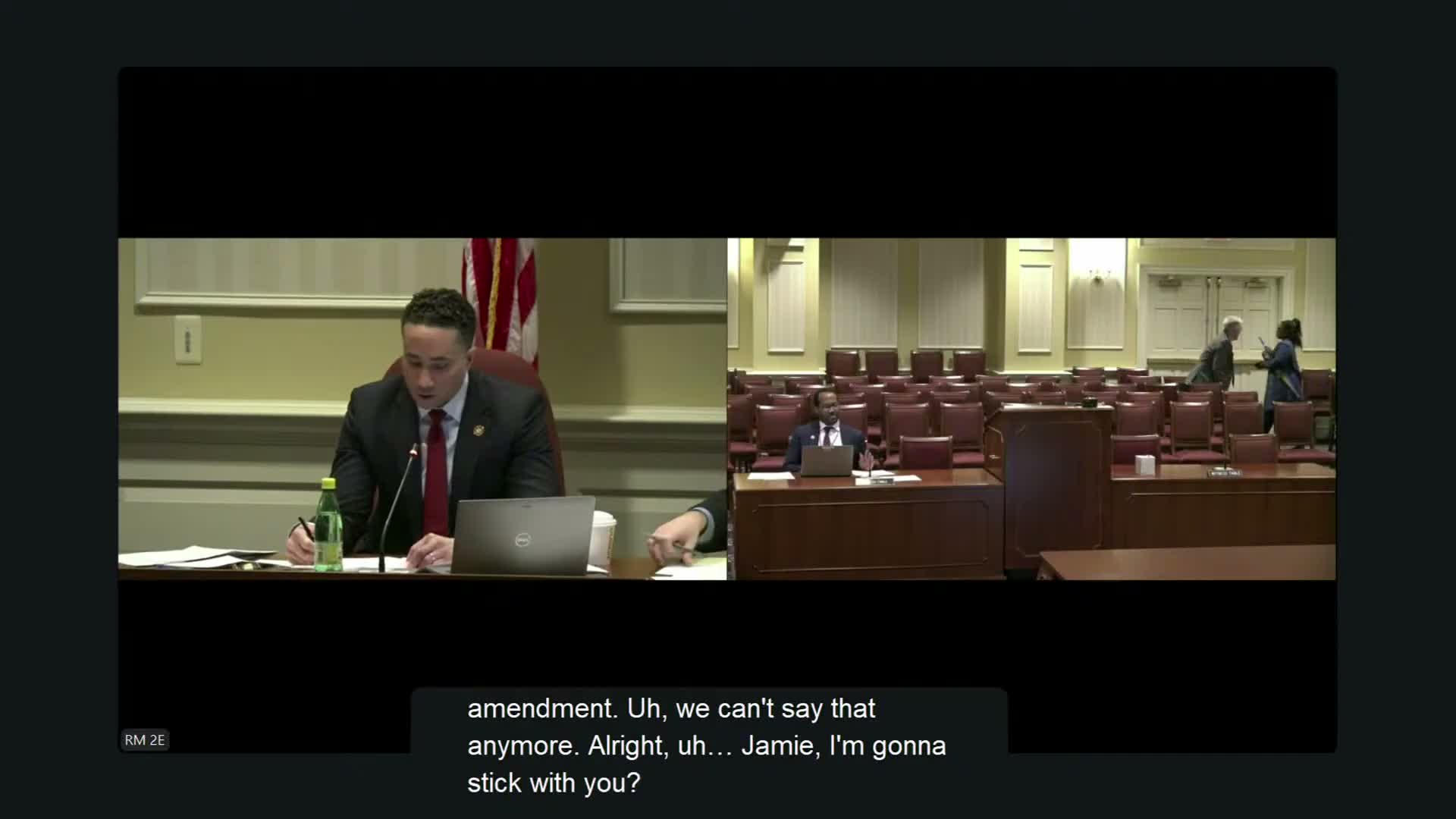
The Judicial Proceedings Committee on Feb. 20 tabled Senate Bill 360 after an extensive discussion about how the Legislature should treat intentional harm to law-enforcement animals.
Sponsor described SB360 as replacing an existing felony that prohibited intentional infliction of severe harm, permanent disability or death on an animal owned or used by law enforcement with a range of misdemeanors and related offenses for interference with emergency-response animals. There were no amendments in the packet.
Committee members focused on a legal knot: when can a person claim self defense against an animal used by an officer, and does harming that animal amount to assaulting an officer? Counsel said the current statute had some bracketed language about self defense that would be repealed by the bill and suggested adding an applicability provision or an explicit carve-out to preserve a self-defense exception if the committee intended it.
Senator Fulton and others questioned whether established defenses (for resisting unlawful force) apply if the object of a defendant's response is an animal rather than a person. "I don't think that it constitutes an assault if it's against the animal," counsel said, explaining that courts might treat striking the animal differently than striking a person and that specific statutory clarity would help judges applying the law.
Senator Sundar raised historical concerns, invoking the Edmund Pettus Bridge and the canine attacks used against civil-rights demonstrators, and said the discussion complicated what had appeared to be an easy bill. Other members said the bill raised difficult scenarios — including when a service or police animal is deployed properly and when the force is unjustified — and urged careful drafting.
The committee agreed to hold SB360 and directed sponsors and counsel (including Senators Henson, Fulton and Charles) to work on clarified statutory language, including how self‑defense and resisting-unjustified-force doctrines should operate in cases involving animals.
Next steps: sponsors will rework the bill language to define applicability of self-defense and related defenses and return the bill to committee for further consideration.
Sponsor described SB360 as replacing an existing felony that prohibited intentional infliction of severe harm, permanent disability or death on an animal owned or used by law enforcement with a range of misdemeanors and related offenses for interference with emergency-response animals. There were no amendments in the packet.
Committee members focused on a legal knot: when can a person claim self defense against an animal used by an officer, and does harming that animal amount to assaulting an officer? Counsel said the current statute had some bracketed language about self defense that would be repealed by the bill and suggested adding an applicability provision or an explicit carve-out to preserve a self-defense exception if the committee intended it.
Senator Fulton and others questioned whether established defenses (for resisting unlawful force) apply if the object of a defendant's response is an animal rather than a person. "I don't think that it constitutes an assault if it's against the animal," counsel said, explaining that courts might treat striking the animal differently than striking a person and that specific statutory clarity would help judges applying the law.
Senator Sundar raised historical concerns, invoking the Edmund Pettus Bridge and the canine attacks used against civil-rights demonstrators, and said the discussion complicated what had appeared to be an easy bill. Other members said the bill raised difficult scenarios — including when a service or police animal is deployed properly and when the force is unjustified — and urged careful drafting.
The committee agreed to hold SB360 and directed sponsors and counsel (including Senators Henson, Fulton and Charles) to work on clarified statutory language, including how self‑defense and resisting-unjustified-force doctrines should operate in cases involving animals.
Next steps: sponsors will rework the bill language to define applicability of self-defense and related defenses and return the bill to committee for further consideration.
View the Full Meeting & All Its Details
This article offers just a summary. Unlock complete video, transcripts, and insights as a Founder Member.
✓
Watch full, unedited meeting videos
✓
Search every word spoken in unlimited transcripts
✓
AI summaries & real-time alerts (all government levels)
✓
Permanent access to expanding government content
30-day money-back guarantee
