City outlines recycling rules, contamination problems and GROW food‑waste pilot for April 2026
February 16, 2026 | Honolulu County, Hawaii
This article was created by AI summarizing key points discussed. AI makes mistakes, so for full details and context, please refer to the video of the full meeting. Please report any errors so we can fix them. Report an error »
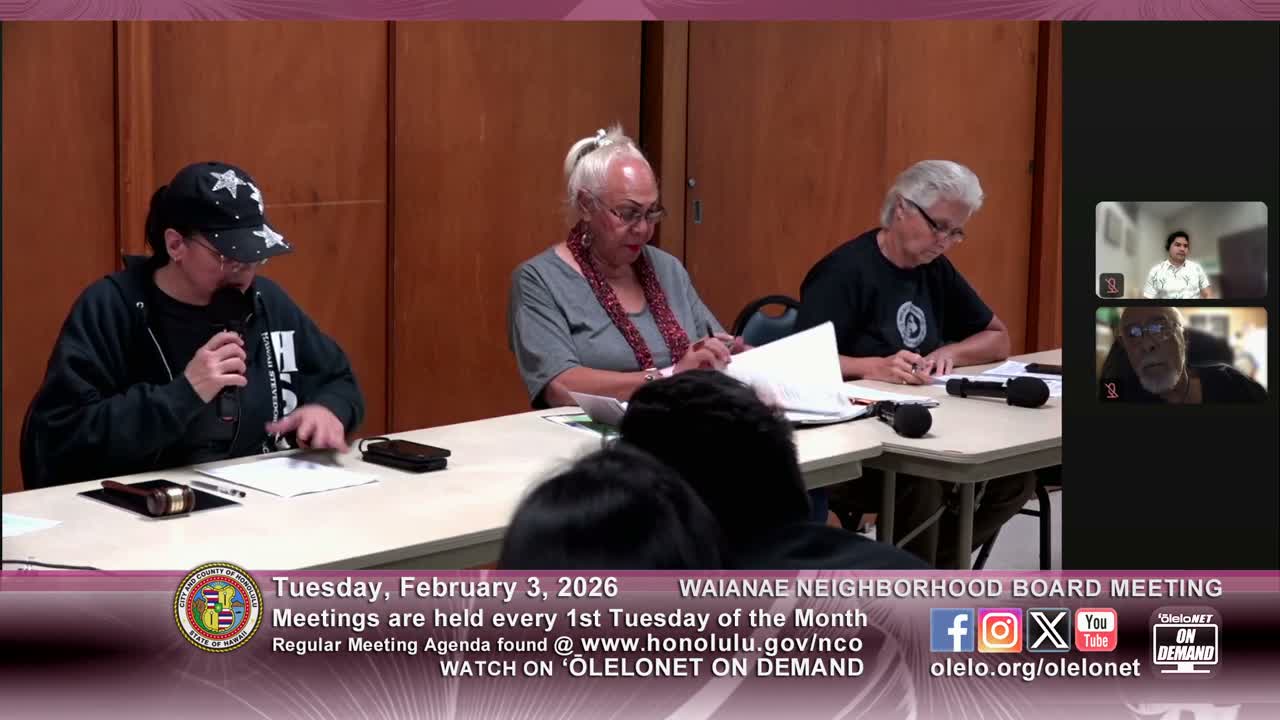
Henry Gabriel, recycling program branch chief for the City and County of Honolulu, presented what materials belong in blue recycling carts (glass bottles/jars, aluminum and bimetal cans, corrugated cardboard, plastics #1 and #2) and what should go into green compost carts (yard trimmings, fruit/vegetable matter and yard debris). Gabriel described convenience‑center services for compressed‑gas tanks, tire recycling, metal and e‑waste, and advised residents to contact hazardous‑waste firms for commercial tanks.
Gabriel said contamination (non‑target items placed in colored carts, such as hoses, blankets and non‑corrugated paperboard) is a major problem; he cited past waste audits and said contamination rates can be as high as about 23% in some districts. To reduce lines at busy convenience centers, staff sometimes mix green waste with other loads; Gabriel said the preferred long‑term solution is larger, better‑equipped centers that allow separation without causing traffic backup.
On food waste, Gabriel announced the city’s GROW (Green Recycling Organic Waste) pilot will accept food waste in specified green carts beginning April 1, 2026, and that Nanakuli is included in the pilot. Until the pilot expands, the city instructs residents not to place meats, fats or dairy in green carts outside pilot zones and to continue backyard composting where available.
Residents asked practical questions about tires (policy noted as four per month, to be confirmed), disposal of through‑wall AC units (convenience centers will accept them and extract refrigerant) and how to identify plastic #1 or #2. Gabriel said education materials (flyers and stickers for blue carts) are available and the department will work with partners such as DMV on outreach.
On compostable packaging and PFAS, Gabriel cautioned that some compostable items contain PFAS (a persistent chemical) and the city is studying contractor capabilities and Department of Health guidance before accepting those materials for composting.
Gabriel said contamination (non‑target items placed in colored carts, such as hoses, blankets and non‑corrugated paperboard) is a major problem; he cited past waste audits and said contamination rates can be as high as about 23% in some districts. To reduce lines at busy convenience centers, staff sometimes mix green waste with other loads; Gabriel said the preferred long‑term solution is larger, better‑equipped centers that allow separation without causing traffic backup.
On food waste, Gabriel announced the city’s GROW (Green Recycling Organic Waste) pilot will accept food waste in specified green carts beginning April 1, 2026, and that Nanakuli is included in the pilot. Until the pilot expands, the city instructs residents not to place meats, fats or dairy in green carts outside pilot zones and to continue backyard composting where available.
Residents asked practical questions about tires (policy noted as four per month, to be confirmed), disposal of through‑wall AC units (convenience centers will accept them and extract refrigerant) and how to identify plastic #1 or #2. Gabriel said education materials (flyers and stickers for blue carts) are available and the department will work with partners such as DMV on outreach.
On compostable packaging and PFAS, Gabriel cautioned that some compostable items contain PFAS (a persistent chemical) and the city is studying contractor capabilities and Department of Health guidance before accepting those materials for composting.
View the Full Meeting & All Its Details
This article offers just a summary. Unlock complete video, transcripts, and insights as a Founder Member.
✓
Watch full, unedited meeting videos
✓
Search every word spoken in unlimited transcripts
✓
AI summaries & real-time alerts (all government levels)
✓
Permanent access to expanding government content
30-day money-back guarantee
