DLNR outlines Exceptional Tree Program and how residents can nominate and protect trees
February 07, 2026 | Honolulu County, Hawaii
This article was created by AI summarizing key points discussed. AI makes mistakes, so for full details and context, please refer to the video of the full meeting. Please report any errors so we can fix them. Report an error »
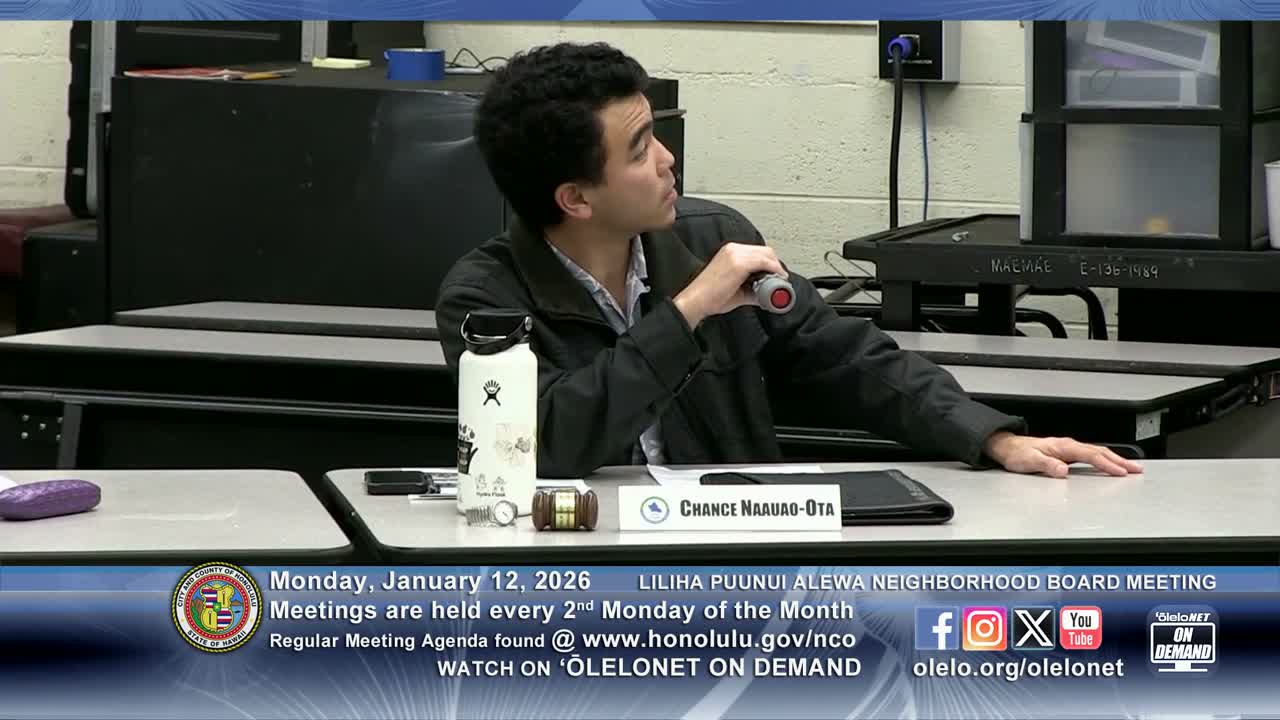
Heather McMillan, DLNR urban and community forester, presented the Exceptional Tree Program and explained how trees become exceptionalized and protected under the city and county ordinance that grew out of the Exceptional Tree Act (1975). She said nominations require property-owner support and that designated trees are protected against improper pruning or removal unless a city permit finds a threat to public safety. The program provides an incentive—a tax deduction for private owners of exceptional trees for pruning services every three years—and the exceptional status continues after a property changes hands.
McMillan highlighted canopy and climate benefits: higher canopy coverage cools surfaces and ambient air, improves stormwater retention and supports public health. She said over 1,400 exceptional trees exist across Hawaii, with a notable share on military land and more than 20% on municipal or state land. The program favors endemic species, trees with cultural or historic significance, large canopy, or species rarity. She encouraged residents to use a QR code or the Division of Urban Forestry website to nominate trees and said the division maintains a list of qualified arborists for required pruning.
Board members asked about incentives for non-exceptional but large-canopy trees (e.g., mango trees) and whether the public must be allowed access to a protected tree; McMillan said there is no public-access requirement and suggested that the board and community consider trees as critical infrastructure. She offered to be a contact for questions and to share the slide deck with the chair.
McMillan highlighted canopy and climate benefits: higher canopy coverage cools surfaces and ambient air, improves stormwater retention and supports public health. She said over 1,400 exceptional trees exist across Hawaii, with a notable share on military land and more than 20% on municipal or state land. The program favors endemic species, trees with cultural or historic significance, large canopy, or species rarity. She encouraged residents to use a QR code or the Division of Urban Forestry website to nominate trees and said the division maintains a list of qualified arborists for required pruning.
Board members asked about incentives for non-exceptional but large-canopy trees (e.g., mango trees) and whether the public must be allowed access to a protected tree; McMillan said there is no public-access requirement and suggested that the board and community consider trees as critical infrastructure. She offered to be a contact for questions and to share the slide deck with the chair.
Don't Miss a Word: See the Full Meeting!
Go beyond summaries. Unlock every video, transcript, and key insight with a Founder Membership.
✓
Get instant access to full meeting videos
✓
Search and clip any phrase from complete transcripts
✓
Receive AI-powered summaries & custom alerts
✓
Enjoy lifetime, unrestricted access to government data
30-day money-back guarantee
