Sen. Danielle Conrad urges repeal of capital‑gains preference, citing $20 million revenue potential
February 20, 2026 | 2026 Legislature NE, Nebraska
This article was created by AI summarizing key points discussed. AI makes mistakes, so for full details and context, please refer to the video of the full meeting. Please report any errors so we can fix them. Report an error »
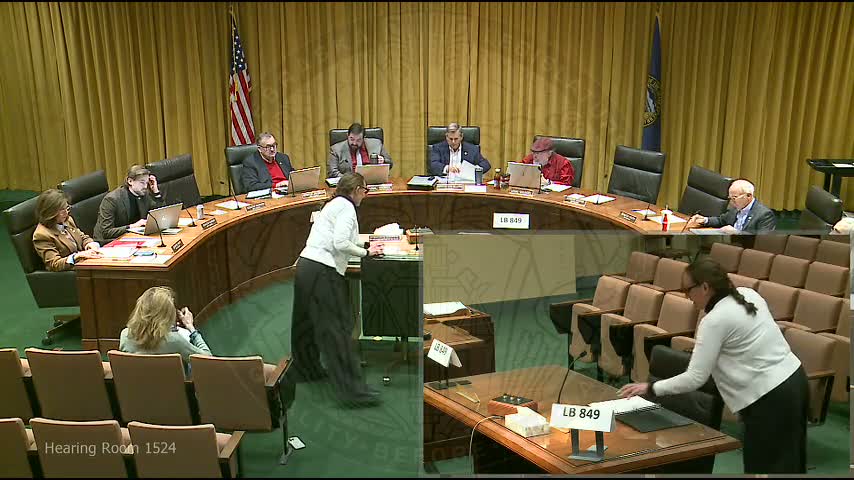
Senator Danielle Conrad, who said she represents North Lincoln in the Legislature, told the Revenue Committee that LB 872 would eliminate a special income‑tax reduction for “extraordinary dividends and certain capital gains” created in 1987. Conrad told senators the provision affected about 800 filers in tax year 2023 and that 91% of those using the preference have incomes above $1,000,000, and she said eliminating it could bring in roughly $20,000,000 for state priorities.
Conrad argued the exemption was negotiated in a different tax era and that recent changes to Nebraska’s income‑tax structure mean the measure should be reexamined. “If we’re going to have a comprehensive discussion about taxes, I think we should talk about everybody’s taxes,” she said, pressing that this slice of treatment disproportionately benefits the top “one‑tenth of 1%.”
Opponents told the committee the preference plays a practical role in succession planning and business sales. Stacy Watson, a certified public accountant testifying on behalf of the Nebraska Society of Certified Public Accountants, the Nebraska Chamber of Commerce and industry groups, said the reduction most often comes into play during sales, generational transfers and ownership restructuring and that removing it (she noted an effective date of 01/01/2026 in the bill language) would increase the tax cost of those transactions and could prompt some taxpayers to change residency.
“When the sales of an entity is contemplated, planning often begins years in advance,” Watson said, warning that taxing those capital events without broader structural reform could put Nebraska at a competitive disadvantage and harm local economies and schools.
Committee members asked whether the exclusion functions like a retirement vehicle for some owners and whether employees who receive stock at sale benefit from the provision. Witnesses and members agreed the tax liability can spike in the sale year, even if the underlying economic gains accrued over years. Some senators also emphasized that the provision historically encouraged philanthropy and local reinvestment by owners who remained in the state.
The committee received proponent and opponent letters and heard no in‑person proponents. The hearing record shows a mix of fiscal and policy concerns; senators said they would weigh options ranging from full repeal to narrower reforms or guardrails that would preserve entrepreneurship incentives while addressing equity and revenue needs. The committee closed the LB 872 hearing without a recorded vote and moved on to other bills.
Conrad argued the exemption was negotiated in a different tax era and that recent changes to Nebraska’s income‑tax structure mean the measure should be reexamined. “If we’re going to have a comprehensive discussion about taxes, I think we should talk about everybody’s taxes,” she said, pressing that this slice of treatment disproportionately benefits the top “one‑tenth of 1%.”
Opponents told the committee the preference plays a practical role in succession planning and business sales. Stacy Watson, a certified public accountant testifying on behalf of the Nebraska Society of Certified Public Accountants, the Nebraska Chamber of Commerce and industry groups, said the reduction most often comes into play during sales, generational transfers and ownership restructuring and that removing it (she noted an effective date of 01/01/2026 in the bill language) would increase the tax cost of those transactions and could prompt some taxpayers to change residency.
“When the sales of an entity is contemplated, planning often begins years in advance,” Watson said, warning that taxing those capital events without broader structural reform could put Nebraska at a competitive disadvantage and harm local economies and schools.
Committee members asked whether the exclusion functions like a retirement vehicle for some owners and whether employees who receive stock at sale benefit from the provision. Witnesses and members agreed the tax liability can spike in the sale year, even if the underlying economic gains accrued over years. Some senators also emphasized that the provision historically encouraged philanthropy and local reinvestment by owners who remained in the state.
The committee received proponent and opponent letters and heard no in‑person proponents. The hearing record shows a mix of fiscal and policy concerns; senators said they would weigh options ranging from full repeal to narrower reforms or guardrails that would preserve entrepreneurship incentives while addressing equity and revenue needs. The committee closed the LB 872 hearing without a recorded vote and moved on to other bills.
View the Full Meeting & All Its Details
This article offers just a summary. Unlock complete video, transcripts, and insights as a Founder Member.
✓
Watch full, unedited meeting videos
✓
Search every word spoken in unlimited transcripts
✓
AI summaries & real-time alerts (all government levels)
✓
Permanent access to expanding government content
30-day money-back guarantee
