Council talks parks, school field access and bonding options; $80 million estimate cited
February 21, 2026 | West Valley City Council, West Valley City, Salt Lake County, Utah
This article was created by AI summarizing key points discussed. AI makes mistakes, so for full details and context, please refer to the video of the full meeting. Please report any errors so we can fix them. Report an error »
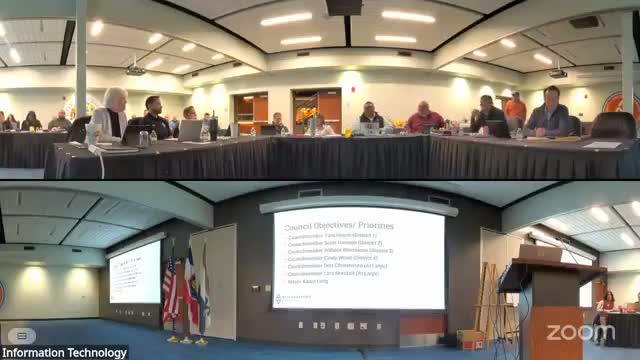
Unidentified Speaker 2 and Abby (Unidentified Speaker 4) reviewed parks and community programming options, including negotiations for park space at McNair and possible use of Carl Sandburg Elementary as a community resource center or program site. Councilors asked whether school buildings or just fields would be available and noted restroom access would require operational arrangements with school districts.
Council members repeatedly raised maintenance and completion of existing parks as priorities. "The neighborhood parks ... don't have restrooms," Unidentified Speaker 1 said, and several members urged finishing currently stalled projects before adding new sites. Speakers said older playground equipment is reaching the end of life and parts are hard to source.
On funding, staff and finance advisors (Unidentified Speaker 9 and Unidentified Speaker 2) explained that bond funds are often project‑specific and discussed options to combine grants with bonding. Staff said some bonds can be self‑defeased or structured to be callable, but more flexibility often comes with higher interest costs. Councilors debated timing — whether to wait for potential grant awards before issuing bonds or to bond sooner to accelerate projects.
A high‑level cost estimate emerged during the workshop: "If I put it to develop the existing parks, we're probably in the neighborhood of, like, 80,000,000," Unidentified Speaker 1 said. Councilors requested the parks study and said they would prioritize projects after reviewing the study's findings.
Why it matters: Parks, fields and recreation programming affect neighborhood quality of life and youth sports access; funding choices (grants vs. bonds) will determine timing and taxpayer impact.
What9s next: Staff will deliver the parks study results at an upcoming meeting and produce prioritized project lists and cost estimates for council consideration; no bond was authorized at the workshop.
Council members repeatedly raised maintenance and completion of existing parks as priorities. "The neighborhood parks ... don't have restrooms," Unidentified Speaker 1 said, and several members urged finishing currently stalled projects before adding new sites. Speakers said older playground equipment is reaching the end of life and parts are hard to source.
On funding, staff and finance advisors (Unidentified Speaker 9 and Unidentified Speaker 2) explained that bond funds are often project‑specific and discussed options to combine grants with bonding. Staff said some bonds can be self‑defeased or structured to be callable, but more flexibility often comes with higher interest costs. Councilors debated timing — whether to wait for potential grant awards before issuing bonds or to bond sooner to accelerate projects.
A high‑level cost estimate emerged during the workshop: "If I put it to develop the existing parks, we're probably in the neighborhood of, like, 80,000,000," Unidentified Speaker 1 said. Councilors requested the parks study and said they would prioritize projects after reviewing the study's findings.
Why it matters: Parks, fields and recreation programming affect neighborhood quality of life and youth sports access; funding choices (grants vs. bonds) will determine timing and taxpayer impact.
What9s next: Staff will deliver the parks study results at an upcoming meeting and produce prioritized project lists and cost estimates for council consideration; no bond was authorized at the workshop.
View the Full Meeting & All Its Details
This article offers just a summary. Unlock complete video, transcripts, and insights as a Founder Member.
✓
Watch full, unedited meeting videos
✓
Search every word spoken in unlimited transcripts
✓
AI summaries & real-time alerts (all government levels)
✓
Permanent access to expanding government content
30-day money-back guarantee
