Beacon Economics urges San Joaquin supervisors to prioritize public-health measures, childcare and workforce when spending ARPA funds
February 22, 2026 | San Joaquin County, California
This article was created by AI summarizing key points discussed. AI makes mistakes, so for full details and context, please refer to the video of the full meeting. Please report any errors so we can fix them. Report an error »
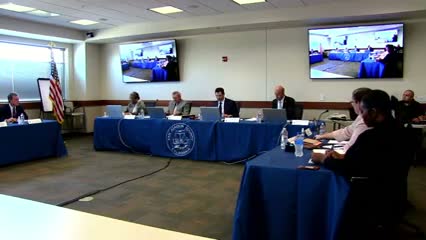
At a special San Joaquin County Board of Supervisors meeting on Oct. 29, consultants from Beacon Economics told county leaders to prioritize pandemic control and workforce investments when spending their American Rescue Plan Act funds.
Dr. Chris Thornburg, founding partner of Beacon Economics, framed the presentation with a broad macroeconomic view, arguing that the pandemic’s economic shock has been uneven and that the county’s logistics and food-manufacturing clusters have been growth drivers. "This economy is gonna rock and roll for a few years, the new roaring twenties," Thornburg said, adding that the greater risk is the eventual cost of very large fiscal stimulus.
Patrick Adler of Beacon Economics laid out a four-level "triage" for ARPA spending that ranks pandemic-control measures first: testing and sequencing, vaccination campaigns and medical infrastructure. The consultants recommended prioritizing rapid antigen testing to enable workplaces to scale up safely, and noted incentives can raise vaccine uptake: "Paying people to get vaccinated does seem to work," Adler said, citing peer-reviewed studies and small-cash programs.
The plan then recommends targeted individual and business aid — emphasizing refunds (utility, business-license or internet refunds) and narrowly targeted grants for firms demonstrably harmed by COVID-19 — followed by hazard pay for frontline workers and then eligible infrastructure projects such as broadband or water/sewer work already in planning. Beacon warned of Treasury constraints and audit risk for impermissible uses such as pension deposits or debt service.
CAO Jay Wilberty told the board the county has received roughly $74 million from the first ARPA tranche and has committed about $59.4 million; "we have just over $8,000,000 remaining that's uncommitted," he said. Board members pressed the consultants and staff for concrete next steps: Supervisor Miller asked staff to work with public-health leaders to identify needed testing and vaccination resources; Vice Chair Winn stressed child care and behavioral health as priorities for workforce recovery; and Supervisor Rickman pressed for community-level input and fair targeting if the county proceeds with business aid.
Several supervisors also raised practical concerns: the administrative cost of tightly targeted grants, the risk of subsidizing businesses that would remain weak absent structural changes, and how to make hazard pay meaningful without consuming the entire ARPA pot. Beacon’s team recommended refunds and administratively simple programs where possible to reduce monitoring burdens and suggested pairing any targeting with local outreach to avoid "insider" advantages.
The board asked CAO Wilberty and staff to return with a more detailed plan and cost estimates, including community outreach to downtown and business stakeholders, ahead of the second ARPA tranche expected in 2022.
Ending: The Board adjourned and scheduled the next session to continue ARPA planning; staff committed to follow up with supervisors on price-tagged options and stakeholder engagement.
Dr. Chris Thornburg, founding partner of Beacon Economics, framed the presentation with a broad macroeconomic view, arguing that the pandemic’s economic shock has been uneven and that the county’s logistics and food-manufacturing clusters have been growth drivers. "This economy is gonna rock and roll for a few years, the new roaring twenties," Thornburg said, adding that the greater risk is the eventual cost of very large fiscal stimulus.
Patrick Adler of Beacon Economics laid out a four-level "triage" for ARPA spending that ranks pandemic-control measures first: testing and sequencing, vaccination campaigns and medical infrastructure. The consultants recommended prioritizing rapid antigen testing to enable workplaces to scale up safely, and noted incentives can raise vaccine uptake: "Paying people to get vaccinated does seem to work," Adler said, citing peer-reviewed studies and small-cash programs.
The plan then recommends targeted individual and business aid — emphasizing refunds (utility, business-license or internet refunds) and narrowly targeted grants for firms demonstrably harmed by COVID-19 — followed by hazard pay for frontline workers and then eligible infrastructure projects such as broadband or water/sewer work already in planning. Beacon warned of Treasury constraints and audit risk for impermissible uses such as pension deposits or debt service.
CAO Jay Wilberty told the board the county has received roughly $74 million from the first ARPA tranche and has committed about $59.4 million; "we have just over $8,000,000 remaining that's uncommitted," he said. Board members pressed the consultants and staff for concrete next steps: Supervisor Miller asked staff to work with public-health leaders to identify needed testing and vaccination resources; Vice Chair Winn stressed child care and behavioral health as priorities for workforce recovery; and Supervisor Rickman pressed for community-level input and fair targeting if the county proceeds with business aid.
Several supervisors also raised practical concerns: the administrative cost of tightly targeted grants, the risk of subsidizing businesses that would remain weak absent structural changes, and how to make hazard pay meaningful without consuming the entire ARPA pot. Beacon’s team recommended refunds and administratively simple programs where possible to reduce monitoring burdens and suggested pairing any targeting with local outreach to avoid "insider" advantages.
The board asked CAO Wilberty and staff to return with a more detailed plan and cost estimates, including community outreach to downtown and business stakeholders, ahead of the second ARPA tranche expected in 2022.
Ending: The Board adjourned and scheduled the next session to continue ARPA planning; staff committed to follow up with supervisors on price-tagged options and stakeholder engagement.
View the Full Meeting & All Its Details
This article offers just a summary. Unlock complete video, transcripts, and insights as a Founder Member.
✓
Watch full, unedited meeting videos
✓
Search every word spoken in unlimited transcripts
✓
AI summaries & real-time alerts (all government levels)
✓
Permanent access to expanding government content
30-day money-back guarantee
