Highland Park Golf Course seeks continued subsidy as operators promise eventual self‑sufficiency
February 21, 2026 | Cleveland, Cuyahoga County, Ohio
This article was created by AI summarizing key points discussed. AI makes mistakes, so for full details and context, please refer to the video of the full meeting. Please report any errors so we can fix them. Report an error »
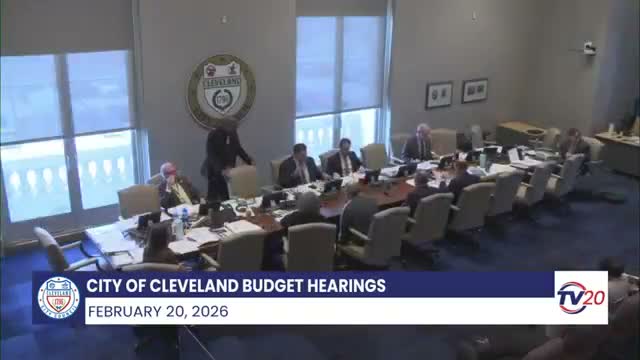
Paul Sampliner, a board member of the Highland Park Golf Course Foundation, and Tom Sheets, the course’s general manager, told the finance committee that recent capital work and a new driving range are central to a plan to make the facility self‑sustaining. "It’s projected to do $190,000 this year," Sampliner said of the range, and presenters described cart fleet replacements, drainage and irrigation upgrades and a program to expand junior golf and instruction.
City finance staff described how the golf course’s enterprise fund is budgeted for 2026. "The actual revenue that the golf course is collecting... is $1,650,000.00," a finance official told the committee, while total budgeted expenses amount to about $2,610,000, leaving a planned transfer to cover the shortfall. Finance staff said the proposed transfer in 2026 to balance the fund is approximately $909,000.
Council members objected to the size and persistence of the subsidy and asked detailed questions about the underlying numbers, staffing and past accounting. Councilman Mike Blensohn said the city should prioritize neighborhood recreation over subsidizing a golf course: "We should be subsidizing recreation for kids in our neighborhoods. That’s what we should be subsidizing, not golf courses." Several members said they want reconciled profit‑and‑loss figures showing how the city’s transfers align with Highland’s internal projections.
Presenters emphasized a multi‑year transition: they reported 40,000 rounds in 2025 and projected 55,000 rounds for 2026, with the expectation that a full buildout of both courses and the range would make the operation sustainable by the late 2020s. They also said some philanthropic commitments and sponsorships are in progress but not yet realized.
The committee requested copies of the golf course’s projection sheets and asked finance staff and Highland representatives to reconcile differences between the course’s five‑year profit‑and‑loss projections and the city’s accounting. No formal vote or decision was taken; members signaled they expect follow‑up budget detail and a timetable to reduce the subsidy if projections are not met.
City finance staff described how the golf course’s enterprise fund is budgeted for 2026. "The actual revenue that the golf course is collecting... is $1,650,000.00," a finance official told the committee, while total budgeted expenses amount to about $2,610,000, leaving a planned transfer to cover the shortfall. Finance staff said the proposed transfer in 2026 to balance the fund is approximately $909,000.
Council members objected to the size and persistence of the subsidy and asked detailed questions about the underlying numbers, staffing and past accounting. Councilman Mike Blensohn said the city should prioritize neighborhood recreation over subsidizing a golf course: "We should be subsidizing recreation for kids in our neighborhoods. That’s what we should be subsidizing, not golf courses." Several members said they want reconciled profit‑and‑loss figures showing how the city’s transfers align with Highland’s internal projections.
Presenters emphasized a multi‑year transition: they reported 40,000 rounds in 2025 and projected 55,000 rounds for 2026, with the expectation that a full buildout of both courses and the range would make the operation sustainable by the late 2020s. They also said some philanthropic commitments and sponsorships are in progress but not yet realized.
The committee requested copies of the golf course’s projection sheets and asked finance staff and Highland representatives to reconcile differences between the course’s five‑year profit‑and‑loss projections and the city’s accounting. No formal vote or decision was taken; members signaled they expect follow‑up budget detail and a timetable to reduce the subsidy if projections are not met.
Don't Miss a Word: See the Full Meeting!
Go beyond summaries. Unlock every video, transcript, and key insight with a Founder Membership.
✓
Get instant access to full meeting videos
✓
Search and clip any phrase from complete transcripts
✓
Receive AI-powered summaries & custom alerts
✓
Enjoy lifetime, unrestricted access to government data
30-day money-back guarantee
