San Joaquin County supervisors map six draft priorities after daylong planning retreat
February 15, 2026 | San Joaquin County, California
This article was created by AI summarizing key points discussed. AI makes mistakes, so for full details and context, please refer to the video of the full meeting. Please report any errors so we can fix them. Report an error »
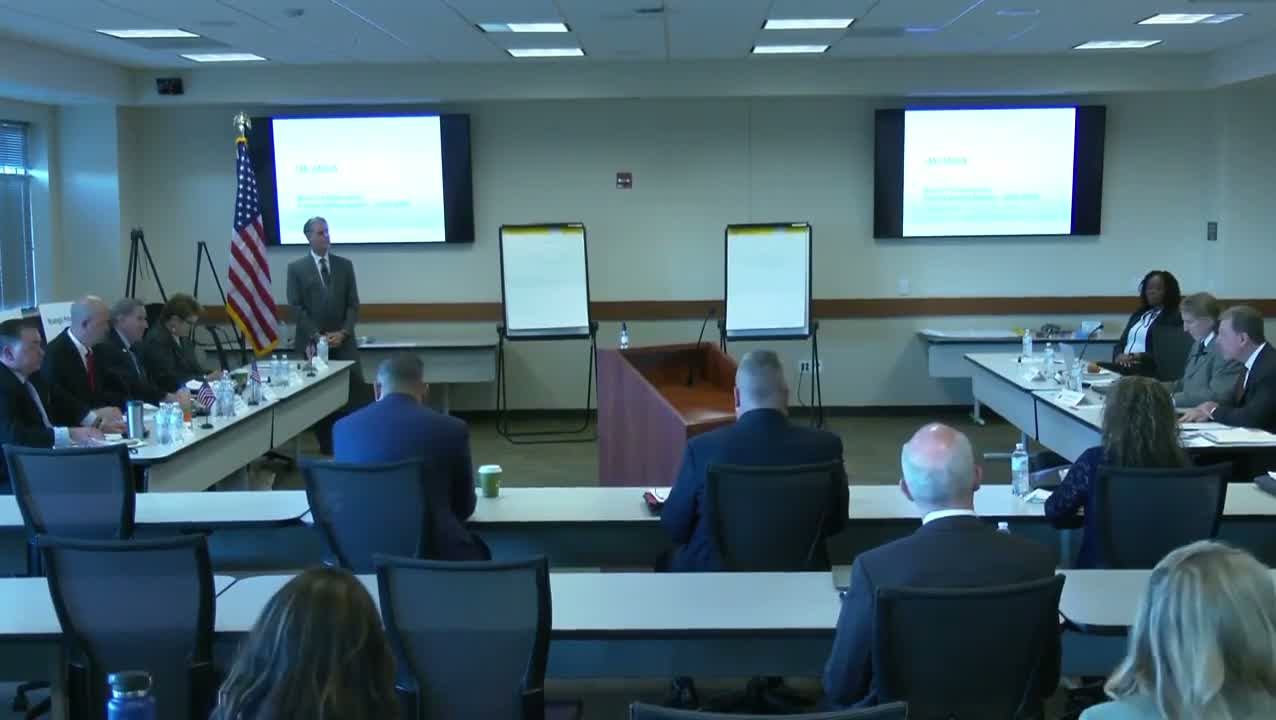
San Joaquin County supervisors convened a full-day strategic-planning retreat where department heads presented brief reports on accomplishments during the pandemic and recurring challenges, and the board sketched six draft priorities for the next three years but did not take final votes.
The retreat, led by CEO Jay Woverdang and facilitated by the county chief administrative officer (CAO), combined a “look back” at departmental work over the last three years with a “look forward” to generate SMART goals and measurable outcomes. Woverdang told the board the county remains in a relatively strong fiscal position but faces persistent headwinds: “We have $74,000,000 which is on the way in May,” he said, referring to an upcoming tranche of ARPA funding the board will allocate.
Department heads gave two-minute presentations that repeatedly raised three themes: difficulty recruiting and retaining staff, increased reliance on technology and digitization to deliver services, and service pressures tied to homelessness. Several department leaders catalogued pandemic responses that became permanent capabilities — online training for elections staff, expanded remote access and new permitting throughput — while flagging staffing shortages in areas such as behavioral health and public safety.
The county’s constituent survey from December 2021, read for the board during the meeting, ranked water storage, quality and sustainability as the top public priority, followed by addressing homelessness and long-term financial stability. The board used the survey results to shape the retreat conversation.
Supervisors discussed possible headline priorities that would guide more specific SMART goals. The draft categories discussed during the retreat included fiscal optimization (maintaining a structurally balanced budget and addressing pension liabilities), organizational capacity and technology, economic recovery and business attraction, water management, public safety/quality-of-life (including illegal dumping and neighborhood cleanup), and homelessness mitigation with subgoals such as increased shelter capacity and supportive services.
Board members emphasized process over immediate decisions: the group agreed not to adopt final priorities during the retreat and instead asked the CAO’s office to draft worded priorities, propose SMART goals and develop key performance indicators for periodic check‑ins. The facilitator recommended periodic reporting so the board can track progress against measurable targets through the three‑year horizon.
The meeting included one public comment urging more public-health funding, funding for police‑alternative first-response units and climate resilience projects such as levee strengthening and tree planting.
The board did not adopt policy changes at the retreat; instead members directed staff to return with written priority language, measurable goals and recommended timelines for reporting. The board’s next regular meeting was announced for March 1 at 9 a.m.
The retreat, led by CEO Jay Woverdang and facilitated by the county chief administrative officer (CAO), combined a “look back” at departmental work over the last three years with a “look forward” to generate SMART goals and measurable outcomes. Woverdang told the board the county remains in a relatively strong fiscal position but faces persistent headwinds: “We have $74,000,000 which is on the way in May,” he said, referring to an upcoming tranche of ARPA funding the board will allocate.
Department heads gave two-minute presentations that repeatedly raised three themes: difficulty recruiting and retaining staff, increased reliance on technology and digitization to deliver services, and service pressures tied to homelessness. Several department leaders catalogued pandemic responses that became permanent capabilities — online training for elections staff, expanded remote access and new permitting throughput — while flagging staffing shortages in areas such as behavioral health and public safety.
The county’s constituent survey from December 2021, read for the board during the meeting, ranked water storage, quality and sustainability as the top public priority, followed by addressing homelessness and long-term financial stability. The board used the survey results to shape the retreat conversation.
Supervisors discussed possible headline priorities that would guide more specific SMART goals. The draft categories discussed during the retreat included fiscal optimization (maintaining a structurally balanced budget and addressing pension liabilities), organizational capacity and technology, economic recovery and business attraction, water management, public safety/quality-of-life (including illegal dumping and neighborhood cleanup), and homelessness mitigation with subgoals such as increased shelter capacity and supportive services.
Board members emphasized process over immediate decisions: the group agreed not to adopt final priorities during the retreat and instead asked the CAO’s office to draft worded priorities, propose SMART goals and develop key performance indicators for periodic check‑ins. The facilitator recommended periodic reporting so the board can track progress against measurable targets through the three‑year horizon.
The meeting included one public comment urging more public-health funding, funding for police‑alternative first-response units and climate resilience projects such as levee strengthening and tree planting.
The board did not adopt policy changes at the retreat; instead members directed staff to return with written priority language, measurable goals and recommended timelines for reporting. The board’s next regular meeting was announced for March 1 at 9 a.m.
Don't Miss a Word: See the Full Meeting!
Go beyond summaries. Unlock every video, transcript, and key insight with a Founder Membership.
✓
Get instant access to full meeting videos
✓
Search and clip any phrase from complete transcripts
✓
Receive AI-powered summaries & custom alerts
✓
Enjoy lifetime, unrestricted access to government data
30-day money-back guarantee
