Consultants present $41 million feasibility study for Hibbing indoor recreation center
November 08, 2024 | Hibbing City, St. Louis County, Minnesota
This article was created by AI summarizing key points discussed. AI makes mistakes, so for full details and context, please refer to the video of the full meeting. Please report any errors so we can fix them. Report an error »
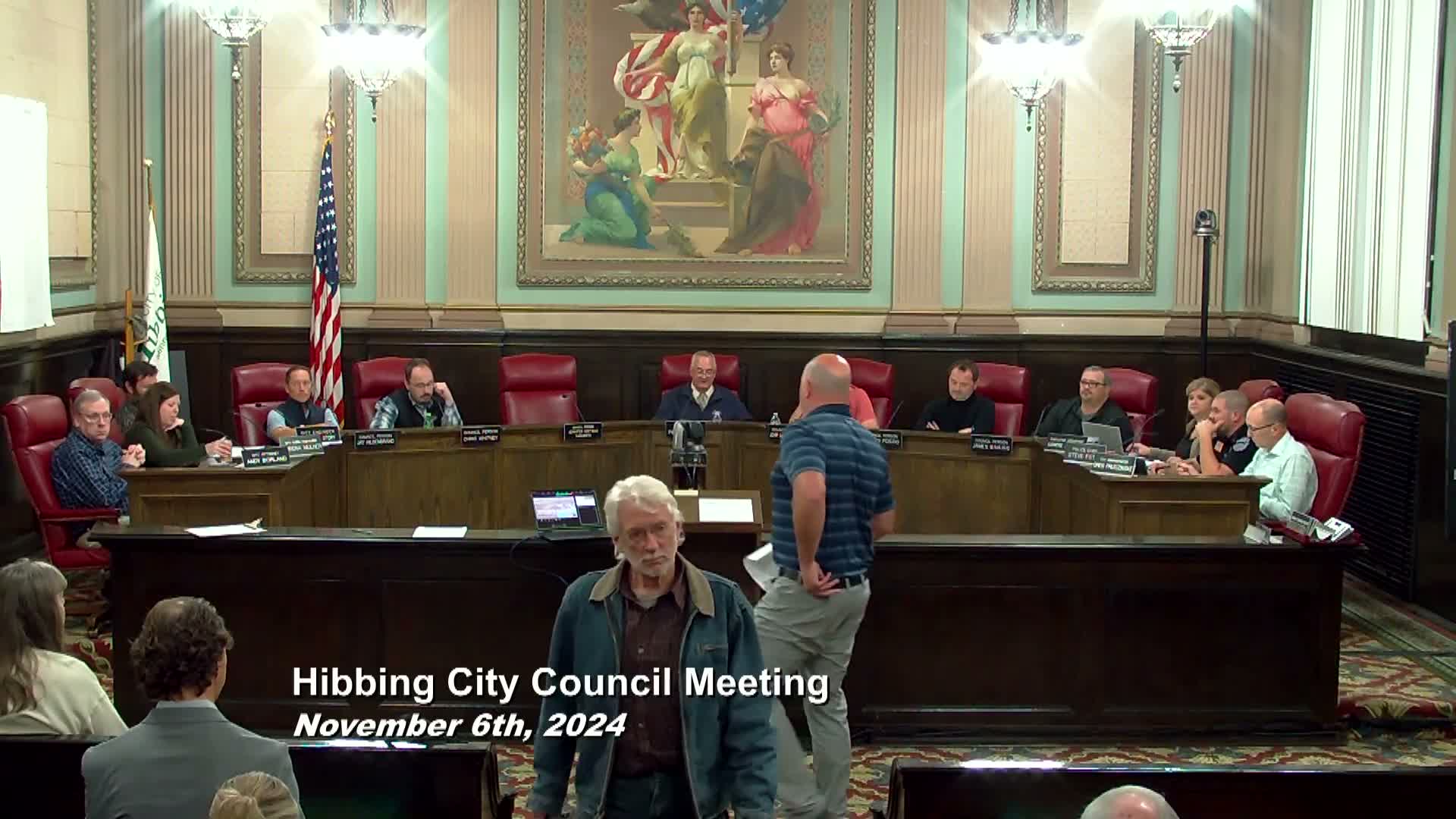
Consultants and city staff presented a feasibility study on Nov. 6 assessing demand, programming and costs for a proposed indoor recreation and community center in Hibbing. Adam Barnett, principal architect with JLG Architects, summarized a seven- to eight-month analysis that included market and demographic work, stakeholder interviews and a community survey that drew nearly 900 responses.
Barnett said the study found a clear lack of large indoor field-house–type spaces in the broader service area and that 62% of survey respondents reported their indoor recreation needs were not being met; 67% said they would use a facility multiple times per week. Ballard King’s analysis and community outreach indicated demand across age groups, and respondents prioritized aquatics, open court/turf space, an indoor playground and an indoor walking track.
The study presented a notional Phase 1 community-center program (excluding a pool and banquet/event center) with a total project cost of about $41,000,000, an amount escalated to expected 2027 pricing. Barnett said that incorporating the pool and banquet center would add roughly $14 million to a full buildout. The consultants estimated operating cost recovery for the Phase 1 program at roughly 79%; inclusion of Phase 2 elements lowered that recovery estimate slightly (to about 77%).
Potential sites evaluated included the Lincoln school site, the Green Haven site and the Vic Power site; consultants said each has advantages for vehicle and pedestrian circulation and that Vic Power could support an expanded recreation campus in the future. The team recommended further site-specific work—geotechnical and infrastructure studies—to refine cost and feasibility.
Barnett and other consultants also reviewed conditions at existing arenas. They advised budgeting for replacement or upgrades to refrigeration and ice systems: the Memorial Arena systems were approaching the end of expected service life and the Fairgrounds Arena equipment was substantially older, with specific building-code and mechanical concerns noted.
City Service Director Mr. Rollick framed the study as part of the council’s strategic initiative to bolster quality-of-life amenities and said the report is intended as a planning tool; the council asked questions about mechanical and heating systems and next steps for project funding and operations. The presentation concluded with the council thanking the consultants and taking no formal action to commit funding at this meeting.
Next steps identified by staff and consultants included deeper site evaluation, further community engagement, and development of funding and operating strategies should the council decide to pursue design or construction.
Barnett said the study found a clear lack of large indoor field-house–type spaces in the broader service area and that 62% of survey respondents reported their indoor recreation needs were not being met; 67% said they would use a facility multiple times per week. Ballard King’s analysis and community outreach indicated demand across age groups, and respondents prioritized aquatics, open court/turf space, an indoor playground and an indoor walking track.
The study presented a notional Phase 1 community-center program (excluding a pool and banquet/event center) with a total project cost of about $41,000,000, an amount escalated to expected 2027 pricing. Barnett said that incorporating the pool and banquet center would add roughly $14 million to a full buildout. The consultants estimated operating cost recovery for the Phase 1 program at roughly 79%; inclusion of Phase 2 elements lowered that recovery estimate slightly (to about 77%).
Potential sites evaluated included the Lincoln school site, the Green Haven site and the Vic Power site; consultants said each has advantages for vehicle and pedestrian circulation and that Vic Power could support an expanded recreation campus in the future. The team recommended further site-specific work—geotechnical and infrastructure studies—to refine cost and feasibility.
Barnett and other consultants also reviewed conditions at existing arenas. They advised budgeting for replacement or upgrades to refrigeration and ice systems: the Memorial Arena systems were approaching the end of expected service life and the Fairgrounds Arena equipment was substantially older, with specific building-code and mechanical concerns noted.
City Service Director Mr. Rollick framed the study as part of the council’s strategic initiative to bolster quality-of-life amenities and said the report is intended as a planning tool; the council asked questions about mechanical and heating systems and next steps for project funding and operations. The presentation concluded with the council thanking the consultants and taking no formal action to commit funding at this meeting.
Next steps identified by staff and consultants included deeper site evaluation, further community engagement, and development of funding and operating strategies should the council decide to pursue design or construction.
Don't Miss a Word: See the Full Meeting!
Go beyond summaries. Unlock every video, transcript, and key insight with a Founder Membership.
✓
Get instant access to full meeting videos
✓
Search and clip any phrase from complete transcripts
✓
Receive AI-powered summaries & custom alerts
✓
Enjoy lifetime, unrestricted access to government data
30-day money-back guarantee
