Mass. parole board briefs special commission on releases, reentry programs and Mattis decision hearings
February 09, 2025 | 2026 Legislature MA, Massachusetts
This article was created by AI summarizing key points discussed. AI makes mistakes, so for full details and context, please refer to the video of the full meeting. Please report any errors so we can fix them. Report an error »
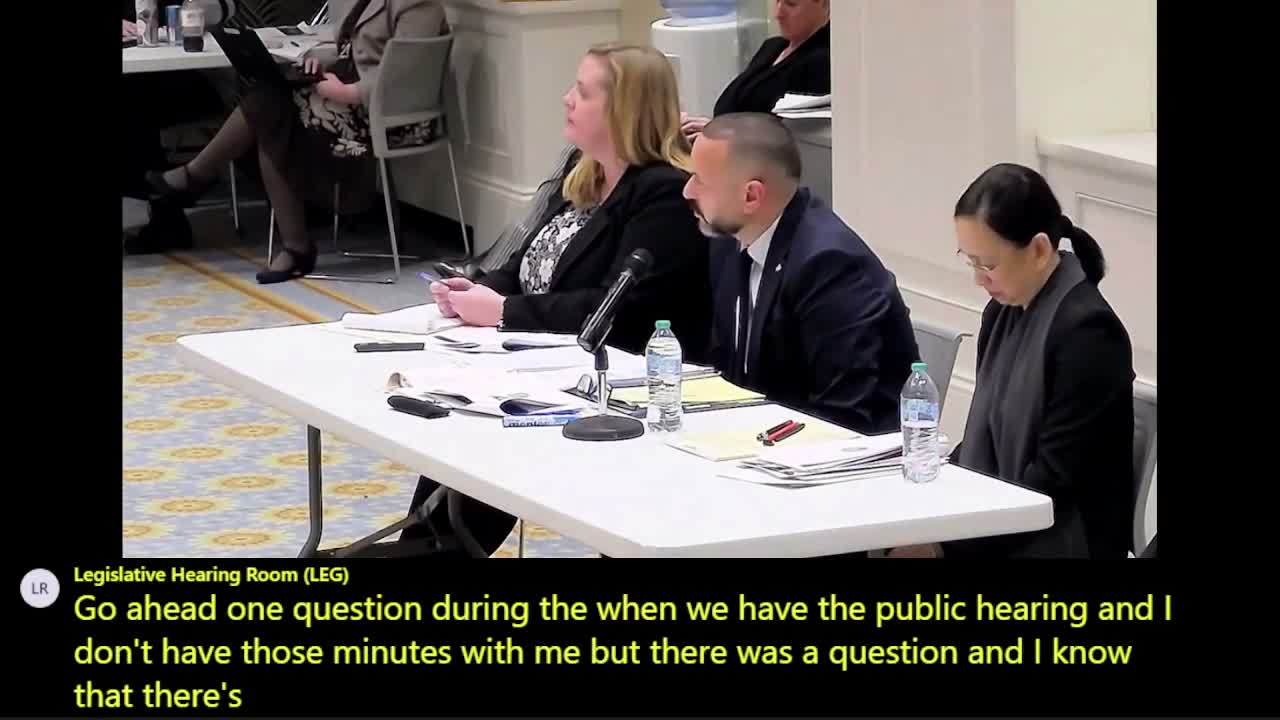
Angelo Gomez Jr., who identified himself as chair and described decades of experience in parole and corrections, told the Special Commission on Criminal Justice Reform on Jan. 14 that the parole board held 2,810 institutional release hearings in 2024 and is increasingly using evidence-based risk assessments and time-limited GPS guidance to tailor supervision.
"Our paroling rates as a whole average about 68% of all the combined hearings," Gomez said, describing how the board grants parole and supervises conditional release in collaboration with the Department of Correction, houses of correction, courts, probation and community partners.
The presentation to the commission covered the board’s mission and operations, transitional services (which handles intake and hearing preparation), the life-sentenced unit, victim-notification practices, and field services. Gomez reported that the board held 141 initial and review hearings for people serving life sentences and that staff sent 18,238 notifications to victims, family members and other interested parties in 2024.
Commissioners pressed for clearer breakdowns of headline figures. One member noted apparent differences between a roughly 2,000-per-year flow of releases to supervision and a year-end stock of about 1,200 active parolees; Gomez and staff explained the difference reflects interstate compact transfers, differing counting windows and people in custody awaiting revocation or further action. Commission staff agreed to produce a refined, reconciled dataset on flow versus stock and length of supervision.
On outcomes and supports, Gomez described partnerships that place roughly 30–36% of parolees into state-funded housing programs (MASH / silver housing) and community residential justice (CRJ) beds, and singled out county sheriff collaborations and the Rocky Hill and host/halfway programs for helping individuals transition back into communities. He said parole staff conduct about 32,000 community contacts a year and that about 70% of the board’s supervision work occurs in the community.
Commissioners asked for service-outcome measures. Sheriff Kochi and others urged statistics that show how many parolees find sustained housing, employment and treatment placements after release. Gomez said the board can produce consolidated outcome figures and that many placements show high short-term transition success; he estimated employment/housing outcomes “well in the eighties” for some programs but agreed to provide precise, documented counts and retention measures.
The hearing also included an update on the Supreme Judicial Court’s Mattis decision. Judith Lyons, identified in the record as general counsel, told commissioners that as of Jan. 2024 the board had identified 210 individuals affected by the ruling, 144 of whom were immediately eligible for parole hearings; the board had completed 100 of those hearings and had about 10 more scheduled. Lyons and Gomez said some eligible people postponed hearings after consulting counsel, and that the board is continuing to schedule hearings as individuals become eligible.
Lyons clarified the board’s advisory role on clemency matters: the board conducts hearings and makes recommendations, but clemency or commutation petitions are transmitted to the governor’s office and governor’s council for final consideration. Gomez told the commission the board had processed 53 pardons, 70 commutations and 41 early-termination applications in the relevant reporting period and that some clemency matters remain pending with the governor’s office.
The commission asked for additional data and cross-agency comparisons, including: a) a reconciled flow/stock table (annual releases vs. active supervision at year-end), b) counts of how many parolees receive and retain housing, employment and treatment at 30/90/180 days, c) the number of hearings completed under the Mattis cohort with outcomes by hearing type, and d) staff counts and regional caseloads. Gomez and staff agreed to provide those materials and more granular breakdowns.
The hearing closed with scheduling details: the commission set a March 9 public hearing focused on lived-experience testimony and announced upcoming site visits. A procedural motion to approve the minutes and a voice vote to adjourn were recorded at the start and end of the session, respectively.
The commission requested follow-up documents and refined statistics to aid its deliberations; commissioners signaled that housing capacity and post-release outcomes will be central to any recommendations they develop.
"Our paroling rates as a whole average about 68% of all the combined hearings," Gomez said, describing how the board grants parole and supervises conditional release in collaboration with the Department of Correction, houses of correction, courts, probation and community partners.
The presentation to the commission covered the board’s mission and operations, transitional services (which handles intake and hearing preparation), the life-sentenced unit, victim-notification practices, and field services. Gomez reported that the board held 141 initial and review hearings for people serving life sentences and that staff sent 18,238 notifications to victims, family members and other interested parties in 2024.
Commissioners pressed for clearer breakdowns of headline figures. One member noted apparent differences between a roughly 2,000-per-year flow of releases to supervision and a year-end stock of about 1,200 active parolees; Gomez and staff explained the difference reflects interstate compact transfers, differing counting windows and people in custody awaiting revocation or further action. Commission staff agreed to produce a refined, reconciled dataset on flow versus stock and length of supervision.
On outcomes and supports, Gomez described partnerships that place roughly 30–36% of parolees into state-funded housing programs (MASH / silver housing) and community residential justice (CRJ) beds, and singled out county sheriff collaborations and the Rocky Hill and host/halfway programs for helping individuals transition back into communities. He said parole staff conduct about 32,000 community contacts a year and that about 70% of the board’s supervision work occurs in the community.
Commissioners asked for service-outcome measures. Sheriff Kochi and others urged statistics that show how many parolees find sustained housing, employment and treatment placements after release. Gomez said the board can produce consolidated outcome figures and that many placements show high short-term transition success; he estimated employment/housing outcomes “well in the eighties” for some programs but agreed to provide precise, documented counts and retention measures.
The hearing also included an update on the Supreme Judicial Court’s Mattis decision. Judith Lyons, identified in the record as general counsel, told commissioners that as of Jan. 2024 the board had identified 210 individuals affected by the ruling, 144 of whom were immediately eligible for parole hearings; the board had completed 100 of those hearings and had about 10 more scheduled. Lyons and Gomez said some eligible people postponed hearings after consulting counsel, and that the board is continuing to schedule hearings as individuals become eligible.
Lyons clarified the board’s advisory role on clemency matters: the board conducts hearings and makes recommendations, but clemency or commutation petitions are transmitted to the governor’s office and governor’s council for final consideration. Gomez told the commission the board had processed 53 pardons, 70 commutations and 41 early-termination applications in the relevant reporting period and that some clemency matters remain pending with the governor’s office.
The commission asked for additional data and cross-agency comparisons, including: a) a reconciled flow/stock table (annual releases vs. active supervision at year-end), b) counts of how many parolees receive and retain housing, employment and treatment at 30/90/180 days, c) the number of hearings completed under the Mattis cohort with outcomes by hearing type, and d) staff counts and regional caseloads. Gomez and staff agreed to provide those materials and more granular breakdowns.
The hearing closed with scheduling details: the commission set a March 9 public hearing focused on lived-experience testimony and announced upcoming site visits. A procedural motion to approve the minutes and a voice vote to adjourn were recorded at the start and end of the session, respectively.
The commission requested follow-up documents and refined statistics to aid its deliberations; commissioners signaled that housing capacity and post-release outcomes will be central to any recommendations they develop.
Don't Miss a Word: See the Full Meeting!
Go beyond summaries. Unlock every video, transcript, and key insight with a Founder Membership.
✓
Get instant access to full meeting videos
✓
Search and clip any phrase from complete transcripts
✓
Receive AI-powered summaries & custom alerts
✓
Enjoy lifetime, unrestricted access to government data
30-day money-back guarantee
