House orders perfection of major VLT regulatory bill after marathon debate and amendments
February 16, 2026 | 2026 Legislature MO, Missouri
This article was created by AI summarizing key points discussed. AI makes mistakes, so for full details and context, please refer to the video of the full meeting. Please report any errors so we can fix them. Report an error »
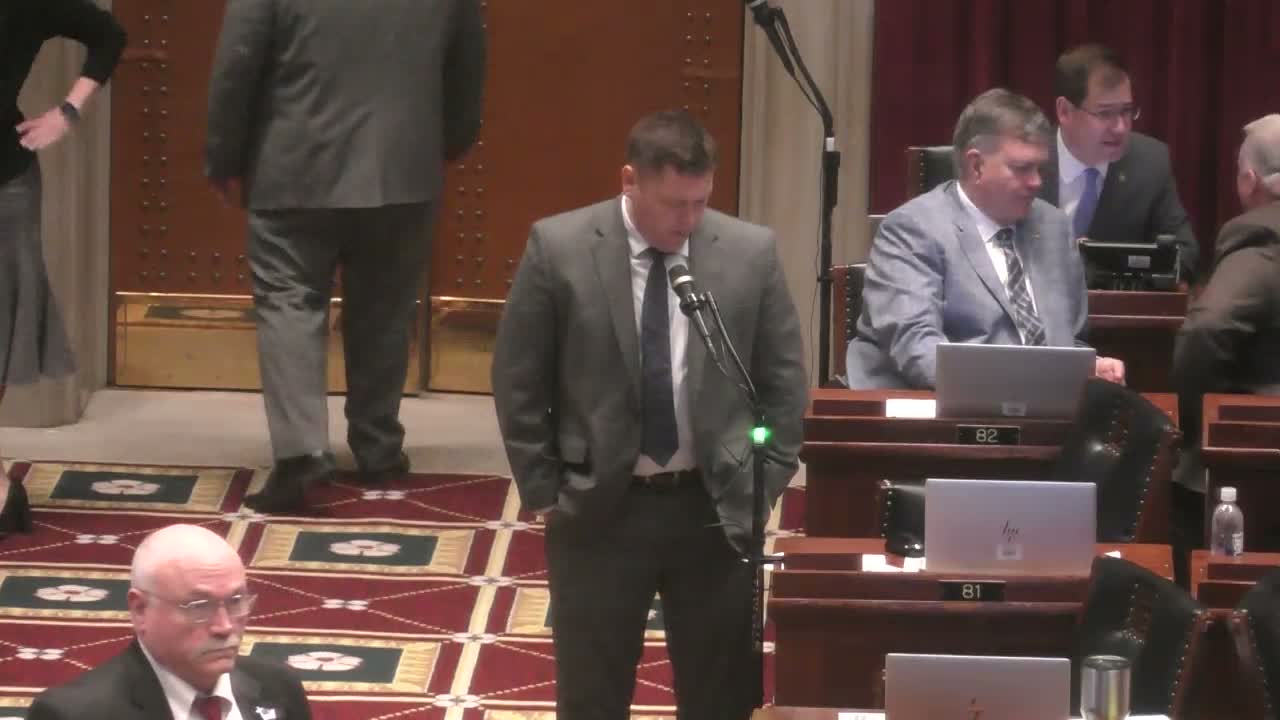
The Missouri House spent the largest portion of its Feb. 12 session debating House Bill 29‑89, a comprehensive bill to regulate and license video‑lottery terminals (VLTs), clarify which unregulated "gray" gaming devices are illegal, and allocate tax and fee revenue to education, veterans, law enforcement, and disability services.
Bill sponsor (gentleman from Pulaski) described the measure as closing a regulatory void: "This is legal, this is illegal. And if illegal activity is happening, that we have an enforcement mechanism to address and crack down the illegal activity and we also give business owner certainty for what they could be licensed for and regulated," he said early in the discussion.
Floor debate lasted hours and produced numerous adopted amendments. Key floor changes included:
- A house amendment adding a $250 per‑terminal annual fee with proceeds dedicated to developmental‑disability services; the sponsor of that amendment argued it would generate "millions of dollars annually" for essential services.
- An amendment to allow dividing the $250 fee between retailer and operator, impose limits on where terminals can be placed, add time‑of‑operation limits and an opt‑in/opt‑out municipal mechanism.
- A change shortening the transition period for existing unregulated "gray" machines from two years to one year and removing an automatic stay tied to litigation.
- Additional amendments addressing warning‑label size, admission fees allocated to historical preservation, self‑exclusion and surveillance retention rules, and an amendment requiring operators with existing machines to submit financial records for state review.
Supporters argued licensing and regulation would protect consumers, generate revenue for schools, local governments, veterans and disability services, and give small businesses a lawful path to participate. Opponents called for making current gray machines illegal, warned of gambling expansion into convenience stores and gas stations, and argued the bill benefits large operators and creates burdensome regulation for small businesses. Several members said legalization risks preying on low‑income residents and could increase addiction and enforcement costs.
After final consideration the House ordered the committee substitute perfected and printed; the clerk recorded a perfection/printing vote of 68 yea and 60 nay. That perfection moves the bill forward (printing and further steps toward final House passage and potential Senate consideration).
Bill sponsor (gentleman from Pulaski) described the measure as closing a regulatory void: "This is legal, this is illegal. And if illegal activity is happening, that we have an enforcement mechanism to address and crack down the illegal activity and we also give business owner certainty for what they could be licensed for and regulated," he said early in the discussion.
Floor debate lasted hours and produced numerous adopted amendments. Key floor changes included:
- A house amendment adding a $250 per‑terminal annual fee with proceeds dedicated to developmental‑disability services; the sponsor of that amendment argued it would generate "millions of dollars annually" for essential services.
- An amendment to allow dividing the $250 fee between retailer and operator, impose limits on where terminals can be placed, add time‑of‑operation limits and an opt‑in/opt‑out municipal mechanism.
- A change shortening the transition period for existing unregulated "gray" machines from two years to one year and removing an automatic stay tied to litigation.
- Additional amendments addressing warning‑label size, admission fees allocated to historical preservation, self‑exclusion and surveillance retention rules, and an amendment requiring operators with existing machines to submit financial records for state review.
Supporters argued licensing and regulation would protect consumers, generate revenue for schools, local governments, veterans and disability services, and give small businesses a lawful path to participate. Opponents called for making current gray machines illegal, warned of gambling expansion into convenience stores and gas stations, and argued the bill benefits large operators and creates burdensome regulation for small businesses. Several members said legalization risks preying on low‑income residents and could increase addiction and enforcement costs.
After final consideration the House ordered the committee substitute perfected and printed; the clerk recorded a perfection/printing vote of 68 yea and 60 nay. That perfection moves the bill forward (printing and further steps toward final House passage and potential Senate consideration).
View the Full Meeting & All Its Details
This article offers just a summary. Unlock complete video, transcripts, and insights as a Founder Member.
✓
Watch full, unedited meeting videos
✓
Search every word spoken in unlimited transcripts
✓
AI summaries & real-time alerts (all government levels)
✓
Permanent access to expanding government content
30-day money-back guarantee
