State experts: upzoning, accessory units and planning grants needed to meet 20‑year housing targets
March 27, 2024 | Governor's Office - Boards & Commissions, Executive, Washington
This article was created by AI summarizing key points discussed. AI makes mistakes, so for full details and context, please refer to the video of the full meeting. Please report any errors so we can fix them. Report an error »
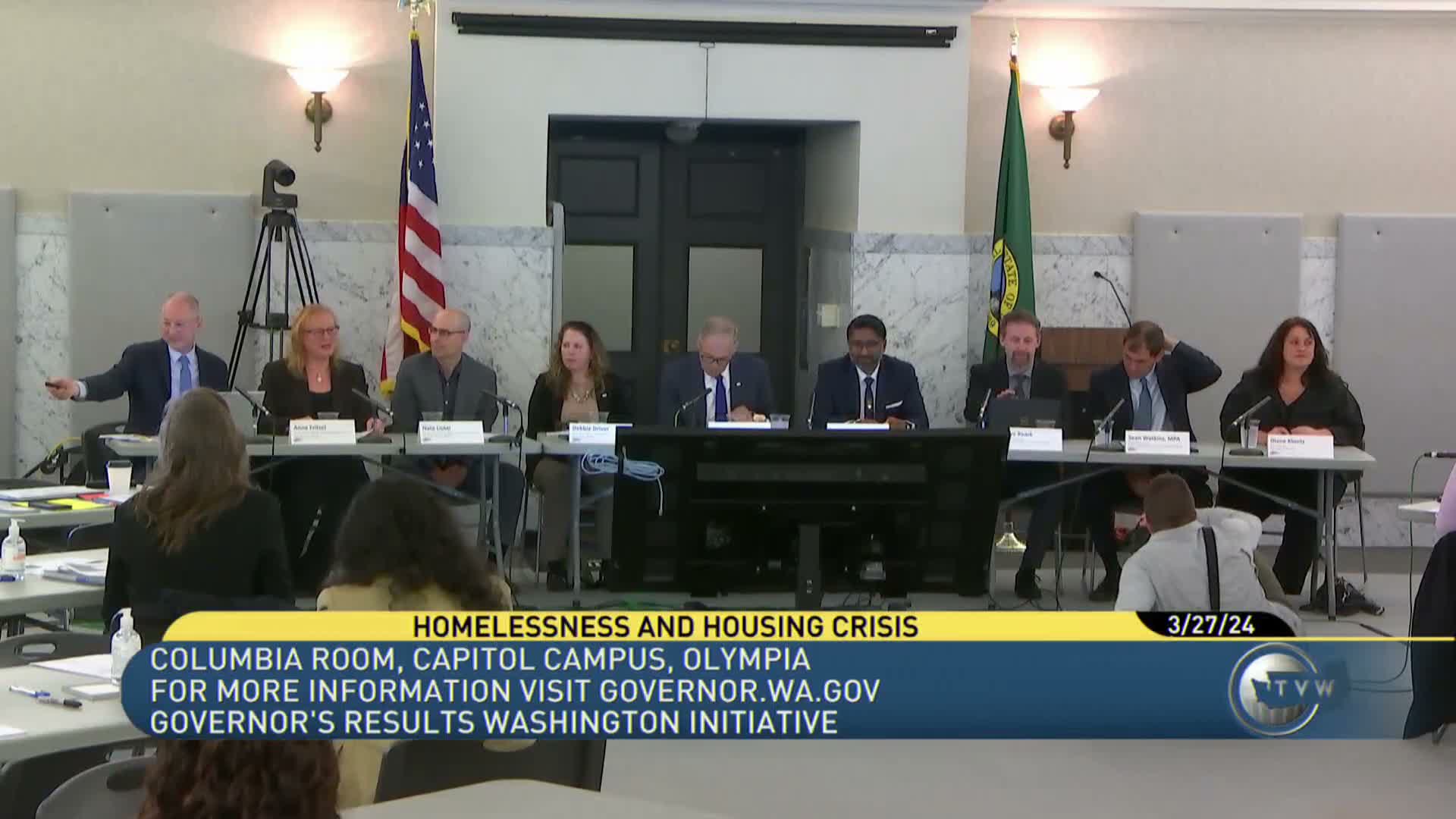
Anne Fritzl, housing section manager in Growth Management Services at the Washington State Department of Commerce, told the panel that a state analysis using Office of Financial Management projections finds Washington needs more than 1,000,000 additional homes over the next 20 years beyond the roughly 3,000,000 currently available.
Fritzl described a graphic used by Commerce that maps housing types by income band: private markets supply many higher‑income single‑family and townhome units, while moderate‑density zoning with incentives could provide ownership opportunities for middle incomes. She said about half the projected need is for lowest‑earning households and will require multifamily zoning, proximity to transit and significant subsidies.
The presentation reviewed recent changes to the Growth Management Act housing goal, requirements for comprehensive plans in fully planning counties, and state expectations that jurisdictions identify barriers—such as large‑lot exclusionary zoning—and take steps to undo discriminatory zoning practices.
Fritzl also said Commerce is preparing a model ordinance to help local governments remove barriers to emergency and permanent supportive housing and that planning grants support regional coordination to accommodate the lowest‑income segments.
Panelists and the governor asked about expedited permitting and the role of local leadership; Fritzl said state law authorizes incentives, waivers and density bonuses to prioritize affordable projects, and Commerce has resources to help modernize permitting systems.
Fritzl described a graphic used by Commerce that maps housing types by income band: private markets supply many higher‑income single‑family and townhome units, while moderate‑density zoning with incentives could provide ownership opportunities for middle incomes. She said about half the projected need is for lowest‑earning households and will require multifamily zoning, proximity to transit and significant subsidies.
The presentation reviewed recent changes to the Growth Management Act housing goal, requirements for comprehensive plans in fully planning counties, and state expectations that jurisdictions identify barriers—such as large‑lot exclusionary zoning—and take steps to undo discriminatory zoning practices.
Fritzl also said Commerce is preparing a model ordinance to help local governments remove barriers to emergency and permanent supportive housing and that planning grants support regional coordination to accommodate the lowest‑income segments.
Panelists and the governor asked about expedited permitting and the role of local leadership; Fritzl said state law authorizes incentives, waivers and density bonuses to prioritize affordable projects, and Commerce has resources to help modernize permitting systems.
Don't Miss a Word: See the Full Meeting!
Go beyond summaries. Unlock every video, transcript, and key insight with a Founder Membership.
✓
Get instant access to full meeting videos
✓
Search and clip any phrase from complete transcripts
✓
Receive AI-powered summaries & custom alerts
✓
Enjoy lifetime, unrestricted access to government data
30-day money-back guarantee
