Committee backs bill limiting prospective Fourth Amendment waivers in plea deals
February 21, 2026 | 2026 Legislature VA, Virginia
This article was created by AI summarizing key points discussed. AI makes mistakes, so for full details and context, please refer to the video of the full meeting. Please report any errors so we can fix them. Report an error »
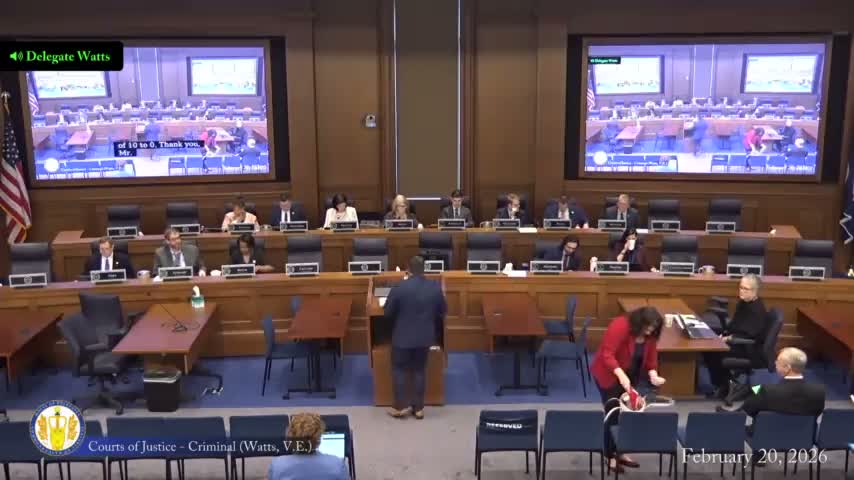
Senate Bill 23, introduced by Senator Salim, would prohibit prosecutors from offering—and judges from entering—plea or sentencing terms that prospectively waive defendants' Fourth Amendment rights or the right to seek expungement of charges. The bill includes exemptions for offenses against children and specialty dockets; where probation is not imposed, the bill limits waivers to five years under one reading of the language discussed.
Ashley Shapiro of Justice For Virginia, a public defender, told the committee she used a FOIA request to review Richmond practice and found that of defendants with active Fourth Amendment waivers, about 96% were people of color and 95% were Black men. Shapiro said prospectively waiving Fourth Amendment rights removes the exclusionary‑rule deterrent and can leave people subject to searches years after sentences end. Dr. Candace Lucas, who advocates for children of color with disabilities, said the bill would protect juveniles and people with disabilities from lifelong collateral consequences of plea deals.
Nathan Green, representing the Virginia Association of Commonwealth's Attorneys, opposed the bill on prosecutorial‑tool grounds, saying banning waivers could remove an important negotiating device that in some cases helps secure lesser outcomes for defendants. Committee members questioned negotiation practices, how waivers vary by jurisdiction and whether the specialty docket exemption and any five‑year cap should be clarified. The subcommittee voted to report SB23 by 7–3.
Ashley Shapiro of Justice For Virginia, a public defender, told the committee she used a FOIA request to review Richmond practice and found that of defendants with active Fourth Amendment waivers, about 96% were people of color and 95% were Black men. Shapiro said prospectively waiving Fourth Amendment rights removes the exclusionary‑rule deterrent and can leave people subject to searches years after sentences end. Dr. Candace Lucas, who advocates for children of color with disabilities, said the bill would protect juveniles and people with disabilities from lifelong collateral consequences of plea deals.
Nathan Green, representing the Virginia Association of Commonwealth's Attorneys, opposed the bill on prosecutorial‑tool grounds, saying banning waivers could remove an important negotiating device that in some cases helps secure lesser outcomes for defendants. Committee members questioned negotiation practices, how waivers vary by jurisdiction and whether the specialty docket exemption and any five‑year cap should be clarified. The subcommittee voted to report SB23 by 7–3.
View the Full Meeting & All Its Details
This article offers just a summary. Unlock complete video, transcripts, and insights as a Founder Member.
✓
Watch full, unedited meeting videos
✓
Search every word spoken in unlimited transcripts
✓
AI summaries & real-time alerts (all government levels)
✓
Permanent access to expanding government content
30-day money-back guarantee
