Vermont committee weighs H.385 changes to help victims of coerced debt, debates whether to pause collections
February 21, 2026 | Commerce & Economic Development, HOUSE OF REPRESENTATIVES, Committees, Legislative , Vermont
This article was created by AI summarizing key points discussed. AI makes mistakes, so for full details and context, please refer to the video of the full meeting. Please report any errors so we can fix them. Report an error »
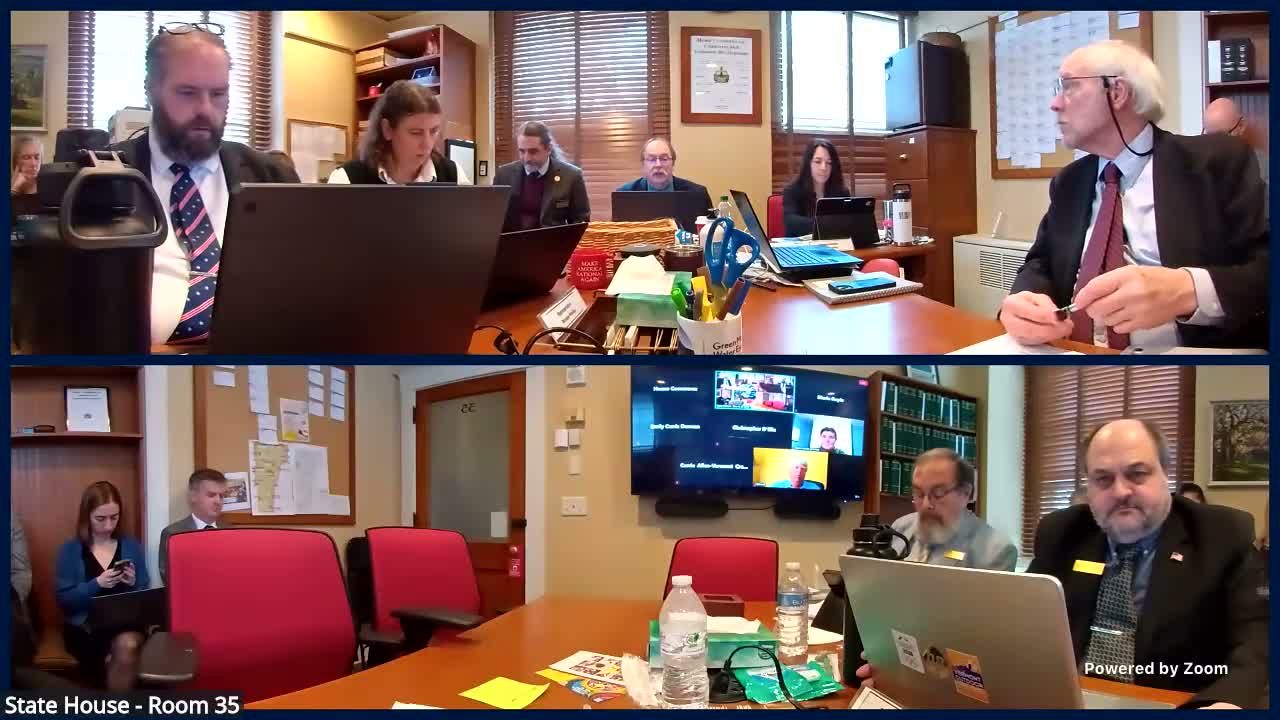
The Vermont House Committee on Commerce & Economic Development on Feb. 20 reviewed draft 1.12 of H.385, an act “relating to remedies and protections for victims of coerced debt,” and opened a contentious discussion over how much power creditors should keep while victims seek relief.
Maria Royal of Legislative Counsel walked lawmakers through the changes in draft 1.12, noting two substantive insertions from the version Judiciary recently reviewed: language on suspicious-transaction bank holds and one additional drafting change. “This draft has the bank holds language that you looked at,” Royal said as she summarized edits to definitions and evidentiary and certification requirements.
Advocates pushed the committee to preserve strong pro-victim protections. Grace Pazden, director of the consumer and homeowner rights project at Vermont Legal Aid, urged clarifying that only a final adjudication on the merits should prevent a claim of coerced debt. She also urged allowing notarized statements as equivalent to the proposed sworn certification and recommended placing required attestation language on the model form creditors will send debtors.
Policy director Charlie Glesserman of the Vermont Network Against Domestic and ****** Violence said the committee faces a pivotal policy choice when a creditor disputes a coerced-debt claim. He urged lawmakers to adopt option 3 from the bill drafts: “cease all collection activities until a court finds that the debt is not coerced,” arguing that most victims lack realistic access to the court system and that permitting collection to continue would undermine the statute’s intent.
Financial-industry representatives and the Department of Financial Regulation cautioned about operational and legal trade-offs. Joe Valente, director of policy at the Department of Financial Regulation, said the agency was "not taking a position on this bill" but supported collecting aggregated data on suspicious holds and warned that federal preemption limits what information the state can compel from national banks.
Royal also outlined creditor-facing mechanics: the bill would preserve creditor rights to repossess collateral under the Uniform Commercial Code while prohibiting creditors from collecting any deficiency from a victim of forced debt. She noted that federal rules governing furnishers’ reporting to credit bureaus (a 30-day plus up-to-15-day timeline for investigations) constrain how long the state can require additional reconsideration timelines.
Committee members pressed Legal Counsel and DFR to clarify legal questions before next week's session, including how the statute of limitations would run, whether a creditor must obtain a judicial finding of coerced debt before suing a perpetrator, and whether technical edits should use the word “authorized” instead of “directed” for court-ordered disclosures. Royal said Judiciary is expected to provide revised language on sealing and remote hearings so protective measures are available upon a debtor's request.
The committee did not vote. Lawmakers asked stakeholders to submit written comments, with Royal and DFR to follow up on contract and creditor-identity questions. The panel will reconvene next week to continue finalizing draft language.
Maria Royal of Legislative Counsel walked lawmakers through the changes in draft 1.12, noting two substantive insertions from the version Judiciary recently reviewed: language on suspicious-transaction bank holds and one additional drafting change. “This draft has the bank holds language that you looked at,” Royal said as she summarized edits to definitions and evidentiary and certification requirements.
Advocates pushed the committee to preserve strong pro-victim protections. Grace Pazden, director of the consumer and homeowner rights project at Vermont Legal Aid, urged clarifying that only a final adjudication on the merits should prevent a claim of coerced debt. She also urged allowing notarized statements as equivalent to the proposed sworn certification and recommended placing required attestation language on the model form creditors will send debtors.
Policy director Charlie Glesserman of the Vermont Network Against Domestic and ****** Violence said the committee faces a pivotal policy choice when a creditor disputes a coerced-debt claim. He urged lawmakers to adopt option 3 from the bill drafts: “cease all collection activities until a court finds that the debt is not coerced,” arguing that most victims lack realistic access to the court system and that permitting collection to continue would undermine the statute’s intent.
Financial-industry representatives and the Department of Financial Regulation cautioned about operational and legal trade-offs. Joe Valente, director of policy at the Department of Financial Regulation, said the agency was "not taking a position on this bill" but supported collecting aggregated data on suspicious holds and warned that federal preemption limits what information the state can compel from national banks.
Royal also outlined creditor-facing mechanics: the bill would preserve creditor rights to repossess collateral under the Uniform Commercial Code while prohibiting creditors from collecting any deficiency from a victim of forced debt. She noted that federal rules governing furnishers’ reporting to credit bureaus (a 30-day plus up-to-15-day timeline for investigations) constrain how long the state can require additional reconsideration timelines.
Committee members pressed Legal Counsel and DFR to clarify legal questions before next week's session, including how the statute of limitations would run, whether a creditor must obtain a judicial finding of coerced debt before suing a perpetrator, and whether technical edits should use the word “authorized” instead of “directed” for court-ordered disclosures. Royal said Judiciary is expected to provide revised language on sealing and remote hearings so protective measures are available upon a debtor's request.
The committee did not vote. Lawmakers asked stakeholders to submit written comments, with Royal and DFR to follow up on contract and creditor-identity questions. The panel will reconvene next week to continue finalizing draft language.
Don't Miss a Word: See the Full Meeting!
Go beyond summaries. Unlock every video, transcript, and key insight with a Founder Membership.
✓
Get instant access to full meeting videos
✓
Search and clip any phrase from complete transcripts
✓
Receive AI-powered summaries & custom alerts
✓
Enjoy lifetime, unrestricted access to government data
30-day money-back guarantee
