Auto dealers warn H.385 protections for coerced debt could shift losses to small Vermont dealers
February 21, 2026 | Commerce & Economic Development, HOUSE OF REPRESENTATIVES, Committees, Legislative , Vermont
This article was created by AI summarizing key points discussed. AI makes mistakes, so for full details and context, please refer to the video of the full meeting. Please report any errors so we can fix them. Report an error »
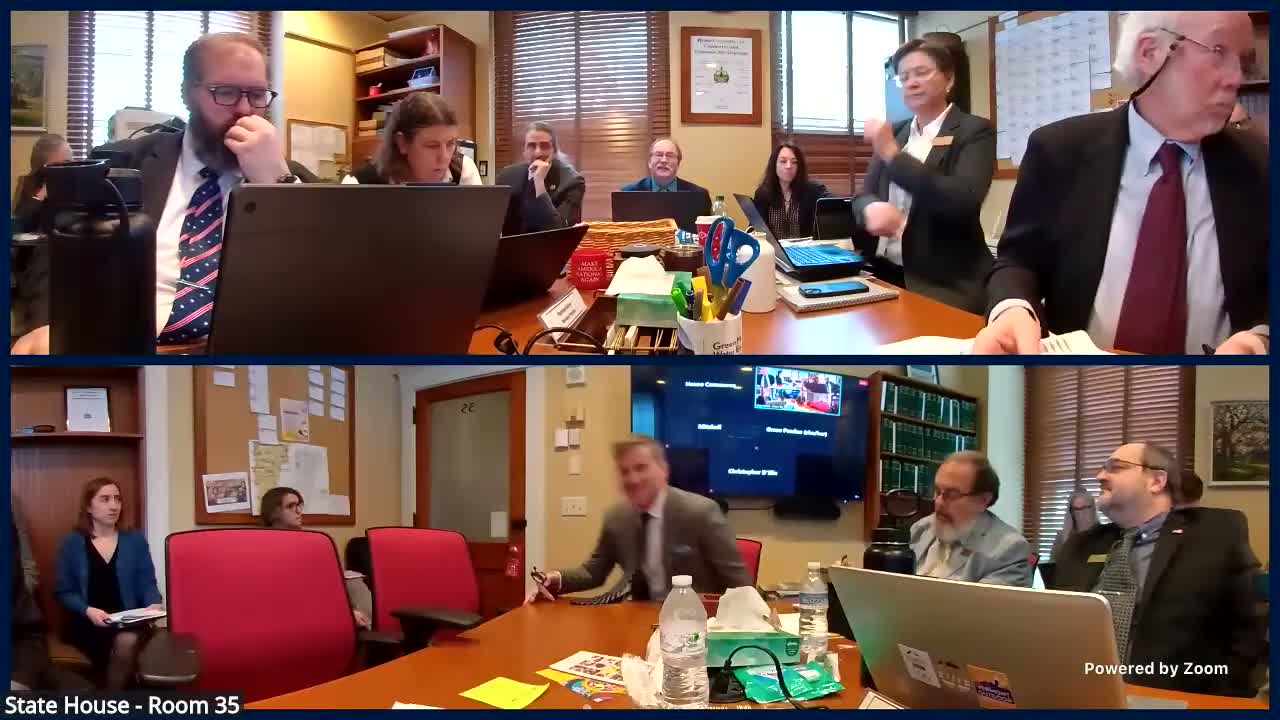
Automobile dealers and industry representatives told the House Commerce & Economic Development Committee on Feb. 20 that draft H.385’s protections for victims of coerced debt could have unintended consequences for small Vermont dealers tied to indirect auto-lending contracts.
Matt Coda of Meadow Hill, speaking on behalf of the Vermont Vehicle and Automotive Distributors Association, said dealers in Vermont sell about 100,000 vehicles a year and that roughly 50% of those purchases are financed. Coda urged the committee to be mindful of unintended consequences as it crafts protections for victims.
Mitchell Jay (dealership representative) explained indirect lending: dealers originate retail installment contracts and routinely assign them to lenders; most dealer agreements include repurchase or chargeback obligations if a loan becomes uncollectible. Jay cited 2025 auto-retail sales in Vermont of roughly $2,400,000,000 and average loan sizes of about $40,000 for new cars and $25,000 for used cars. “If the lender calls up and forces us to repurchase the loan, 1 loan for some dealers could be devastating,” Jay said, noting that a single large chargeback could wipe out profits for a small dealer and potentially push a small-business owner into insolvency.
Dealers asked the committee to clarify whether protections should be limited to unsecured debt (as some other states have done) or to adopt guardrails to prevent unintended exposure for small local businesses. Committee members asked how the dealer finance managers are trained to detect coercion or vulnerability; industry witnesses said training varies and identifying coercion in a face-to-face sale can be difficult.
Legislative Counsel and the Department of Financial Regulation agreed to research specific contract-law questions, including who constitutes the 'creditor' in an indirect-lending chain and how non-Vermont lenders and national banks affect the state’s ability to limit transfers or repurchases. The committee did not make any changes at the hearing and asked for written follow-up.
Matt Coda of Meadow Hill, speaking on behalf of the Vermont Vehicle and Automotive Distributors Association, said dealers in Vermont sell about 100,000 vehicles a year and that roughly 50% of those purchases are financed. Coda urged the committee to be mindful of unintended consequences as it crafts protections for victims.
Mitchell Jay (dealership representative) explained indirect lending: dealers originate retail installment contracts and routinely assign them to lenders; most dealer agreements include repurchase or chargeback obligations if a loan becomes uncollectible. Jay cited 2025 auto-retail sales in Vermont of roughly $2,400,000,000 and average loan sizes of about $40,000 for new cars and $25,000 for used cars. “If the lender calls up and forces us to repurchase the loan, 1 loan for some dealers could be devastating,” Jay said, noting that a single large chargeback could wipe out profits for a small dealer and potentially push a small-business owner into insolvency.
Dealers asked the committee to clarify whether protections should be limited to unsecured debt (as some other states have done) or to adopt guardrails to prevent unintended exposure for small local businesses. Committee members asked how the dealer finance managers are trained to detect coercion or vulnerability; industry witnesses said training varies and identifying coercion in a face-to-face sale can be difficult.
Legislative Counsel and the Department of Financial Regulation agreed to research specific contract-law questions, including who constitutes the 'creditor' in an indirect-lending chain and how non-Vermont lenders and national banks affect the state’s ability to limit transfers or repurchases. The committee did not make any changes at the hearing and asked for written follow-up.
Don't Miss a Word: See the Full Meeting!
Go beyond summaries. Unlock every video, transcript, and key insight with a Founder Membership.
✓
Get instant access to full meeting videos
✓
Search and clip any phrase from complete transcripts
✓
Receive AI-powered summaries & custom alerts
✓
Enjoy lifetime, unrestricted access to government data
30-day money-back guarantee
