Senate Judiciary Committee advances broad probate overhaul, including directed trusts and domestic asset protection provisions
February 20, 2026 | 2026 Legislature KY, Kentucky
This article was created by AI summarizing key points discussed. AI makes mistakes, so for full details and context, please refer to the video of the full meeting. Please report any errors so we can fix them. Report an error »
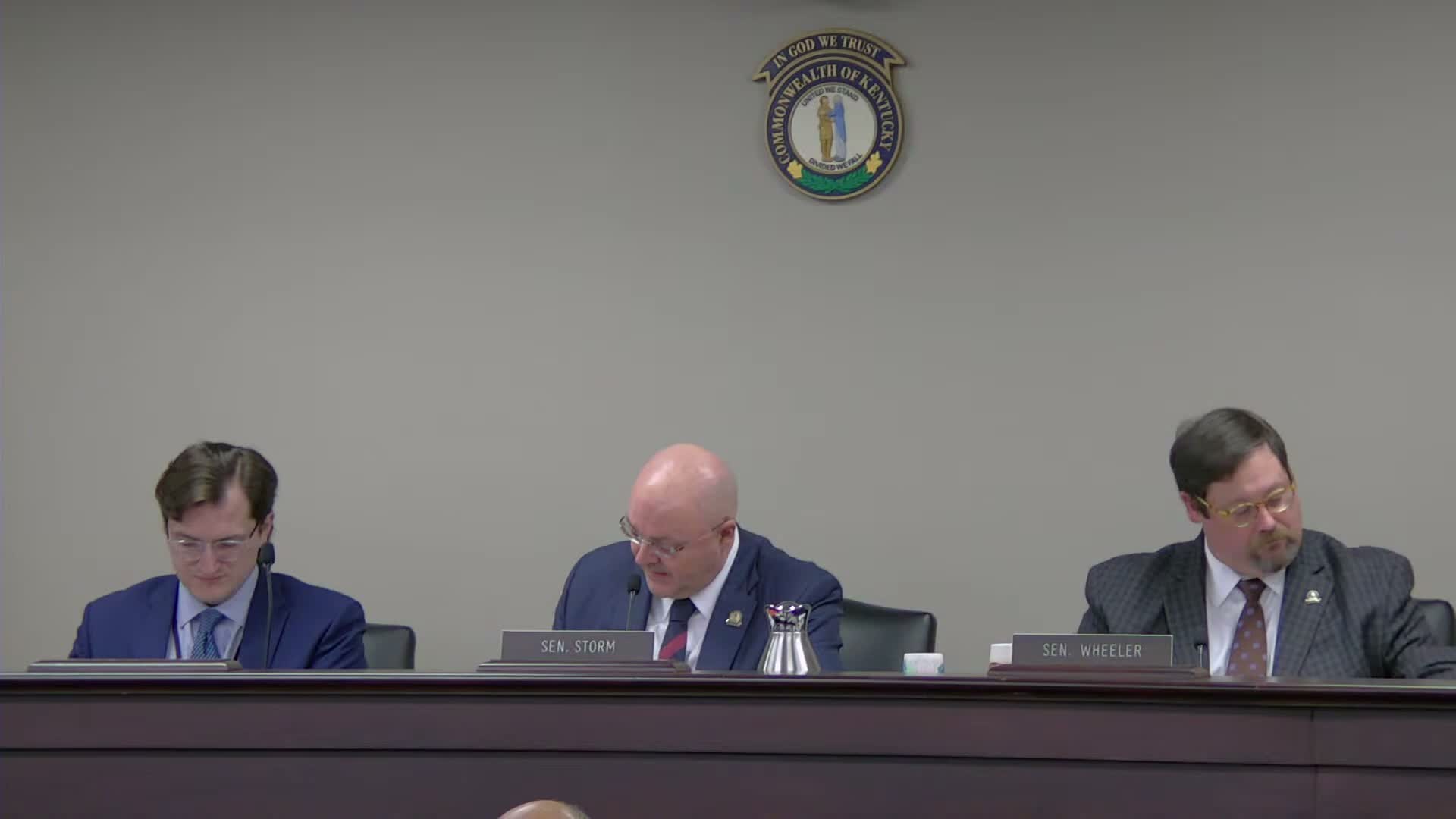
The Senate Judiciary Committee advanced Senate Bill 50, an omnibus package modernizing probate and trust law, after discussion of electronic filing, inheritance-tax adjustments and a domestic asset protection trust provision.
The bill’s sponsor, President Stivers, said the measure updates statutes to reflect electronic notarization and filings and to address intestacy issues that arise as people live longer and hold assets across states. "Every so often, you just have to go through and do some updating," Stivers said in committee testimony, noting work tied to the Uniform Law Commission.
Attorney counsel summarized the bill’s three primary components: modernization of probate and intestacy rules, adoption of directed-trust provisions to allow settlors to appoint advisers to direct trustees, and a DAPT-like section allowing a settlor to be a beneficiary only when there are no pending or threatened creditor claims. Counsel told the committee the DAPT portion would "not allow transfers when there are pending or threatened court actions against the transferor," and emphasized limits intended to prevent intentional creditor avoidance.
Tim Shank of the Kentucky Bankers Association testified in opposition to the bill’s nonuniform DAPT section, raising industry concerns about recorded property transfers and the window for creditors to bring claims. "We just wanted to avoid those unintended consequences," Shank said, pointing to language that could require mortgage holders to bring an action within a limited period or risk extinguishing a claim. He also criticized a "clear and convincing" evidentiary standard in the provision and urged technical fixes to protect mortgage interests.
Committee members questioned timing and foreclosure issues; one senator noted federal restrictions can bar foreclosure for a period after default, creating scenarios where a mortgage holder might be unable to foreclose yet still face extinguishment of its lien if transfers are not detected. Counsel responded that those outcomes were not the committee’s intent and offered to work with bankers to draft clarifying language.
Senator Wheeler moved the bill from committee and Senator Thomas seconded. The secretary called the roll; the committee recorded nine yes votes, zero no votes and zero passes. The committee reported SB50 favorably and recommended it "same should pass" to the full Senate.
What’s next: The sponsors and counsel indicated the committee may refer parts of the bill with fiscal impact to appropriations/revenue for review and pledged follow-up technical edits to address bankers’ concerns before floor consideration.
The bill’s sponsor, President Stivers, said the measure updates statutes to reflect electronic notarization and filings and to address intestacy issues that arise as people live longer and hold assets across states. "Every so often, you just have to go through and do some updating," Stivers said in committee testimony, noting work tied to the Uniform Law Commission.
Attorney counsel summarized the bill’s three primary components: modernization of probate and intestacy rules, adoption of directed-trust provisions to allow settlors to appoint advisers to direct trustees, and a DAPT-like section allowing a settlor to be a beneficiary only when there are no pending or threatened creditor claims. Counsel told the committee the DAPT portion would "not allow transfers when there are pending or threatened court actions against the transferor," and emphasized limits intended to prevent intentional creditor avoidance.
Tim Shank of the Kentucky Bankers Association testified in opposition to the bill’s nonuniform DAPT section, raising industry concerns about recorded property transfers and the window for creditors to bring claims. "We just wanted to avoid those unintended consequences," Shank said, pointing to language that could require mortgage holders to bring an action within a limited period or risk extinguishing a claim. He also criticized a "clear and convincing" evidentiary standard in the provision and urged technical fixes to protect mortgage interests.
Committee members questioned timing and foreclosure issues; one senator noted federal restrictions can bar foreclosure for a period after default, creating scenarios where a mortgage holder might be unable to foreclose yet still face extinguishment of its lien if transfers are not detected. Counsel responded that those outcomes were not the committee’s intent and offered to work with bankers to draft clarifying language.
Senator Wheeler moved the bill from committee and Senator Thomas seconded. The secretary called the roll; the committee recorded nine yes votes, zero no votes and zero passes. The committee reported SB50 favorably and recommended it "same should pass" to the full Senate.
What’s next: The sponsors and counsel indicated the committee may refer parts of the bill with fiscal impact to appropriations/revenue for review and pledged follow-up technical edits to address bankers’ concerns before floor consideration.
Don't Miss a Word: See the Full Meeting!
Go beyond summaries. Unlock every video, transcript, and key insight with a Founder Membership.
✓
Get instant access to full meeting videos
✓
Search and clip any phrase from complete transcripts
✓
Receive AI-powered summaries & custom alerts
✓
Enjoy lifetime, unrestricted access to government data
30-day money-back guarantee
