Nantucket Board of Health approves variance allowing up to 19 bedrooms for proposed 55+ cottage community, with conditions
February 20, 2026 | Nantucket County, Massachusetts
This article was created by AI summarizing key points discussed. AI makes mistakes, so for full details and context, please refer to the video of the full meeting. Please report any errors so we can fix them. Report an error »
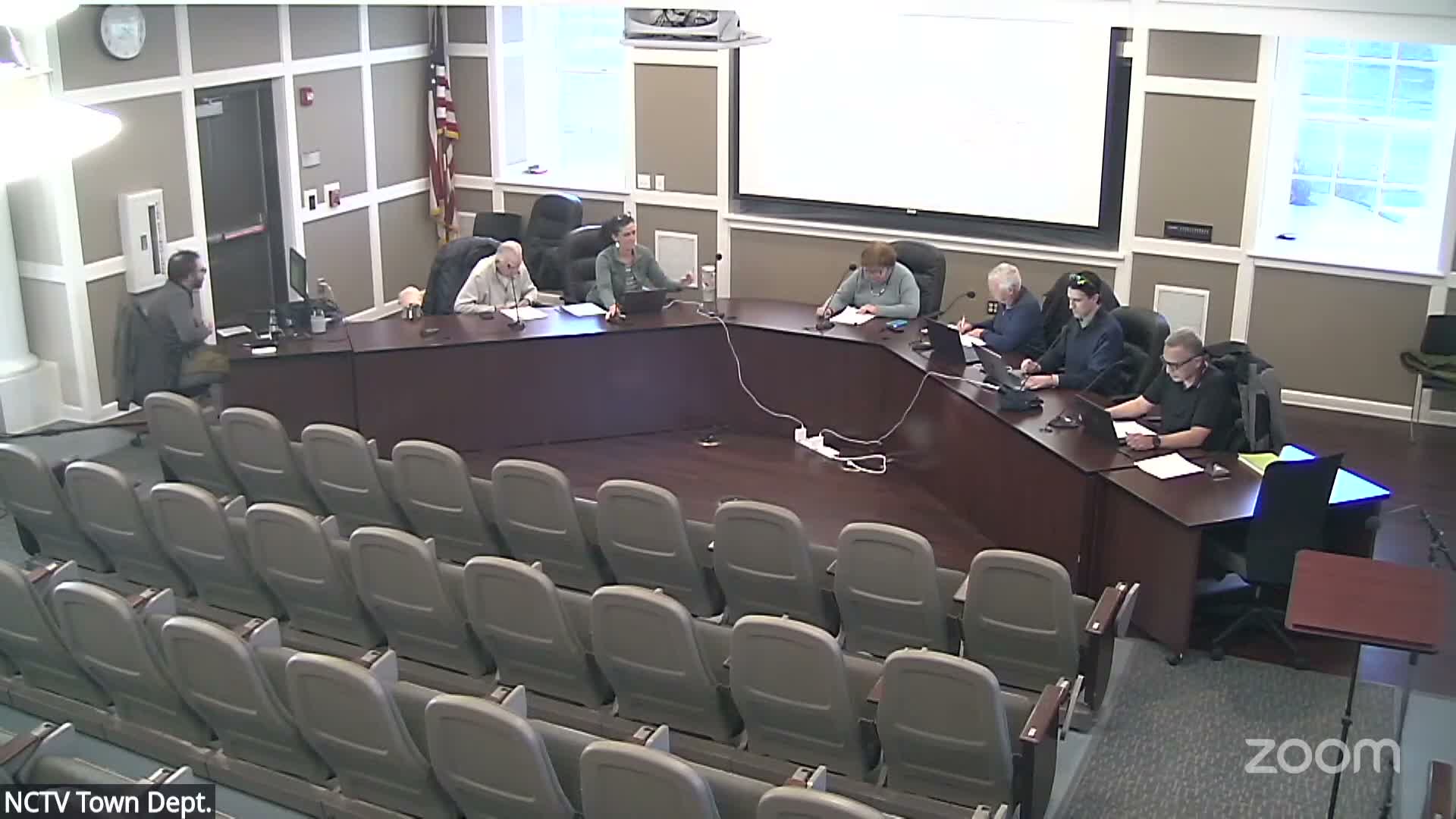
The Nantucket Board of Health voted on Feb. 19 to approve a variance that allows a proposed 55‑and‑older cottage community to proceed with a bedroom cap of 19 across two lots, subject to multiple conditions intended to protect the island’s water resources.
The board’s motion — made by a member of the board and seconded — set the conditions to include a maximum of 12 dwelling units, a restriction that the development remain for elder housing (55+), walkthrough inspections by board staff to verify system installation and the use of the best available innovative/advanced (IA) septic systems at the time of installation. The motion passed in a recorded vote the board described during the meeting as “3 to 1,” with at least one abstention noted in the record.
The applicant’s representative described the project as a 10‑cottage community (nine two‑bedroom cottages and one one‑bedroom cottage) and said the variance request would allow an IA system solution that, from an engineering standpoint, produces higher‑quality discharge than a conventional system. As the applicant put it, “the quality of the discharge using the IA system with more people is exponentially better than not using one,” a justification offered to support granting bedroom credits tied to IA technology.
Opponents on the board raised concerns about the broader policy effects of granting bedroom credits — noting that increasing permitted bedrooms can increase flow and nitrogen loading — and pressed the applicant for clarity about how the project would be restricted if the planning board later required design changes. Board members and staff discussed options including a site‑level bedroom cap and deed restrictions, and the approved conditions include limits to reduce the risk of future reconfiguration that would alter the project’s character.
Before the vote, the chair reminded members that the board was acting on the plan presented at the Feb. 19 meeting and that any substantive change in use would return to the board for review. The applicant acknowledged the conditions and thanked the board after the vote.
Next steps: with the Board of Health variance approved, the project will continue to the planning board for its land‑use review; the permit and conditions recorded by the Board of Health will remain enforceable and staff will perform walkthroughs to confirm septic installation and compliance with the imposed restrictions.
The board’s motion — made by a member of the board and seconded — set the conditions to include a maximum of 12 dwelling units, a restriction that the development remain for elder housing (55+), walkthrough inspections by board staff to verify system installation and the use of the best available innovative/advanced (IA) septic systems at the time of installation. The motion passed in a recorded vote the board described during the meeting as “3 to 1,” with at least one abstention noted in the record.
The applicant’s representative described the project as a 10‑cottage community (nine two‑bedroom cottages and one one‑bedroom cottage) and said the variance request would allow an IA system solution that, from an engineering standpoint, produces higher‑quality discharge than a conventional system. As the applicant put it, “the quality of the discharge using the IA system with more people is exponentially better than not using one,” a justification offered to support granting bedroom credits tied to IA technology.
Opponents on the board raised concerns about the broader policy effects of granting bedroom credits — noting that increasing permitted bedrooms can increase flow and nitrogen loading — and pressed the applicant for clarity about how the project would be restricted if the planning board later required design changes. Board members and staff discussed options including a site‑level bedroom cap and deed restrictions, and the approved conditions include limits to reduce the risk of future reconfiguration that would alter the project’s character.
Before the vote, the chair reminded members that the board was acting on the plan presented at the Feb. 19 meeting and that any substantive change in use would return to the board for review. The applicant acknowledged the conditions and thanked the board after the vote.
Next steps: with the Board of Health variance approved, the project will continue to the planning board for its land‑use review; the permit and conditions recorded by the Board of Health will remain enforceable and staff will perform walkthroughs to confirm septic installation and compliance with the imposed restrictions.
Don't Miss a Word: See the Full Meeting!
Go beyond summaries. Unlock every video, transcript, and key insight with a Founder Membership.
✓
Get instant access to full meeting videos
✓
Search and clip any phrase from complete transcripts
✓
Receive AI-powered summaries & custom alerts
✓
Enjoy lifetime, unrestricted access to government data
30-day money-back guarantee
