Music-industry leaders urge creation of state music office, revival of tax incentives and workforce supports
February 20, 2026 | Economic Development & Tourism, HOUSE OF REPRESENTATIVES, Committees, Legislative, Georgia
This article was created by AI summarizing key points discussed. AI makes mistakes, so for full details and context, please refer to the video of the full meeting. Please report any errors so we can fix them. Report an error »
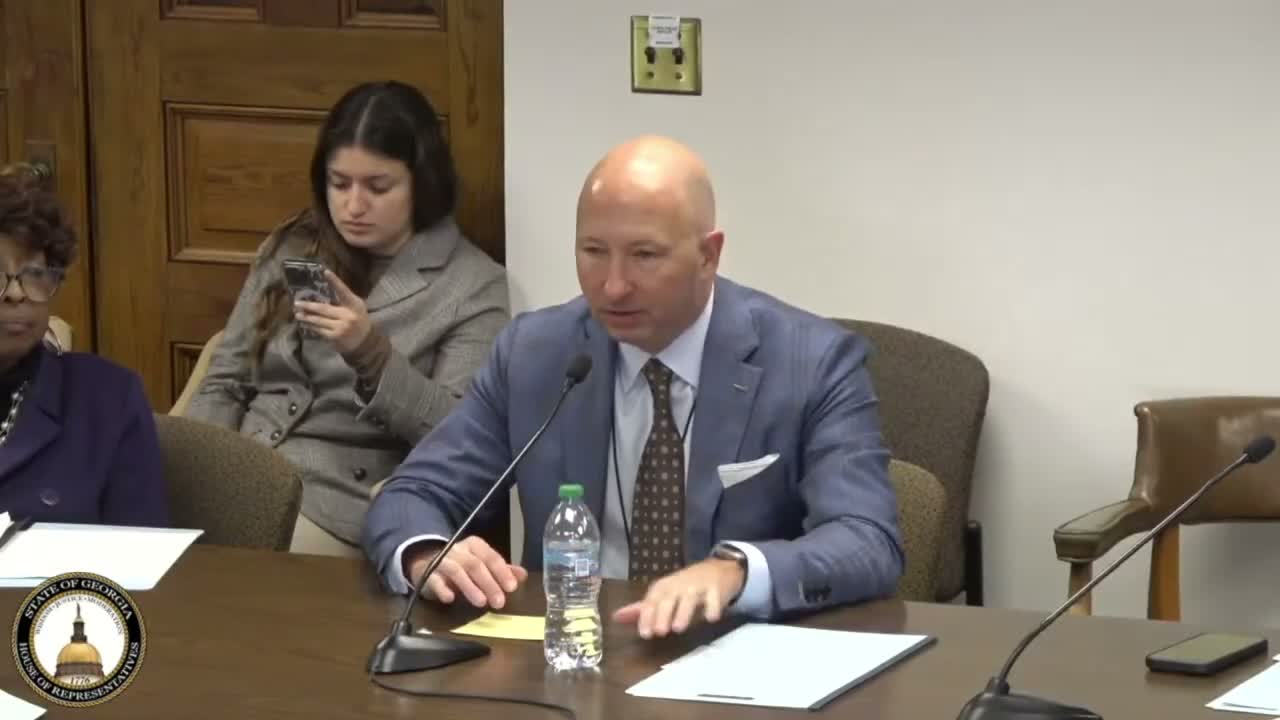
Industry representatives told the Economic Development & Tourism Committee that a stronger, coordinated state policy could help retain music production, rehearsal and manufacturing in Georgia.
Brian Hudson, a recording-industry representative and member of the Recording Academy, framed music as an economic-development sector beyond tourism. He said the group is tracking several bills, including a proposal to create a state music office and legislation addressing digital replicas and artificial intelligence.
Matt McClain, executive director and general manager of Trilith/Trof Live in Fayetteville, said his complex has created hundreds of jobs, bought services from local vendors and generated hotel-room demand. “We will spend over $5,000,000 annually with over 90 local and regional vendors to help support the operations of the venue,” he said, and he described competition from other states that offer rehearsal tax credits.
Michael Greig Thomas, CEO of Echo Base in Athens, described vinyl pressing as a growing manufacturing sector with training and local hiring. He said Echo Base employs about 30 full-time staff (with plans to expand), can produce roughly 2,000,000 records annually and expects approximately $5,000,000 in revenue by year-end.
Mala Sharma, president of Georgia Music Partners, urged the committee to consider policy tools to support the industry, citing statewide figures: Georgia Music Partners represents more than 70,000 music professionals and 10,000 music-related businesses and, she said, the industry contributes more than $5,000,000,000 annually to the state economy. Sharma recommended exploring incentives similar to film tax credits, improved coordination with cities and counties, and additional investment in music education to build a workforce pipeline.
No committee vote was taken on policy proposals during the presentation. Members thanked presenters, discussed next steps and adjourned the meeting.
Brian Hudson, a recording-industry representative and member of the Recording Academy, framed music as an economic-development sector beyond tourism. He said the group is tracking several bills, including a proposal to create a state music office and legislation addressing digital replicas and artificial intelligence.
Matt McClain, executive director and general manager of Trilith/Trof Live in Fayetteville, said his complex has created hundreds of jobs, bought services from local vendors and generated hotel-room demand. “We will spend over $5,000,000 annually with over 90 local and regional vendors to help support the operations of the venue,” he said, and he described competition from other states that offer rehearsal tax credits.
Michael Greig Thomas, CEO of Echo Base in Athens, described vinyl pressing as a growing manufacturing sector with training and local hiring. He said Echo Base employs about 30 full-time staff (with plans to expand), can produce roughly 2,000,000 records annually and expects approximately $5,000,000 in revenue by year-end.
Mala Sharma, president of Georgia Music Partners, urged the committee to consider policy tools to support the industry, citing statewide figures: Georgia Music Partners represents more than 70,000 music professionals and 10,000 music-related businesses and, she said, the industry contributes more than $5,000,000,000 annually to the state economy. Sharma recommended exploring incentives similar to film tax credits, improved coordination with cities and counties, and additional investment in music education to build a workforce pipeline.
No committee vote was taken on policy proposals during the presentation. Members thanked presenters, discussed next steps and adjourned the meeting.
Don't Miss a Word: See the Full Meeting!
Go beyond summaries. Unlock every video, transcript, and key insight with a Founder Membership.
✓
Get instant access to full meeting videos
✓
Search and clip any phrase from complete transcripts
✓
Receive AI-powered summaries & custom alerts
✓
Enjoy lifetime, unrestricted access to government data
30-day money-back guarantee
