House Energy panel explores reactivating Joint Carbon Emissions Reduction Committee to study Vermont’s energy future
February 20, 2026 | Environment & Energy, HOUSE OF REPRESENTATIVES, Committees, Legislative , Vermont
This article was created by AI summarizing key points discussed. AI makes mistakes, so for full details and context, please refer to the video of the full meeting. Please report any errors so we can fix them. Report an error »
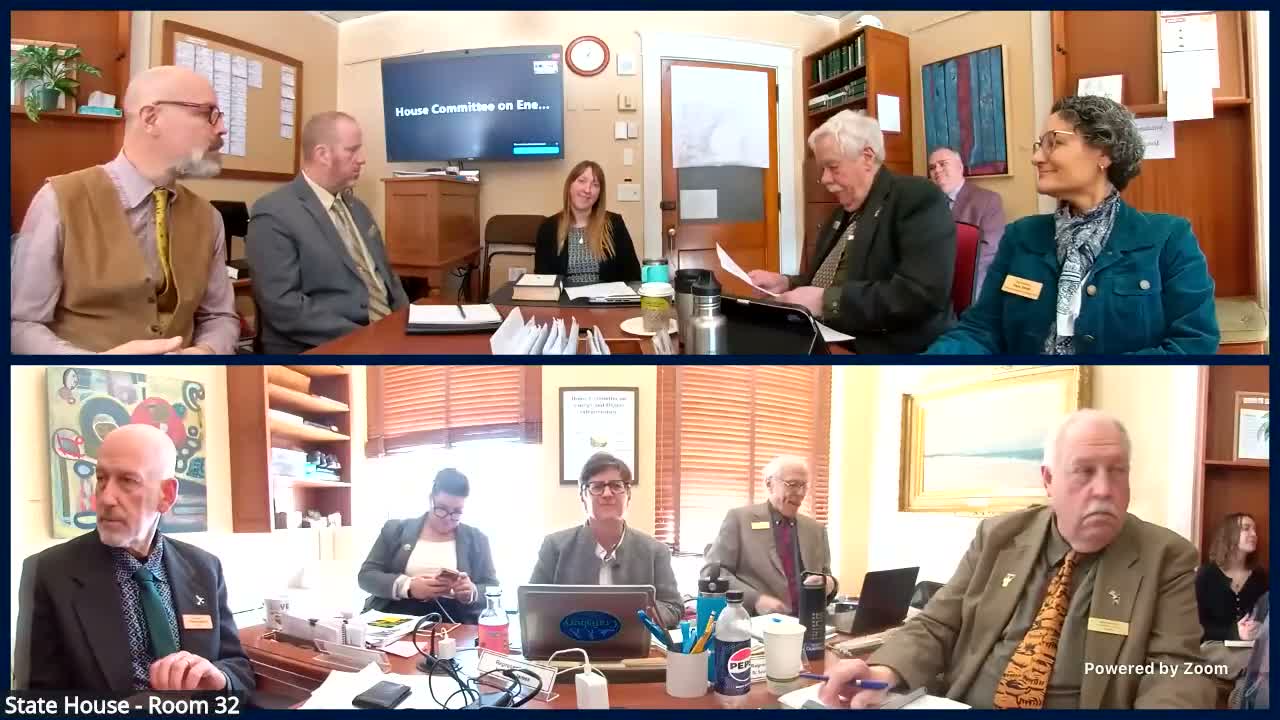
Montpelier — Members of the House Energy and Digital Infrastructure committee discussed on Feb. 19 reviving the dormant Joint Carbon Emissions Reduction Committee to study Vermont’s energy future, including options ranging from solar and wind to biomass and small modular nuclear reactors.
Representative Kathleen James opened the meeting by proposing the legislature use the existing joint committee rather than create a new task force. ‘‘This committee was created in 1978,’’ said Ellen Czech of the Office of Legislative Council, summarizing her review of 2 VSA chapter 17 and the statute’s subsequent amendments.
Why it matters: Committee members said an off‑session study could provide focused recommendations to inform legislation next session, but they urged a narrowly drawn charge to produce useful work in a limited summer/fall timeframe. Several members suggested aligning the committee’s work with the state’s Comprehensive Energy Plan to avoid duplicating ongoing Department of Public Service work.
What was covered: Czech reviewed the statute’s key points, including membership drawn from specified house and senate committees, rotation of the chair between chambers, and a 2019 change that limited off‑session meetings to five. She noted a statutory reference to an "office of legislative operations" that no longer exists and flagged that the statutory language could be updated in a technical corrections bill or in the committee bill itself.
Budget and logistics: Scott Moore, legislative finance manager at the Joint Fiscal Office, walked members through how per diem, mileage and meal allowances are calculated and said his example for 10 legislators meeting up to five times produced an estimate of about $13,500, ‘‘give or take,’’ depending on attendance, mileage and the number of meetings. Moore described assumptions used in the estimate — a GSA mileage reimbursement of 0.725 per mile, an average round trip of roughly 120 miles and an off‑session per diem of $189 — and emphasized the figure is an approximation.
Scope concerns and suggested starting points: Members discussed possible charges, including siting and policy for solar, wind, biomass, and nuclear technologies (including SMRs), as well as net‑metering and battery integration. Several members warned that an overly broad assignment risks producing little actionable output and recommended a narrow, concrete charge — for example, reviewing the Department of Public Service’s six‑year Comprehensive Energy Plan and making recommendations on its key proposals.
Next steps: Committee members expressed interest in drafting a committee bill before crossover to require appointments and set a timetable for summer study; Representative James said hearing from the Department of Public Service and drafting a session‑law charge (including an appointment deadline and a report due date) would be sensible next steps. No formal motion or vote was recorded during the session.
Quotes: Ellen Czech of the Office of Legislative Council summarized the panel’s research: "This committee was created in 1978." Scott Moore of the Joint Fiscal Office said of the budget estimate: "I came up with about $13,500, give or take, for the cost of this committee if we had 10 members that came for up to 5 meetings." Representative Kathleen James asked the group whether to pursue a committee bill before crossover; multiple members responded affirmatively during the discussion.
What’s next: The committee paused to take a break and planned to follow up by obtaining Department of Public Service testimony and, if members agree, drafting statutory language or session law to authorize the committee’s summer work and set reporting deadlines.
Representative Kathleen James opened the meeting by proposing the legislature use the existing joint committee rather than create a new task force. ‘‘This committee was created in 1978,’’ said Ellen Czech of the Office of Legislative Council, summarizing her review of 2 VSA chapter 17 and the statute’s subsequent amendments.
Why it matters: Committee members said an off‑session study could provide focused recommendations to inform legislation next session, but they urged a narrowly drawn charge to produce useful work in a limited summer/fall timeframe. Several members suggested aligning the committee’s work with the state’s Comprehensive Energy Plan to avoid duplicating ongoing Department of Public Service work.
What was covered: Czech reviewed the statute’s key points, including membership drawn from specified house and senate committees, rotation of the chair between chambers, and a 2019 change that limited off‑session meetings to five. She noted a statutory reference to an "office of legislative operations" that no longer exists and flagged that the statutory language could be updated in a technical corrections bill or in the committee bill itself.
Budget and logistics: Scott Moore, legislative finance manager at the Joint Fiscal Office, walked members through how per diem, mileage and meal allowances are calculated and said his example for 10 legislators meeting up to five times produced an estimate of about $13,500, ‘‘give or take,’’ depending on attendance, mileage and the number of meetings. Moore described assumptions used in the estimate — a GSA mileage reimbursement of 0.725 per mile, an average round trip of roughly 120 miles and an off‑session per diem of $189 — and emphasized the figure is an approximation.
Scope concerns and suggested starting points: Members discussed possible charges, including siting and policy for solar, wind, biomass, and nuclear technologies (including SMRs), as well as net‑metering and battery integration. Several members warned that an overly broad assignment risks producing little actionable output and recommended a narrow, concrete charge — for example, reviewing the Department of Public Service’s six‑year Comprehensive Energy Plan and making recommendations on its key proposals.
Next steps: Committee members expressed interest in drafting a committee bill before crossover to require appointments and set a timetable for summer study; Representative James said hearing from the Department of Public Service and drafting a session‑law charge (including an appointment deadline and a report due date) would be sensible next steps. No formal motion or vote was recorded during the session.
Quotes: Ellen Czech of the Office of Legislative Council summarized the panel’s research: "This committee was created in 1978." Scott Moore of the Joint Fiscal Office said of the budget estimate: "I came up with about $13,500, give or take, for the cost of this committee if we had 10 members that came for up to 5 meetings." Representative Kathleen James asked the group whether to pursue a committee bill before crossover; multiple members responded affirmatively during the discussion.
What’s next: The committee paused to take a break and planned to follow up by obtaining Department of Public Service testimony and, if members agree, drafting statutory language or session law to authorize the committee’s summer work and set reporting deadlines.
View the Full Meeting & All Its Details
This article offers just a summary. Unlock complete video, transcripts, and insights as a Founder Member.
✓
Watch full, unedited meeting videos
✓
Search every word spoken in unlimited transcripts
✓
AI summaries & real-time alerts (all government levels)
✓
Permanent access to expanding government content
30-day money-back guarantee
