Consultants brief board on tribal outreach plan after GIS review finds tribal–freight corridor intersections
January 23, 2026 | Board Council Commission Agencies , Executive, Washington
This article was created by AI summarizing key points discussed. AI makes mistakes, so for full details and context, please refer to the video of the full meeting. Please report any errors so we can fix them. Report an error »
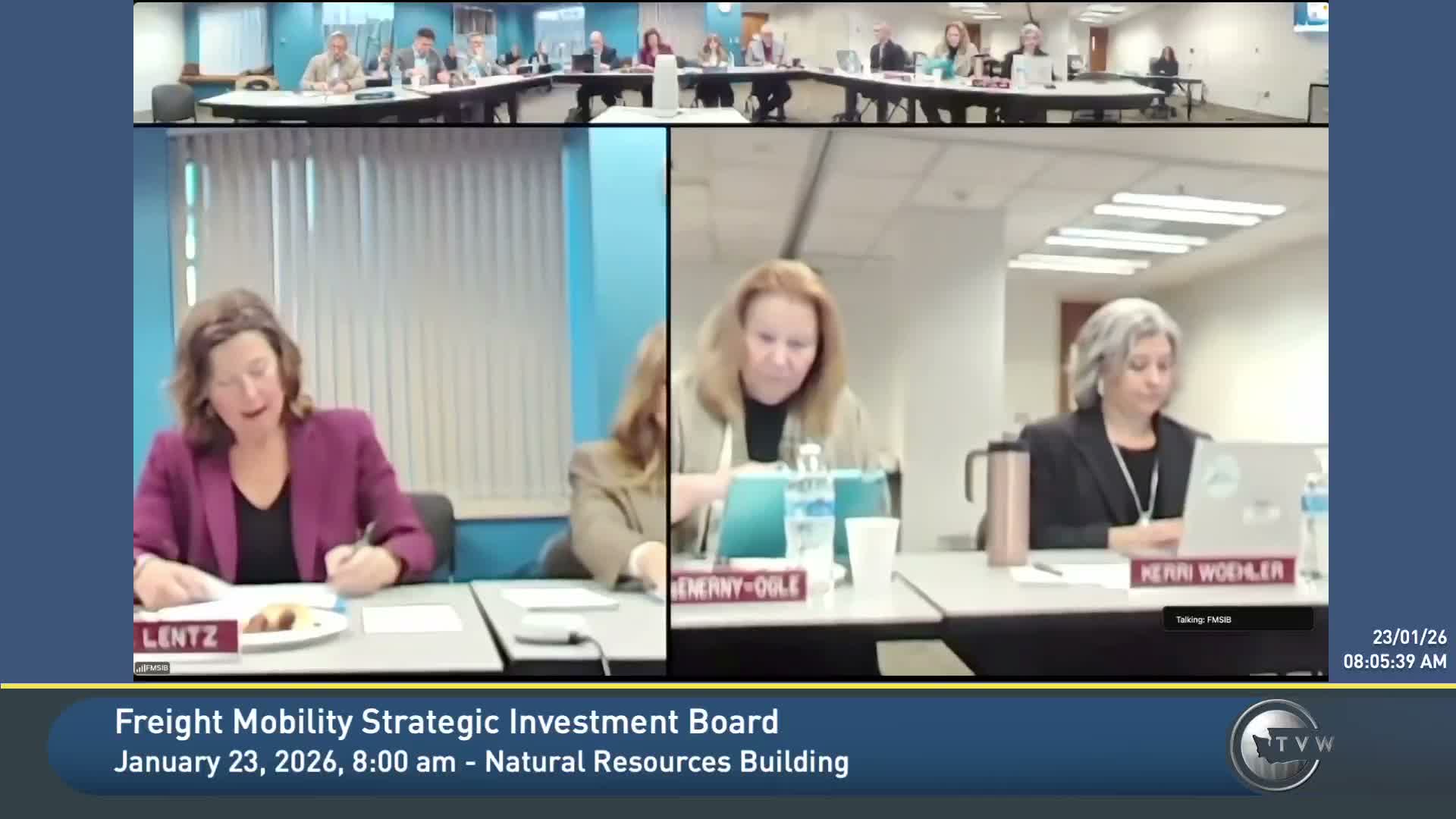
Burke Consulting told the board it is running a 16‑month engagement to support the board’s call‑for‑projects process, to document and train staff on a mapping tool, and to begin tribal research and outreach. Julia Pesch of Burke said the work will include capacity support for current and future calls, staff training on a public GIS tool and a deeper, consultative tribal outreach and research phase.
Brian Murphy of Burke said high‑level GIS desk work found ‘‘of the 29 federally recognized tribes in Washington, 8 of them have land that’s directly on a strategic freight corridor’’ and another seven tribal land parcels abut freight corridors. The consultants also reported the board has received one application from a tribe so far — the Jamestown S'Klallam tribe — which the consultants said had been submitted twice for the same project and scored relatively low in the prior process.
The consultants proposed an outreach approach that starts with existing tribal networks and regional partners rather than unsolicited direct contact to individual tribal governments. They explained that, as sovereign governments, tribes are often contacted through government‑to‑government channels and that outreach should respect those protocols. ‘‘We think the best way to raise awareness among tribes is probably not going out to individual tribes and saying it looks like you might have a project,’’ Pesch said; the team recommended engaging through organizations such as regional tribal transportation planning organizations and other established networks.
Board members pressed for clarification on eligibility — whether projects not directly on a strategic freight corridor could still qualify if they had demonstrable substantial impacts on freight corridors — and several members asked the consultants to account for widely varying tribal grant‑writing capacity. Burke said eligibility remains focused on projects that benefit strategic freight corridors but acknowledged cases where freight‑adjacent projects could be competitive. The consultants also said they will use the mapping tool and additional desk research to identify sites that merit closer, direct engagement.
Next steps: the consultants plan to finalize an engagement plan, continue GIS and desk research, host an information session for applicants and begin targeted outreach planning. They told the board they expect to return with updates on preliminary research in April or June and asked members to share contact information for local tribal or tribal‑organization relationships to support introductions.
The presentation and Q&A took place as part of the board’s agenda and concluded with an invitation for board feedback and follow‑up by staff and consultants.
Brian Murphy of Burke said high‑level GIS desk work found ‘‘of the 29 federally recognized tribes in Washington, 8 of them have land that’s directly on a strategic freight corridor’’ and another seven tribal land parcels abut freight corridors. The consultants also reported the board has received one application from a tribe so far — the Jamestown S'Klallam tribe — which the consultants said had been submitted twice for the same project and scored relatively low in the prior process.
The consultants proposed an outreach approach that starts with existing tribal networks and regional partners rather than unsolicited direct contact to individual tribal governments. They explained that, as sovereign governments, tribes are often contacted through government‑to‑government channels and that outreach should respect those protocols. ‘‘We think the best way to raise awareness among tribes is probably not going out to individual tribes and saying it looks like you might have a project,’’ Pesch said; the team recommended engaging through organizations such as regional tribal transportation planning organizations and other established networks.
Board members pressed for clarification on eligibility — whether projects not directly on a strategic freight corridor could still qualify if they had demonstrable substantial impacts on freight corridors — and several members asked the consultants to account for widely varying tribal grant‑writing capacity. Burke said eligibility remains focused on projects that benefit strategic freight corridors but acknowledged cases where freight‑adjacent projects could be competitive. The consultants also said they will use the mapping tool and additional desk research to identify sites that merit closer, direct engagement.
Next steps: the consultants plan to finalize an engagement plan, continue GIS and desk research, host an information session for applicants and begin targeted outreach planning. They told the board they expect to return with updates on preliminary research in April or June and asked members to share contact information for local tribal or tribal‑organization relationships to support introductions.
The presentation and Q&A took place as part of the board’s agenda and concluded with an invitation for board feedback and follow‑up by staff and consultants.
View the Full Meeting & All Its Details
This article offers just a summary. Unlock complete video, transcripts, and insights as a Founder Member.
✓
Watch full, unedited meeting videos
✓
Search every word spoken in unlimited transcripts
✓
AI summaries & real-time alerts (all government levels)
✓
Permanent access to expanding government content
30-day money-back guarantee
