Providers and hospitals tell subcommittee rate freezes have cut capacity and left dozens of youth stuck in hospitals
February 20, 2026 | Education, Business and Administration Subcommittee, Budget and Taxation Committee, SENATE, SENATE, Committees, Legislative, Maryland
This article was created by AI summarizing key points discussed. AI makes mistakes, so for full details and context, please refer to the video of the full meeting. Please report any errors so we can fix them. Report an error »
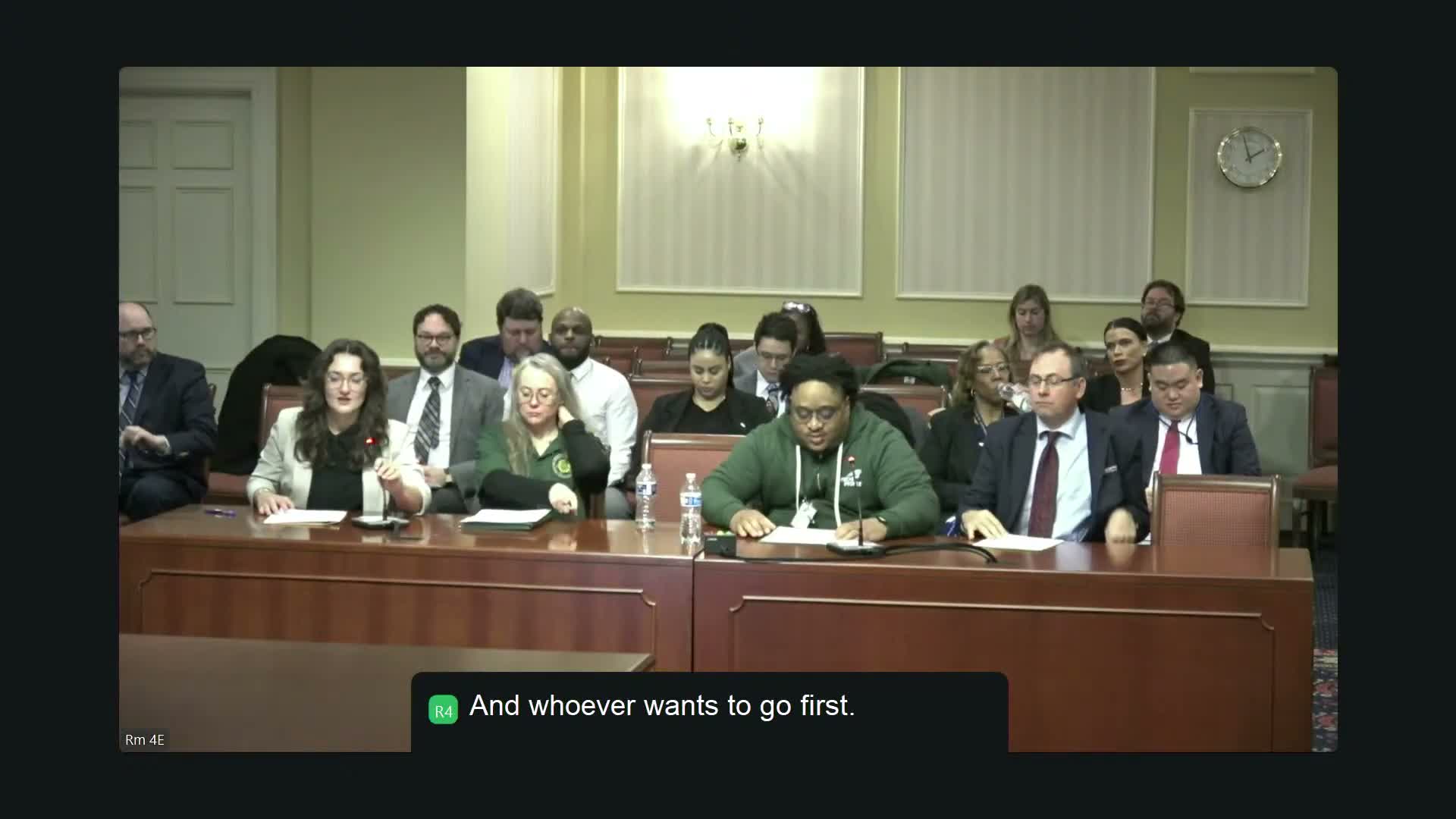
A coalition of child-placement providers, frontline child-welfare workers and hospitals told the Senate Health and Human Services subcommittee on Feb. 18 that frozen reimbursement rates and staffing pressures are eroding placement capacity for high-need youth and contributing to a backlog of children in hospitals.
Sarah Hairgrove, assistant director of policy at the Community Behavioral Health Association of Maryland, asked the subcommittee to "fully fund rate reform for child placement agencies," saying a nationally recognized cost model was developed with DHS and providers and that current board rates have stagnated. "Investing Maryland's limited resources in strengthening child welfare rate reform means that tax dollars are being spent on settings that improve children's well-being rather than harm it," she said.
Front-line workers described the operational impact: Carrie Elliott, a family support worker from Somerset County, said caseloads are large, travel distances for visits are long, and retention is a problem because pay is not competitive. "We frequently lose folks to other local government jobs or private sector jobs," she said. Byron Mason, a Baltimore County child-protective-service social worker, said vacancies and burnout mean families wait longer for help and children remain in unsafe conditions.
Residential and specialty providers also outlined how frozen rates have narrowed options for youth with complex needs. Brian Frackey of Nexus Woodburn urged restoration of rate increases for residential childcare programs and full funding for treatment-foster-care rate reform, warning that rate freezes "are therefore not freezes but cuts" to services and staff pay. Robert Bassler of Arrow Chatham Family Ministries said rate changes allowed his programs to upgrade facilities and raise pay, which enabled them to accept youth previously in hotels or hospitals.
Theresa Hessler of MARFY said flat funding in fiscal 27 effectively reduces capacity because provider costs have risen and staffing requirements to run safe 24-hour programs have increased. She asked the committee to allow the interagency rates committee to operate as intended to stabilize the system.
Jean Krenke of the Maryland Hospital Association described the scope of hospital overstays in the state and the downstream effects on care: "Based on the data ... there are approximately 33 youth that are experiencing a hospital overstay across the state," she said, noting that many have been medically cleared for discharge but remain in inpatient units because there is no appropriate placement. Krenke and other witnesses said some of the youth hospitals count are pending voluntary placement agreements or are known to DHS but not yet in custody.
Witnesses urged investment in workforce pay, rate reform implementation and additional placement capacity for youth with high behavioral and clinical needs. Several asked the committee to press for improved data systems and interagency coordination so the state can count and resolve hospital overstays more quickly.
The committee heard multiple personal accounts and concrete requests for funding adjustments but did not take formal votes during the session. DHS and SSA leaders agreed to provide more complete FY26 and future-year cost data and said they would continue interagency coordination on hospital overstay tracking.
Sarah Hairgrove, assistant director of policy at the Community Behavioral Health Association of Maryland, asked the subcommittee to "fully fund rate reform for child placement agencies," saying a nationally recognized cost model was developed with DHS and providers and that current board rates have stagnated. "Investing Maryland's limited resources in strengthening child welfare rate reform means that tax dollars are being spent on settings that improve children's well-being rather than harm it," she said.
Front-line workers described the operational impact: Carrie Elliott, a family support worker from Somerset County, said caseloads are large, travel distances for visits are long, and retention is a problem because pay is not competitive. "We frequently lose folks to other local government jobs or private sector jobs," she said. Byron Mason, a Baltimore County child-protective-service social worker, said vacancies and burnout mean families wait longer for help and children remain in unsafe conditions.
Residential and specialty providers also outlined how frozen rates have narrowed options for youth with complex needs. Brian Frackey of Nexus Woodburn urged restoration of rate increases for residential childcare programs and full funding for treatment-foster-care rate reform, warning that rate freezes "are therefore not freezes but cuts" to services and staff pay. Robert Bassler of Arrow Chatham Family Ministries said rate changes allowed his programs to upgrade facilities and raise pay, which enabled them to accept youth previously in hotels or hospitals.
Theresa Hessler of MARFY said flat funding in fiscal 27 effectively reduces capacity because provider costs have risen and staffing requirements to run safe 24-hour programs have increased. She asked the committee to allow the interagency rates committee to operate as intended to stabilize the system.
Jean Krenke of the Maryland Hospital Association described the scope of hospital overstays in the state and the downstream effects on care: "Based on the data ... there are approximately 33 youth that are experiencing a hospital overstay across the state," she said, noting that many have been medically cleared for discharge but remain in inpatient units because there is no appropriate placement. Krenke and other witnesses said some of the youth hospitals count are pending voluntary placement agreements or are known to DHS but not yet in custody.
Witnesses urged investment in workforce pay, rate reform implementation and additional placement capacity for youth with high behavioral and clinical needs. Several asked the committee to press for improved data systems and interagency coordination so the state can count and resolve hospital overstays more quickly.
The committee heard multiple personal accounts and concrete requests for funding adjustments but did not take formal votes during the session. DHS and SSA leaders agreed to provide more complete FY26 and future-year cost data and said they would continue interagency coordination on hospital overstay tracking.
Don't Miss a Word: See the Full Meeting!
Go beyond summaries. Unlock every video, transcript, and key insight with a Founder Membership.
✓
Get instant access to full meeting videos
✓
Search and clip any phrase from complete transcripts
✓
Receive AI-powered summaries & custom alerts
✓
Enjoy lifetime, unrestricted access to government data
30-day money-back guarantee
