Committee reconsiders bill S186 after testimony that it could allow juveniles to plead to unrelated charges in criminal court
February 20, 2026 | Government Operations, SENATE, Committees, Legislative , Vermont
This article was created by AI summarizing key points discussed. AI makes mistakes, so for full details and context, please refer to the video of the full meeting. Please report any errors so we can fix them. Report an error »
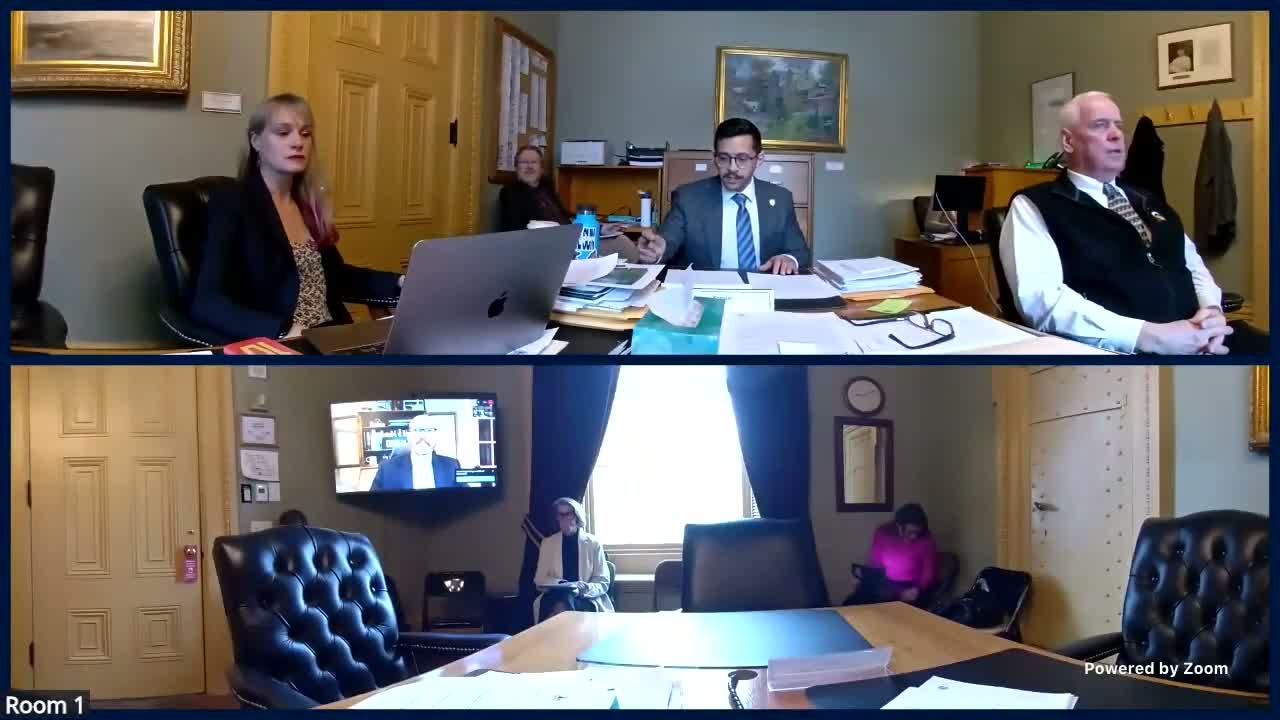
The Government Operations committee on Feb. 20 reopened debate on bill S186 after witnesses warned the measure, as written, could allow juveniles charged with serious offenses to be kept in adult criminal court by pleading to unrelated misdemeanors.
Tom, chief superior judge, told the committee he would confine his remarks to operational impacts and said the measure could improve efficiency "in some ways, allowing the case to be resolved in the criminal division if the parties reach the agreement as the bill allows." He warned, however, that "there is no connection between the offense that causes jurisdiction in the criminal division and the offense that the individual could agree to plead to," and that under the current text "parties could agree to plead to a misdemeanor charge of unlawful trespass or unlawful mischief, something wholly unrelated to the jurisdictional charge."
That scenario, the judge said, could let prosecutors secure an adult-court disposition while resolving an unrelated charge, a result he described as a policy decision for the legislature. He offered a concrete example: a youth charged with aggravated assault could be steered into a plea to a simple-assault or unrelated misdemeanor and remain in criminal court rather than being transferred to juvenile family court.
Committee members pressed on whether the statute should require a nexus between the original charge and the plea. "There should be a sort of nexus to the underlying conduct," one member said, urging language that confines plea agreements to "related" or "lesser included" offenses. The judge agreed that specifying a relationship would "build in that level of protection," though members debated how narrowly to define "related."
Kim McManus of the Department of State's Attorneys and Sheriffs told the committee she shared the judge's drafting concerns and urged care in the bill's phrasing. McManus warned a strict reading of the current sentence could be interpreted to mean a juvenile "could only plead to something other than the offense they were charged with," potentially barring pleas to the charged offense itself in certain readings. She suggested clearer wording such as allowing a juvenile "to agree to plead to the charged offense or a related offense or a lesser included offense" so the statute does not unintentionally restrict permissible plea options.
Members also raised a privacy and procedural question: if a juvenile elects to plead in criminal court, would they forfeit procedural protections or privacy that family court offers? Witnesses noted that the decision is ultimately the juvenile's in consultation with counsel, and that choice could mean losing family-court confidentiality.
The committee did not vote on S186 at this meeting. Members asked staff to draft language that would either require a nexus or expressly allow pleas only to the charged offense, related offenses, or lesser-included offenses, and signaled they would return to the bill after staff review. A final witness (Valerio) was expected on Zoom but the committee paused to follow up offline about logistics.
Next steps: staff will prepare revised language for committee consideration; no formal motion or vote was recorded at the Feb. 20 hearing.
Tom, chief superior judge, told the committee he would confine his remarks to operational impacts and said the measure could improve efficiency "in some ways, allowing the case to be resolved in the criminal division if the parties reach the agreement as the bill allows." He warned, however, that "there is no connection between the offense that causes jurisdiction in the criminal division and the offense that the individual could agree to plead to," and that under the current text "parties could agree to plead to a misdemeanor charge of unlawful trespass or unlawful mischief, something wholly unrelated to the jurisdictional charge."
That scenario, the judge said, could let prosecutors secure an adult-court disposition while resolving an unrelated charge, a result he described as a policy decision for the legislature. He offered a concrete example: a youth charged with aggravated assault could be steered into a plea to a simple-assault or unrelated misdemeanor and remain in criminal court rather than being transferred to juvenile family court.
Committee members pressed on whether the statute should require a nexus between the original charge and the plea. "There should be a sort of nexus to the underlying conduct," one member said, urging language that confines plea agreements to "related" or "lesser included" offenses. The judge agreed that specifying a relationship would "build in that level of protection," though members debated how narrowly to define "related."
Kim McManus of the Department of State's Attorneys and Sheriffs told the committee she shared the judge's drafting concerns and urged care in the bill's phrasing. McManus warned a strict reading of the current sentence could be interpreted to mean a juvenile "could only plead to something other than the offense they were charged with," potentially barring pleas to the charged offense itself in certain readings. She suggested clearer wording such as allowing a juvenile "to agree to plead to the charged offense or a related offense or a lesser included offense" so the statute does not unintentionally restrict permissible plea options.
Members also raised a privacy and procedural question: if a juvenile elects to plead in criminal court, would they forfeit procedural protections or privacy that family court offers? Witnesses noted that the decision is ultimately the juvenile's in consultation with counsel, and that choice could mean losing family-court confidentiality.
The committee did not vote on S186 at this meeting. Members asked staff to draft language that would either require a nexus or expressly allow pleas only to the charged offense, related offenses, or lesser-included offenses, and signaled they would return to the bill after staff review. A final witness (Valerio) was expected on Zoom but the committee paused to follow up offline about logistics.
Next steps: staff will prepare revised language for committee consideration; no formal motion or vote was recorded at the Feb. 20 hearing.
View the Full Meeting & All Its Details
This article offers just a summary. Unlock complete video, transcripts, and insights as a Founder Member.
✓
Watch full, unedited meeting videos
✓
Search every word spoken in unlimited transcripts
✓
AI summaries & real-time alerts (all government levels)
✓
Permanent access to expanding government content
30-day money-back guarantee
