House General and Housing agrees to send revised Appropriations letter highlighting rental-arrears aid, staffing and VHCB priorities
February 21, 2026 | General & Housing, HOUSE OF REPRESENTATIVES, Committees, Legislative , Vermont
This article was created by AI summarizing key points discussed. AI makes mistakes, so for full details and context, please refer to the video of the full meeting. Please report any errors so we can fix them. Report an error »
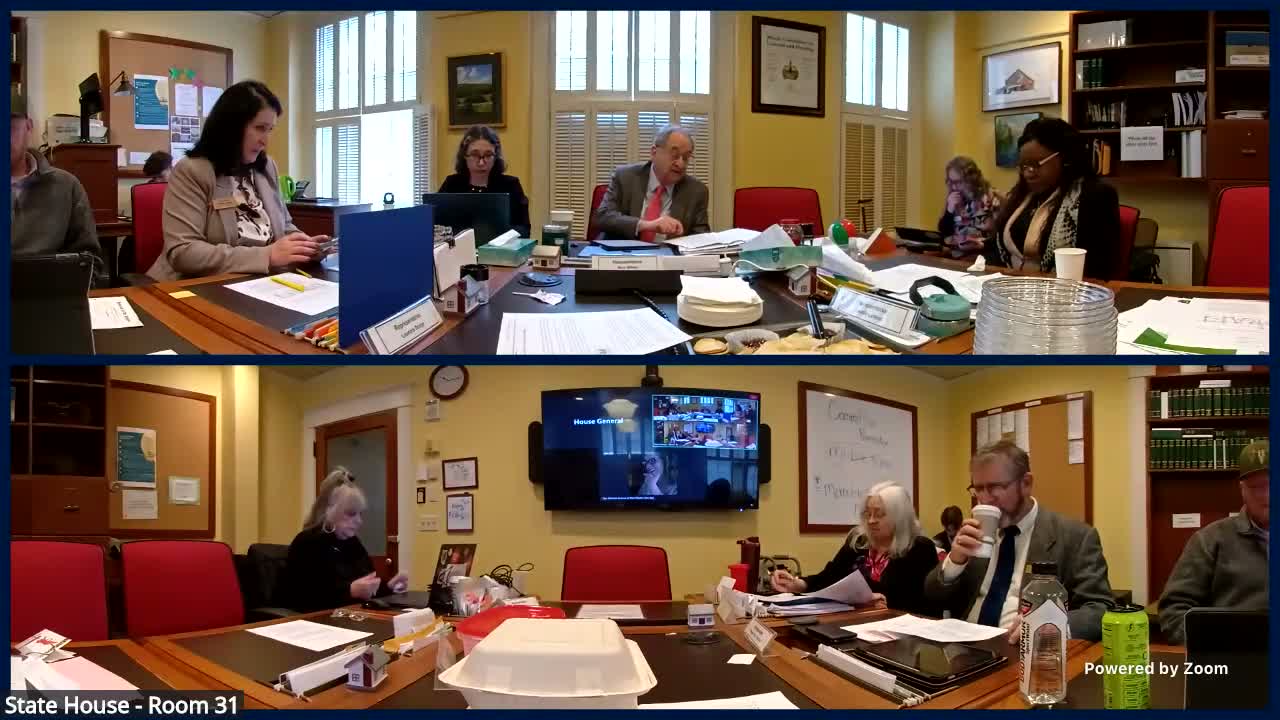
Chair of the House General and Housing committee said Feb. 20 that she would send a revised letter to the Appropriations Committee outlining the panel’s funding priorities for housing and related programs.
The chair opened discussion by explaining she reorganized the draft from “tier 1/2” to “highest priority/high priority,” combined housing and non-housing asks within each tier and included a request to extend the landlord-tenant rental arrears assistance program, which she said “is in law right now” and is broadly supported by members.
Why it matters: Committee members warned that several successful time-limited programs face the risk of being “heavily compromised” or disappearing without base funding. The chair told members that the letter’s purpose is to flag items to Appropriations, not to lock in dollar amounts if the budget cannot accommodate them.
During the discussion members raised three items the letter should emphasize: (1) extending the rental arrears assistance program administered under Vermont State Housing Authority guidelines, which committee members said has proven useful though it can be restrictive; (2) retaining or moving into base funding pilot programs supported by the Vermont Housing & Conservation Board (VHCB), which the chair said included about $12 million in one request that contained roughly $9 million for housing and $3 million targeted to developmental-disability housing pilots; and (3) maintaining staffing for the Human Rights Commission, where members debated whether to prioritize a mediator post or a staff attorney.
On the staffing question, members declined to rank positions in the Appropriations letter. The chair proposed and the committee agreed to strike language that called the mediator “most essential,” after several legislators said the committee had not had sufficient testimony to pre-order positions and that the staff attorney could be equally or more important to operations.
Committee member Mary asked that H.57, a survivors’ benefit bill previously passed by this committee, be highlighted as a candidate for follow-up with Appropriations. Members agreed the Appropriations letter might not be the most effective vehicle but offered to testify or draft a separate letter to press Appropriations to act.
The committee indicated consensus by straw poll to proceed with the revised Appropriations letter; the chair said she would finalize language reflecting the committee’s edits and send it to Appropriations.
What’s next: The chair said she will testify in front of Appropriations and invited members who feel strongly about individual items to testify as well. The letter will be used to signal priorities rather than to bind the Appropriations Committee to the draft funding figures.
The chair opened discussion by explaining she reorganized the draft from “tier 1/2” to “highest priority/high priority,” combined housing and non-housing asks within each tier and included a request to extend the landlord-tenant rental arrears assistance program, which she said “is in law right now” and is broadly supported by members.
Why it matters: Committee members warned that several successful time-limited programs face the risk of being “heavily compromised” or disappearing without base funding. The chair told members that the letter’s purpose is to flag items to Appropriations, not to lock in dollar amounts if the budget cannot accommodate them.
During the discussion members raised three items the letter should emphasize: (1) extending the rental arrears assistance program administered under Vermont State Housing Authority guidelines, which committee members said has proven useful though it can be restrictive; (2) retaining or moving into base funding pilot programs supported by the Vermont Housing & Conservation Board (VHCB), which the chair said included about $12 million in one request that contained roughly $9 million for housing and $3 million targeted to developmental-disability housing pilots; and (3) maintaining staffing for the Human Rights Commission, where members debated whether to prioritize a mediator post or a staff attorney.
On the staffing question, members declined to rank positions in the Appropriations letter. The chair proposed and the committee agreed to strike language that called the mediator “most essential,” after several legislators said the committee had not had sufficient testimony to pre-order positions and that the staff attorney could be equally or more important to operations.
Committee member Mary asked that H.57, a survivors’ benefit bill previously passed by this committee, be highlighted as a candidate for follow-up with Appropriations. Members agreed the Appropriations letter might not be the most effective vehicle but offered to testify or draft a separate letter to press Appropriations to act.
The committee indicated consensus by straw poll to proceed with the revised Appropriations letter; the chair said she would finalize language reflecting the committee’s edits and send it to Appropriations.
What’s next: The chair said she will testify in front of Appropriations and invited members who feel strongly about individual items to testify as well. The letter will be used to signal priorities rather than to bind the Appropriations Committee to the draft funding figures.
View the Full Meeting & All Its Details
This article offers just a summary. Unlock complete video, transcripts, and insights as a Founder Member.
✓
Watch full, unedited meeting videos
✓
Search every word spoken in unlimited transcripts
✓
AI summaries & real-time alerts (all government levels)
✓
Permanent access to expanding government content
30-day money-back guarantee
