Committee reviews strike-all amendment to H.775; debates municipal planning requirement and disability needs
February 20, 2026 | General & Housing, HOUSE OF REPRESENTATIVES, Committees, Legislative , Vermont
This article was created by AI summarizing key points discussed. AI makes mistakes, so for full details and context, please refer to the video of the full meeting. Please report any errors so we can fix them. Report an error »
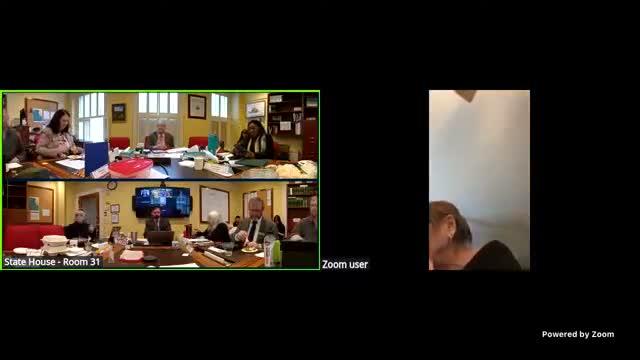
The House General and Housing committee on Feb. 20 examined a strike‑all amendment (2.1) to H.775, the rural housing finance bill, that would revise credit facilities in a state housing special fund, add an off‑site/modular housing pilot, and insert requirements for municipal plans to address housing targets.
Cameron Wood of the Office of Legislative Council presented the draft and described it as "a strike all amendment draft 2.1," saying it carries changes from version 1.1 and adds a new section on municipal planning and a modular‑construction pilot. He said the treasurer's office requested specific edits to allow more flexibility for investing interest earned on loans and to avoid creating an additional standing consultation committee.
Why it matters: the amendment would both expand state financing tools for rural housing and require municipalities that amend or create municipal plans to identify and analyze existing and projected housing needs — or, if they cannot accommodate the targets, provide an analysis of regulatory and fiscal constraints. The change aims to make regional housing targets "real" by embedding them in municipal planning processes while also creating a reporting pathway for municipalities that cannot meet targets.
Key provisions and debate
Credit facilities and treasurer authority: Counsel summarized language that would increase certain authorizations referenced in the bill (noting the draft reflects a change discussed by the treasurer's office from a prior 10% reference toward 12.5%) and create a 1% credit facility intended to support off‑site and modular bulk purchasing of housing. He said the treasurer asked to move a consultation requirement — originally written to apply broadly to all credit facilities and to require consulting multiple housing entities — into the pilot program section so consultation would apply only to that pilot.
Municipal planning requirement: The amendment would add a municipal planning obligation in Title 24 requiring that, when municipalities produce or amend municipal plans, the plans "shall identify and analyze" existing and projected housing needs or include an analysis of constraints preventing them from meeting regional housing targets. The draft lists minimum contents such as a quantification of needed housing types, an inventory of sites (zoned, vacant, underutilized), analysis of constraints (zoning, infrastructure), and potential regulatory or infrastructure actions.
Concerns about burden and timing: Committee members raised concerns that mandating additions to municipal plans could be burdensome because municipalities open or amend plans infrequently; counsel noted municipal plans and amendments expire every eight years unless readopted. Several members suggested an alternative: require municipalities to provide the information to the Department of Housing and Community Development (DHCD) by memo or report instead of embedding all new requirements directly in municipal plans.
Disability‑focused data and amendment language: A committee member identified as Elizabeth cited Vermont Housing Finance Agency data, saying there are "268 total rental units... for people with disabilities" and roughly "90,000" people with disabilities statewide, and urged the committee to ensure the amendment addresses that population. Members debated whether housing targets for specific subpopulations exist in the statewide assessment and whether such targets should be inserted here or handled at the regional or statewide level. Cameron Wood suggested deferring to DHCD and the study committee report that had examined housing for people with disabilities.
Next steps and committee direction: The chair told counsel to add a reference to "individuals with disabilities" into paragraph 1 and to revise paragraph 2 so that, to the extent a municipality cannot meet targets, it would "provide DHCD an analysis" explaining the barriers. Counsel was asked to draft the changes and return after lunch for a straw poll and possible vote; the committee recessed to lunch and planned to reconvene at 1:30 p.m.
Quotes
"This is drafted as a strike all amendment draft 2.1," Cameron Wood said as he opened his presentation.
Unidentified Speaker 1, chairing the meeting, said, "I feel pressure for us to act today," urging a mid‑day decision to allow the bill to continue through subsequent committees before crossover.
Unidentified Speaker 6 (Elizabeth) urged focus on disability needs: "There are 268 total rental units that are, for people with disabilities... the number of people with disabilities in the state is 90,000," she said, pressing for those needs to be addressed.
What the committee did not decide
No formal vote was recorded in the transcript. The committee directed counsel to prepare revised language that would incorporate disability‑focused language in paragraph 1 and change paragraph 2 to require a DHCD analysis from municipalities that cannot meet housing targets; members planned a straw poll after lunch and reserved the option to strip the municipal planning language if a workable approach could not be agreed.
Background and context
Committee discussion referenced Title 24 and municipal planning provisions, the statewide housing needs assessment, the role of regional planning commissions, the Vermont Housing Finance Agency (VHFA) and the Department of Housing and Community Development (DHCD). Counsel noted the amendment relocates some consultation requirements to the pilot program to respect the treasurer's request for streamlined loan issuance and more flexible investment of interest.
What comes next
Counsel will prepare a revised draft reflecting the agreed edits. The committee planned to reconvene at 1:30 p.m. for a straw poll and possible vote on whether to keep the municipal planning language in H.775.
Cameron Wood of the Office of Legislative Council presented the draft and described it as "a strike all amendment draft 2.1," saying it carries changes from version 1.1 and adds a new section on municipal planning and a modular‑construction pilot. He said the treasurer's office requested specific edits to allow more flexibility for investing interest earned on loans and to avoid creating an additional standing consultation committee.
Why it matters: the amendment would both expand state financing tools for rural housing and require municipalities that amend or create municipal plans to identify and analyze existing and projected housing needs — or, if they cannot accommodate the targets, provide an analysis of regulatory and fiscal constraints. The change aims to make regional housing targets "real" by embedding them in municipal planning processes while also creating a reporting pathway for municipalities that cannot meet targets.
Key provisions and debate
Credit facilities and treasurer authority: Counsel summarized language that would increase certain authorizations referenced in the bill (noting the draft reflects a change discussed by the treasurer's office from a prior 10% reference toward 12.5%) and create a 1% credit facility intended to support off‑site and modular bulk purchasing of housing. He said the treasurer asked to move a consultation requirement — originally written to apply broadly to all credit facilities and to require consulting multiple housing entities — into the pilot program section so consultation would apply only to that pilot.
Municipal planning requirement: The amendment would add a municipal planning obligation in Title 24 requiring that, when municipalities produce or amend municipal plans, the plans "shall identify and analyze" existing and projected housing needs or include an analysis of constraints preventing them from meeting regional housing targets. The draft lists minimum contents such as a quantification of needed housing types, an inventory of sites (zoned, vacant, underutilized), analysis of constraints (zoning, infrastructure), and potential regulatory or infrastructure actions.
Concerns about burden and timing: Committee members raised concerns that mandating additions to municipal plans could be burdensome because municipalities open or amend plans infrequently; counsel noted municipal plans and amendments expire every eight years unless readopted. Several members suggested an alternative: require municipalities to provide the information to the Department of Housing and Community Development (DHCD) by memo or report instead of embedding all new requirements directly in municipal plans.
Disability‑focused data and amendment language: A committee member identified as Elizabeth cited Vermont Housing Finance Agency data, saying there are "268 total rental units... for people with disabilities" and roughly "90,000" people with disabilities statewide, and urged the committee to ensure the amendment addresses that population. Members debated whether housing targets for specific subpopulations exist in the statewide assessment and whether such targets should be inserted here or handled at the regional or statewide level. Cameron Wood suggested deferring to DHCD and the study committee report that had examined housing for people with disabilities.
Next steps and committee direction: The chair told counsel to add a reference to "individuals with disabilities" into paragraph 1 and to revise paragraph 2 so that, to the extent a municipality cannot meet targets, it would "provide DHCD an analysis" explaining the barriers. Counsel was asked to draft the changes and return after lunch for a straw poll and possible vote; the committee recessed to lunch and planned to reconvene at 1:30 p.m.
Quotes
"This is drafted as a strike all amendment draft 2.1," Cameron Wood said as he opened his presentation.
Unidentified Speaker 1, chairing the meeting, said, "I feel pressure for us to act today," urging a mid‑day decision to allow the bill to continue through subsequent committees before crossover.
Unidentified Speaker 6 (Elizabeth) urged focus on disability needs: "There are 268 total rental units that are, for people with disabilities... the number of people with disabilities in the state is 90,000," she said, pressing for those needs to be addressed.
What the committee did not decide
No formal vote was recorded in the transcript. The committee directed counsel to prepare revised language that would incorporate disability‑focused language in paragraph 1 and change paragraph 2 to require a DHCD analysis from municipalities that cannot meet housing targets; members planned a straw poll after lunch and reserved the option to strip the municipal planning language if a workable approach could not be agreed.
Background and context
Committee discussion referenced Title 24 and municipal planning provisions, the statewide housing needs assessment, the role of regional planning commissions, the Vermont Housing Finance Agency (VHFA) and the Department of Housing and Community Development (DHCD). Counsel noted the amendment relocates some consultation requirements to the pilot program to respect the treasurer's request for streamlined loan issuance and more flexible investment of interest.
What comes next
Counsel will prepare a revised draft reflecting the agreed edits. The committee planned to reconvene at 1:30 p.m. for a straw poll and possible vote on whether to keep the municipal planning language in H.775.
View the Full Meeting & All Its Details
This article offers just a summary. Unlock complete video, transcripts, and insights as a Founder Member.
✓
Watch full, unedited meeting videos
✓
Search every word spoken in unlimited transcripts
✓
AI summaries & real-time alerts (all government levels)
✓
Permanent access to expanding government content
30-day money-back guarantee
