Conference committee finalizes H 790 conference report, narrows housing-assistance rules
February 20, 2026 | Appropriations, SENATE, Committees, Legislative , Vermont
This article was created by AI summarizing key points discussed. AI makes mistakes, so for full details and context, please refer to the video of the full meeting. Please report any errors so we can fix them. Report an error »
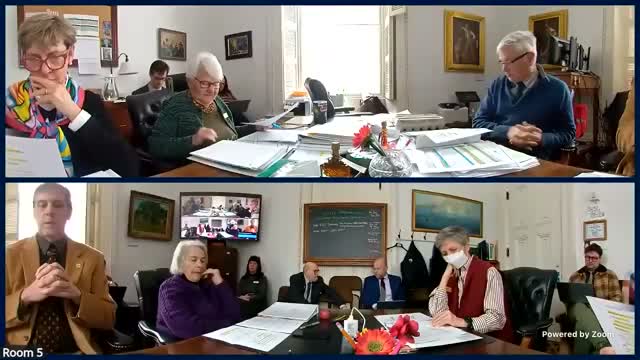
The conference committee on H 790, the Budget Adjustment Act of 2026, met in its third session and finalized a conference report containing six instances of amendment, including changes to housing-assistance language and several funding adjustments. Committee members agreed the draft will be signed and forwarded for formal up-or-down votes on the floor.
The committee accepted language clarifying that Section 8 housing vouchers could be at risk because of federal action and shifted the burden for documenting financial need and HUD compliance from DCF to local housing authorities. Speaker 1, a committee member, said the change reflects expertise at the local level: "the housing authorities are the experts." The revised draft says housing authorities must include evidence that requests conform to applicable HUD requirements and represent necessary and proper expenses.
Speaker 1 said DCF will still prepare guidelines in consultation with the Department of Housing and Community Development and other advisors, and that the draft sets a May 1 deadline for housing authorities to submit reports on financial need. The committee acknowledged administration concerns about that date; Speaker 1 reported talking with Sarah Clark from the administration, who worried the deadline could conflict with the administration’s shelter initiative, but the committee kept May 1 while preserving a mechanism in section C of the budget to alter dates if needed.
On funding adjustments, Speaker 4 summarized the six amendment instances: numeric changes reflecting a Meals on Wheels reduction; a related change to human services totals; an increase in the Vermonters Feeding Vermonters appropriation from 860,000 to 885,000; the accepted housing-assistance language described above; disabilities services payment-reform language; and language reflecting the Meals on Wheels change to 55,000. Speaker 1 also described a 9.5 million global commitment for a one-time payment-reform spending authority tied to the disabilities reforms.
Committee members noted uncertainty at the federal level could affect timing and approvals. Speaker 3 observed that HUD appeared delayed or constrained, which could complicate written approvals, but the group said including the language in the Budget Adjustment Act signals seriousness and allows housing authorities to begin planning and, where allowable, to use some funds prior to written HUD approval.
On procedure, Speaker 4 explained the committee report is a conference report and will be presented in its finalized form; it allows only an up-or-down vote on the floor, not new floor amendments. Members discussed signing order and clarified that signing the report constitutes the committee’s vote. As Speaker 4 put it plainly: "Signing is voting." The transcript records the committee preparing the report for signatures but does not record a floor vote or final chamber action within this meeting.
The meeting ended after brief thanks to staff and the Joint Fiscal Office. The committee’s conference report will move forward for formal consideration by the legislative chambers.
The committee accepted language clarifying that Section 8 housing vouchers could be at risk because of federal action and shifted the burden for documenting financial need and HUD compliance from DCF to local housing authorities. Speaker 1, a committee member, said the change reflects expertise at the local level: "the housing authorities are the experts." The revised draft says housing authorities must include evidence that requests conform to applicable HUD requirements and represent necessary and proper expenses.
Speaker 1 said DCF will still prepare guidelines in consultation with the Department of Housing and Community Development and other advisors, and that the draft sets a May 1 deadline for housing authorities to submit reports on financial need. The committee acknowledged administration concerns about that date; Speaker 1 reported talking with Sarah Clark from the administration, who worried the deadline could conflict with the administration’s shelter initiative, but the committee kept May 1 while preserving a mechanism in section C of the budget to alter dates if needed.
On funding adjustments, Speaker 4 summarized the six amendment instances: numeric changes reflecting a Meals on Wheels reduction; a related change to human services totals; an increase in the Vermonters Feeding Vermonters appropriation from 860,000 to 885,000; the accepted housing-assistance language described above; disabilities services payment-reform language; and language reflecting the Meals on Wheels change to 55,000. Speaker 1 also described a 9.5 million global commitment for a one-time payment-reform spending authority tied to the disabilities reforms.
Committee members noted uncertainty at the federal level could affect timing and approvals. Speaker 3 observed that HUD appeared delayed or constrained, which could complicate written approvals, but the group said including the language in the Budget Adjustment Act signals seriousness and allows housing authorities to begin planning and, where allowable, to use some funds prior to written HUD approval.
On procedure, Speaker 4 explained the committee report is a conference report and will be presented in its finalized form; it allows only an up-or-down vote on the floor, not new floor amendments. Members discussed signing order and clarified that signing the report constitutes the committee’s vote. As Speaker 4 put it plainly: "Signing is voting." The transcript records the committee preparing the report for signatures but does not record a floor vote or final chamber action within this meeting.
The meeting ended after brief thanks to staff and the Joint Fiscal Office. The committee’s conference report will move forward for formal consideration by the legislative chambers.
View the Full Meeting & All Its Details
This article offers just a summary. Unlock complete video, transcripts, and insights as a Founder Member.
✓
Watch full, unedited meeting videos
✓
Search every word spoken in unlimited transcripts
✓
AI summaries & real-time alerts (all government levels)
✓
Permanent access to expanding government content
30-day money-back guarantee
