Senators hear experts on reconstituting a legislative oversight committee and oversight tools
February 20, 2026 | Government Operations, SENATE, Committees, Legislative , Vermont
This article was created by AI summarizing key points discussed. AI makes mistakes, so for full details and context, please refer to the video of the full meeting. Please report any errors so we can fix them. Report an error »
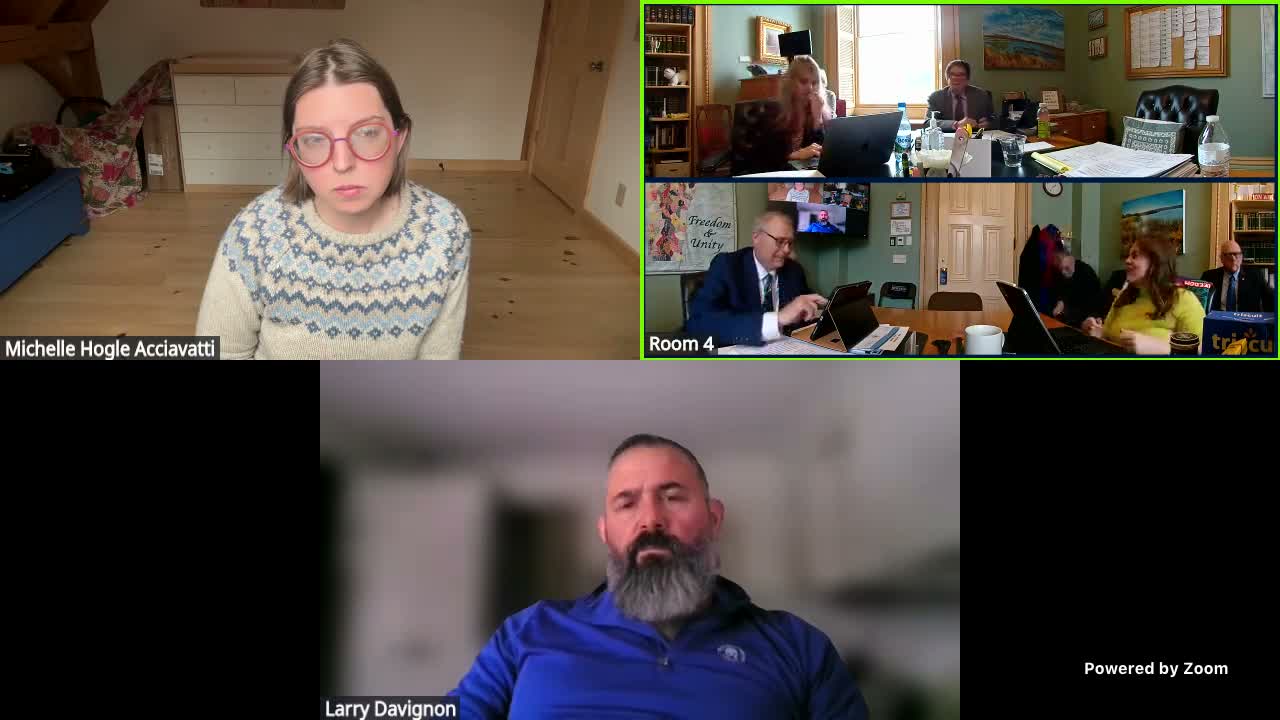
The Senate Committee on Government Operations received presentations Feb. 20 on creating a joint legislative government accountability committee and on tools legislatures use for oversight.
Senator Randy Brock, co-chair of a summer government-accountability committee, summarized a report with 11 actionable recommendations aimed at improving how the legislature follows up on passed laws and measures program effectiveness. Brock emphasized consistent measurement and the need to ensure that enacted statutes achieve intended results.
Will Clark of the National Conference of State Legislatures (NCSL) outlined oversight tools including standing committees, sunset and sunrise reviews, administrative rules review, program evaluation and performance audits. "Legislative oversight tools are...what you all have done as legislators when that gets turned into policy," Clark said, noting that audits and evaluations serve different purposes: audits check compliance and financial controls, while evaluations assess effectiveness and outcomes.
Carrington Skinner (NCSL, Center for Results Driven Governing) emphasized integrating reliable data and evidence into oversight work and highlighted state examples — Utah's statutory performance roles, New Mexico's agency report cards, Indiana's State Data Hub and Colorado's evidence-based budgeting designation — as models for developing dashboards and performance metrics.
Tim Ash, deputy state auditor, urged the committee to make voting members legislators and to avoid adding a separate performance-audit function to a joint oversight committee; he recommended collaboration with the auditor's office for rigorous audits. Ash also described a recent auditor's office inquiry into radon testing in schools, finding that about 70% of schools had complied and roughly 30% had not, which illustrated gaps in follow-up when statutes lack reporting requirements.
Presenters encouraged bipartisan design, limited initial procedural requirements so the committee can develop a track record, and coordination with standing committees to select a manageable number of review topics each year. No formal committee action on charting a final structure was recorded during the session.
Senator Randy Brock, co-chair of a summer government-accountability committee, summarized a report with 11 actionable recommendations aimed at improving how the legislature follows up on passed laws and measures program effectiveness. Brock emphasized consistent measurement and the need to ensure that enacted statutes achieve intended results.
Will Clark of the National Conference of State Legislatures (NCSL) outlined oversight tools including standing committees, sunset and sunrise reviews, administrative rules review, program evaluation and performance audits. "Legislative oversight tools are...what you all have done as legislators when that gets turned into policy," Clark said, noting that audits and evaluations serve different purposes: audits check compliance and financial controls, while evaluations assess effectiveness and outcomes.
Carrington Skinner (NCSL, Center for Results Driven Governing) emphasized integrating reliable data and evidence into oversight work and highlighted state examples — Utah's statutory performance roles, New Mexico's agency report cards, Indiana's State Data Hub and Colorado's evidence-based budgeting designation — as models for developing dashboards and performance metrics.
Tim Ash, deputy state auditor, urged the committee to make voting members legislators and to avoid adding a separate performance-audit function to a joint oversight committee; he recommended collaboration with the auditor's office for rigorous audits. Ash also described a recent auditor's office inquiry into radon testing in schools, finding that about 70% of schools had complied and roughly 30% had not, which illustrated gaps in follow-up when statutes lack reporting requirements.
Presenters encouraged bipartisan design, limited initial procedural requirements so the committee can develop a track record, and coordination with standing committees to select a manageable number of review topics each year. No formal committee action on charting a final structure was recorded during the session.
Don't Miss a Word: See the Full Meeting!
Go beyond summaries. Unlock every video, transcript, and key insight with a Founder Membership.
✓
Get instant access to full meeting videos
✓
Search and clip any phrase from complete transcripts
✓
Receive AI-powered summaries & custom alerts
✓
Enjoy lifetime, unrestricted access to government data
30-day money-back guarantee
