Pinelands committee lays out FY26 work plan, opens public comment on major rule changes
July 26, 2025 | Pinelands Commission, State Departments and Agencies, Organizations, Executive, New Jersey
This article was created by AI summarizing key points discussed. AI makes mistakes, so for full details and context, please refer to the video of the full meeting. Please report any errors so we can fix them. Report an error »
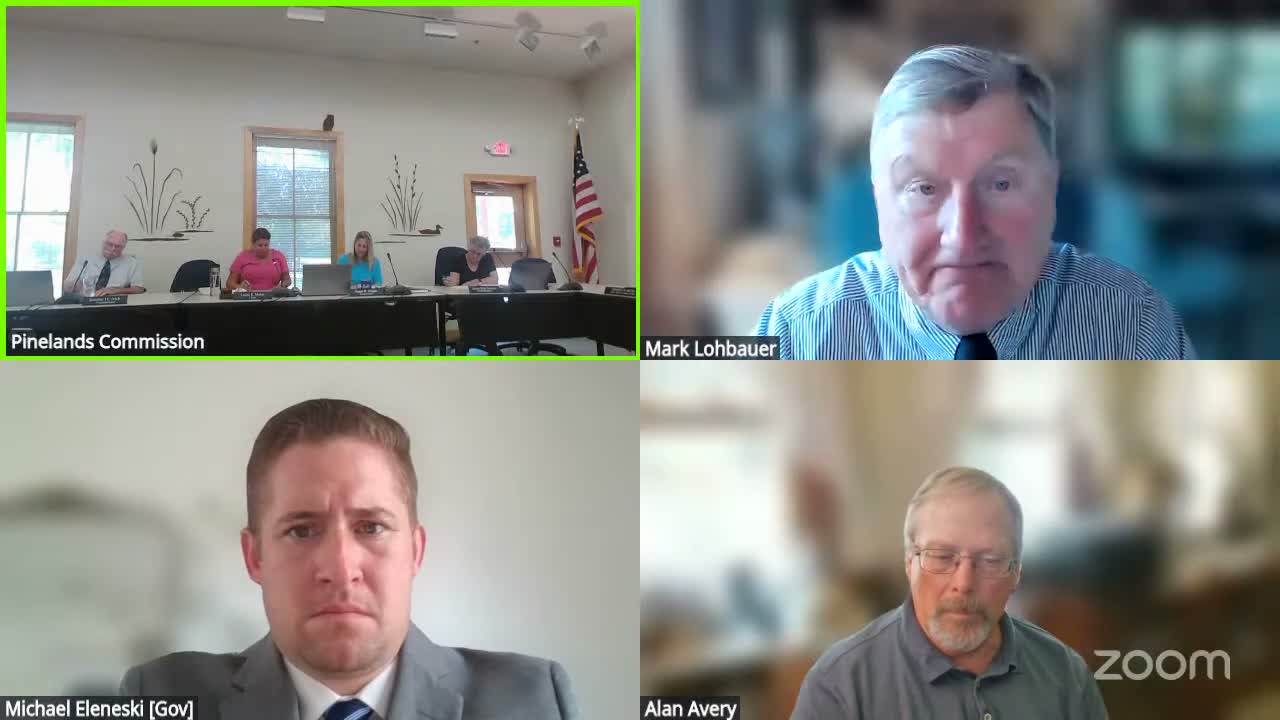
The Policy and Implementation Committee of the Pinelands Commission reviewed a broad FY26 work plan on July 25, focusing on implementing recently adopted Comprehensive Management Plan (CMP) amendments, completing long‑running tasks and launching new initiatives tied to the upcoming budget cycle.
Susan, the staff presenter introduced the plan and told commissioners the commission "is in our implementation phase with applications, coordinating with DEP and, unfortunately, dealing with the ongoing litigation filed by Clayton." She said a larger package of proposed amendments — including redesignating a large area in Evesham from "rural development" to "forest," assigning expiration dates to longstanding certificates and waivers, changing some application fees and clarifying standards for regional growth areas — is in a 60‑day public comment period, which "runs through August 15." The staff hearing last week, she said, was well attended.
Why it matters: the package would change land‑use designations and administrative requirements affecting applicants and municipalities. Susan said staff expect to prepare a response document to written comments and return recommendations to the committee later this year, with potential adoption by year‑end or early January.
Implementation and coordination: commissioners heard that post‑adoption work will include map updates, revised application forms and e‑calculators, and outreach to municipalities that may need local ordinance changes to implement amendments. Susan flagged interagency coordination on several fronts, including expected interactions with DEP, municipal partners and federal agencies where state projects lack local approvals.
Program work and priorities: other items the committee will track this year include:
- Modernizing the commission's application‑tracking and reporting system to improve internal reporting and provide limited public access so applicants can check status.
- Continuing the Pinelands Conservation Fund land‑acquisition round (deadline mid‑September) and preparing fall recommendations for projects.
- Reviewing and updating MOAs (including Pemberton accessible trail work) and older MOAs with DEP dating to the 1990s.
- Pursuing PDC Bank rule changes and possible legislation to fold bank functions more formally into the commission, with funding implications.
- Updating CMP solar facility siting standards and coordinating with the Board of Public Utilities and pilot projects from Rutgers and AES.
Staff cautioned that some items depend on state action. Susan noted new state legislation and DEP actions affecting legal‑advertising requirements and rulemaking timelines: "the new legislation doesn't even kick in until March 30, 2026," and DEP recently submitted a revised proposal that restarts public review for certain resilient‑environment and landscape rules.
Public input and oversight: commissioners asked for links to DEP notices and stressed the need for coordination with DEP and other agencies. A handful of commissioners raised policy specifics — escrow and bonding for mitigation, periods of reliance for certificates of filing, threatened‑and‑endangered species survey protocols and coordination on plant‑data sharing — that staff said would be folded into the work plan and budget choices.
Votes and meeting business: the committee adopted the June 27 minutes by voice vote at the start of the meeting and later approved a motion to adjourn by voice vote. No formal roll‑call tallies for those motions were recorded in the meeting transcript.
What comes next: staff will continue public outreach on the comment period through Aug. 15, prepare a response document for committee consideration, and return draft implementation materials and budget implications to the committee later this year.
Susan, the staff presenter introduced the plan and told commissioners the commission "is in our implementation phase with applications, coordinating with DEP and, unfortunately, dealing with the ongoing litigation filed by Clayton." She said a larger package of proposed amendments — including redesignating a large area in Evesham from "rural development" to "forest," assigning expiration dates to longstanding certificates and waivers, changing some application fees and clarifying standards for regional growth areas — is in a 60‑day public comment period, which "runs through August 15." The staff hearing last week, she said, was well attended.
Why it matters: the package would change land‑use designations and administrative requirements affecting applicants and municipalities. Susan said staff expect to prepare a response document to written comments and return recommendations to the committee later this year, with potential adoption by year‑end or early January.
Implementation and coordination: commissioners heard that post‑adoption work will include map updates, revised application forms and e‑calculators, and outreach to municipalities that may need local ordinance changes to implement amendments. Susan flagged interagency coordination on several fronts, including expected interactions with DEP, municipal partners and federal agencies where state projects lack local approvals.
Program work and priorities: other items the committee will track this year include:
- Modernizing the commission's application‑tracking and reporting system to improve internal reporting and provide limited public access so applicants can check status.
- Continuing the Pinelands Conservation Fund land‑acquisition round (deadline mid‑September) and preparing fall recommendations for projects.
- Reviewing and updating MOAs (including Pemberton accessible trail work) and older MOAs with DEP dating to the 1990s.
- Pursuing PDC Bank rule changes and possible legislation to fold bank functions more formally into the commission, with funding implications.
- Updating CMP solar facility siting standards and coordinating with the Board of Public Utilities and pilot projects from Rutgers and AES.
Staff cautioned that some items depend on state action. Susan noted new state legislation and DEP actions affecting legal‑advertising requirements and rulemaking timelines: "the new legislation doesn't even kick in until March 30, 2026," and DEP recently submitted a revised proposal that restarts public review for certain resilient‑environment and landscape rules.
Public input and oversight: commissioners asked for links to DEP notices and stressed the need for coordination with DEP and other agencies. A handful of commissioners raised policy specifics — escrow and bonding for mitigation, periods of reliance for certificates of filing, threatened‑and‑endangered species survey protocols and coordination on plant‑data sharing — that staff said would be folded into the work plan and budget choices.
Votes and meeting business: the committee adopted the June 27 minutes by voice vote at the start of the meeting and later approved a motion to adjourn by voice vote. No formal roll‑call tallies for those motions were recorded in the meeting transcript.
What comes next: staff will continue public outreach on the comment period through Aug. 15, prepare a response document for committee consideration, and return draft implementation materials and budget implications to the committee later this year.
Don't Miss a Word: See the Full Meeting!
Go beyond summaries. Unlock every video, transcript, and key insight with a Founder Membership.
✓
Get instant access to full meeting videos
✓
Search and clip any phrase from complete transcripts
✓
Receive AI-powered summaries & custom alerts
✓
Enjoy lifetime, unrestricted access to government data
30-day money-back guarantee
