Pinelands committee weighs agrivoltaics but decides to wait for BPU pilot results
June 28, 2025 | Pinelands Commission, State Departments and Agencies, Organizations, Executive, New Jersey
This article was created by AI summarizing key points discussed. AI makes mistakes, so for full details and context, please refer to the video of the full meeting. Please report any errors so we can fix them. Report an error »
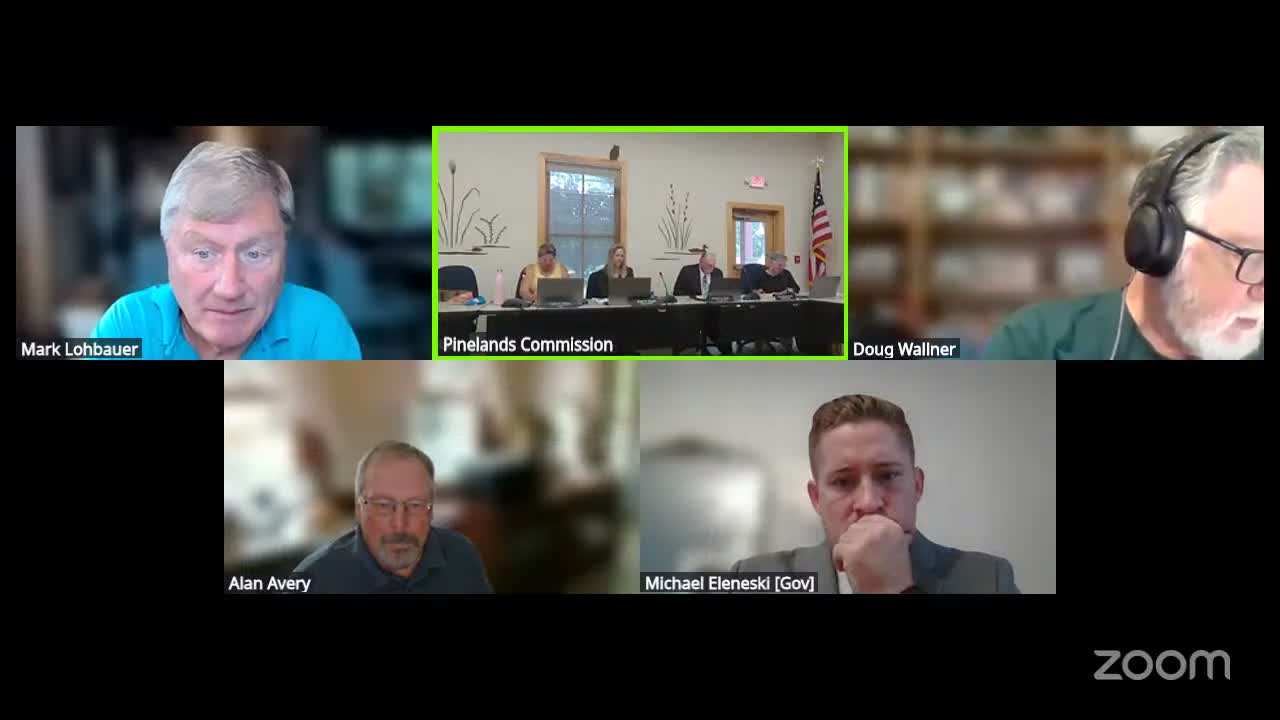
The PNI committee spent a substantial portion of its June 27 meeting debating whether and how the Pinelands Commission should respond to the Board of Public Utilities’ dual‑use (agrivoltaics) solar pilot.
Stacy, a Commission staff presenter, summarized the BPU pilot created under the Dual Use Solar Energy Act (2021). She said BPU launched the program in October 2024, published implementing rules in December 2024, closed the comment period in January 2025, and is conducting expression‑of‑interest evaluations. The statute calls for 200 megawatts over three years, with BPU authorized to extend and add up to another 100 megawatts in later years, Stacy said.
Staff explained how the Pinelands Comprehensive Management Plan (CMP) constrains where large solar facilities may be sited. Preservation area prohibitions, freshwater wetland protections, forested‑land rules, and deed restrictions on preserved farms substantially limit available land. In agricultural production areas, staff said large solar can be permitted only as a principal use limited to 20% of a parcel and no more than 10 acres; in rural development areas, panels are limited to previously disturbed land with clearing capped at 30%.
Stacy described possible Commission responses: (1) pursue Pinelands rule changes to enable pilot participation, (2) create a Commission pilot with its own criteria (which would require rulemaking and offsets), (3) negotiate a memorandum of agreement with BPU (raising legal and offset questions), or (4) wait and analyze data from BPU’s initial rounds. Staff recommended waiting for at least one BPU round, saying it avoids duplicative work and allows the Commission to learn from BPU’s data.
Commissioners expressed differing views. Some said they were wary of the visual and infrastructure effects of large solar installations and of changing protections that preserve the Pinelands’ character. Others urged active support for farmers interested in agrivoltaics, noting some research (commissioner Mark referenced a Maine study) that found productivity benefits for crops like blueberries under partial shading.
A recurring theme was the administrative complexity and slow pace of BPU’s application process; staff reported BPU was still evaluating expressions of interest and had not yet invited applications or published a timeline for awards. The committee did not take any formal vote on rulemaking or a Pinelands pilot; staff will continue outreach to BPU and report back after the pilot’s first rounds produce data.
"This process is extremely time consuming and cumbersome," Stacy said of the BPU pathway, noting the Commission had limited practical options until BPU produces data. Several commissioners agreed that gathering BPU’s early results would better inform any Pinelands action.
Stacy, a Commission staff presenter, summarized the BPU pilot created under the Dual Use Solar Energy Act (2021). She said BPU launched the program in October 2024, published implementing rules in December 2024, closed the comment period in January 2025, and is conducting expression‑of‑interest evaluations. The statute calls for 200 megawatts over three years, with BPU authorized to extend and add up to another 100 megawatts in later years, Stacy said.
Staff explained how the Pinelands Comprehensive Management Plan (CMP) constrains where large solar facilities may be sited. Preservation area prohibitions, freshwater wetland protections, forested‑land rules, and deed restrictions on preserved farms substantially limit available land. In agricultural production areas, staff said large solar can be permitted only as a principal use limited to 20% of a parcel and no more than 10 acres; in rural development areas, panels are limited to previously disturbed land with clearing capped at 30%.
Stacy described possible Commission responses: (1) pursue Pinelands rule changes to enable pilot participation, (2) create a Commission pilot with its own criteria (which would require rulemaking and offsets), (3) negotiate a memorandum of agreement with BPU (raising legal and offset questions), or (4) wait and analyze data from BPU’s initial rounds. Staff recommended waiting for at least one BPU round, saying it avoids duplicative work and allows the Commission to learn from BPU’s data.
Commissioners expressed differing views. Some said they were wary of the visual and infrastructure effects of large solar installations and of changing protections that preserve the Pinelands’ character. Others urged active support for farmers interested in agrivoltaics, noting some research (commissioner Mark referenced a Maine study) that found productivity benefits for crops like blueberries under partial shading.
A recurring theme was the administrative complexity and slow pace of BPU’s application process; staff reported BPU was still evaluating expressions of interest and had not yet invited applications or published a timeline for awards. The committee did not take any formal vote on rulemaking or a Pinelands pilot; staff will continue outreach to BPU and report back after the pilot’s first rounds produce data.
"This process is extremely time consuming and cumbersome," Stacy said of the BPU pathway, noting the Commission had limited practical options until BPU produces data. Several commissioners agreed that gathering BPU’s early results would better inform any Pinelands action.
Don't Miss a Word: See the Full Meeting!
Go beyond summaries. Unlock every video, transcript, and key insight with a Founder Membership.
✓
Get instant access to full meeting videos
✓
Search and clip any phrase from complete transcripts
✓
Receive AI-powered summaries & custom alerts
✓
Enjoy lifetime, unrestricted access to government data
30-day money-back guarantee
