Public commenter warns of tax‑credit timing for agrivoltaics and urges Pinelands scrutiny of artificial turf heat risks
June 28, 2025 | Pinelands Commission, State Departments and Agencies, Organizations, Executive, New Jersey
This article was created by AI summarizing key points discussed. AI makes mistakes, so for full details and context, please refer to the video of the full meeting. Please report any errors so we can fix them. Report an error »
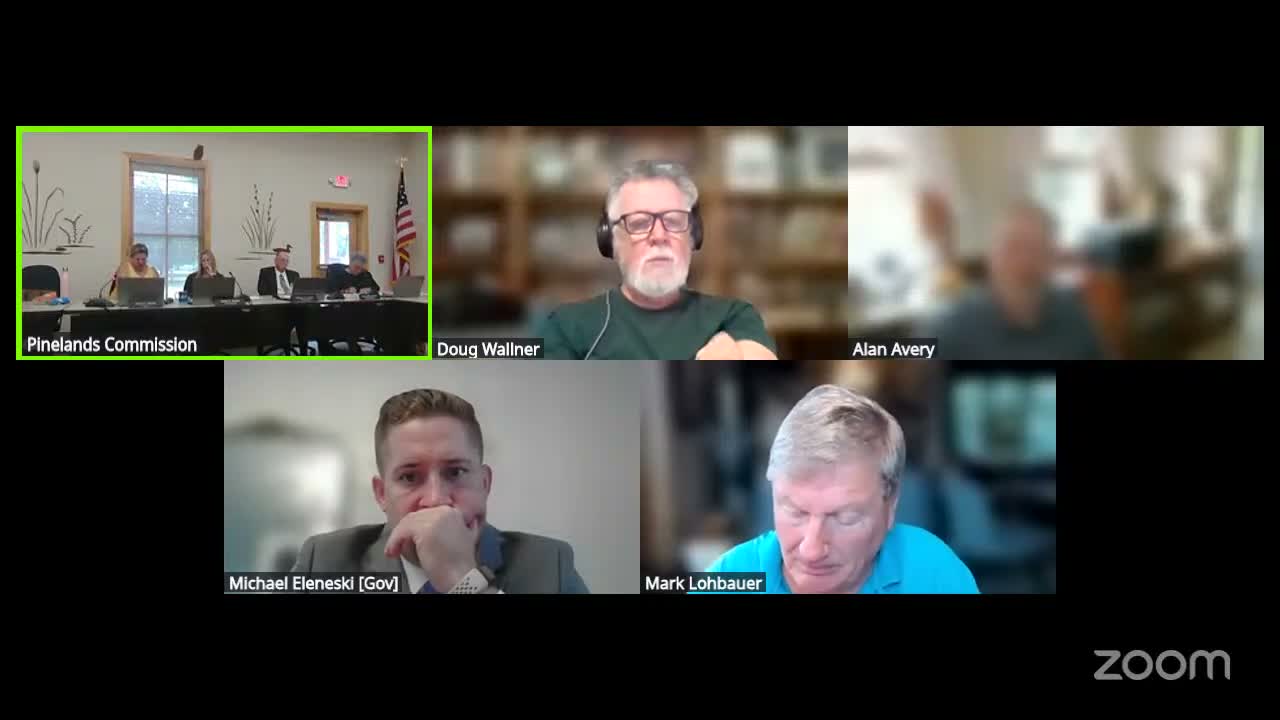
During public comment, Heidi Ye of the Pinelands Preservation Alliance told the committee that federal tax‑credit timelines could force developers to start construction quickly and that the Commission should be mindful of that timing when deciding how to engage with BPU’s dual‑use pilot.
"I think projects have to demonstrate that they've started construction by the end of this year, and they're in operation by 2028," she said, expressing concern that projects may need waivers or longer timelines to be financially viable. She also urged the Commission to pursue more substantial discussion on artificial turf and its role in amplifying extreme heat, citing a DEP technical memo that artificial turf can reach temperatures similar to or hotter than asphalt.
Ye asked whether the PCIS revamp would incorporate artificial intelligence tools and whether the project would be developed in‑house or outsourced. Staff described the plan to use in‑house IT staff funded by NPS grant time while leaving open the option to use outside consultants for specific tasks as needed.
Her comments underscored public concern about federal incentive timing and heat impacts associated with artificial turf and reinforced commissioner remarks about convening further discussion of agrivoltaics and municipal resilience measures.
"We will be trying to present everything that we think are the most relevant to the Pinelands and proposing next steps for municipalities as well as the Pinelands Commission," Ye said of an upcoming public webinar she is hosting.
"I think projects have to demonstrate that they've started construction by the end of this year, and they're in operation by 2028," she said, expressing concern that projects may need waivers or longer timelines to be financially viable. She also urged the Commission to pursue more substantial discussion on artificial turf and its role in amplifying extreme heat, citing a DEP technical memo that artificial turf can reach temperatures similar to or hotter than asphalt.
Ye asked whether the PCIS revamp would incorporate artificial intelligence tools and whether the project would be developed in‑house or outsourced. Staff described the plan to use in‑house IT staff funded by NPS grant time while leaving open the option to use outside consultants for specific tasks as needed.
Her comments underscored public concern about federal incentive timing and heat impacts associated with artificial turf and reinforced commissioner remarks about convening further discussion of agrivoltaics and municipal resilience measures.
"We will be trying to present everything that we think are the most relevant to the Pinelands and proposing next steps for municipalities as well as the Pinelands Commission," Ye said of an upcoming public webinar she is hosting.
Don't Miss a Word: See the Full Meeting!
Go beyond summaries. Unlock every video, transcript, and key insight with a Founder Membership.
✓
Get instant access to full meeting videos
✓
Search and clip any phrase from complete transcripts
✓
Receive AI-powered summaries & custom alerts
✓
Enjoy lifetime, unrestricted access to government data
30-day money-back guarantee
