Pinelands Commission approves Atlantic County VoTech artificial‑turf field after heated debate
May 10, 2025 | Pinelands Commission, State Departments and Agencies, Organizations, Executive, New Jersey
This article was created by AI summarizing key points discussed. AI makes mistakes, so for full details and context, please refer to the video of the full meeting. Please report any errors so we can fix them. Report an error »
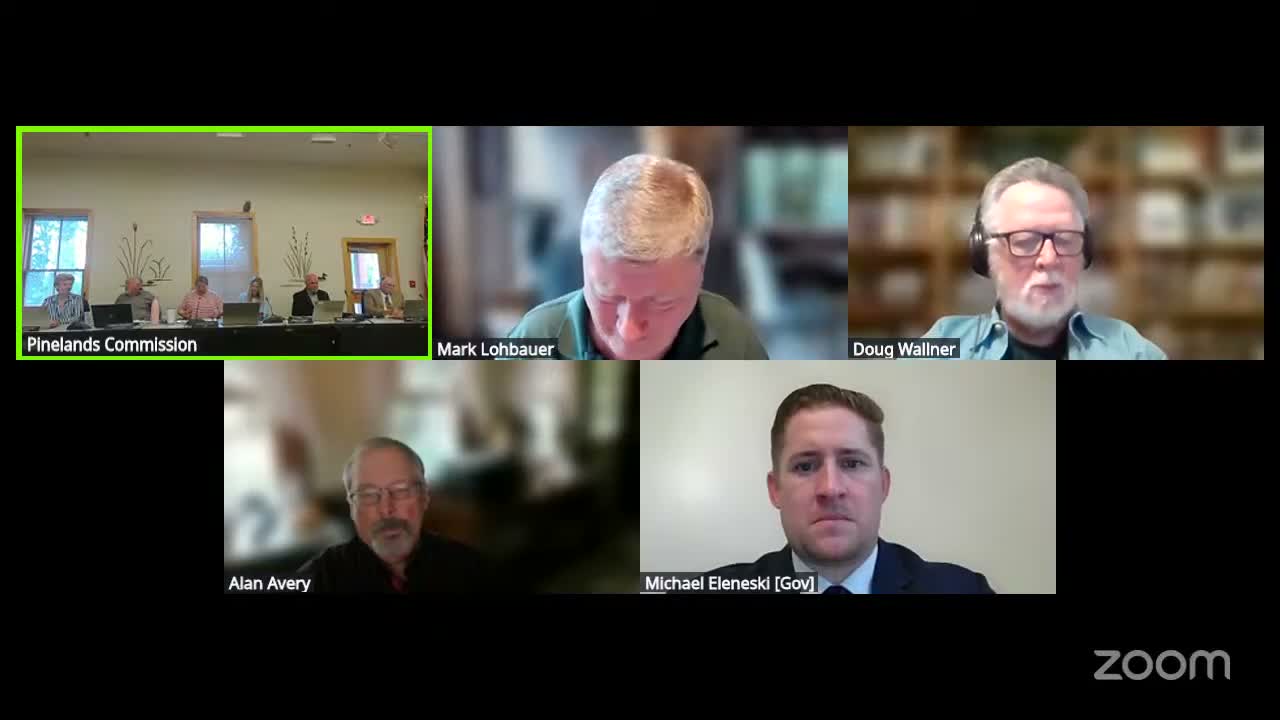
The Pinelands Commission voted May 9 to approve Atlantic County Vocational‑Technical’s proposal to install an artificial‑surface athletic field at its Mays Landing campus after extended debate about environmental and public‑health risks.
Commissioners spent nearly an hour questioning whether the commission could or should require the applicant to demonstrate that the proposed field would not violate groundwater quality standards. Commissioner Mark Lobar pointed to the commission’s Comprehensive Management Plan and administrative code language that, he said, places responsibility on applicants to show a project “will not result in a violation of groundwater quality standards.”
Other commissioners raised human‑health and disposal concerns about artificial turf materials. One commissioner said she had “a little bit of a crisis of conscience about allowing artificial turf in wholesale … for our children to go play on,” citing worries about toxic infill materials, limited product lifespan and lack of proven reuse or disposal methods.
Staff described the project’s stormwater management design, including a stormwater facility beneath the field and a nearby stormwater basin, and noted that past reviews of similar fields were not conclusive. Staff and legal counsel explained that the commission’s current rules do not directly regulate building materials and that changing that would require a targeted rulemaking process.
Public commenters urged caution. Jason Al said emerging studies show associations between artificial turf and chemicals such as PFOA, PFOS and GenX and urged the commission to take the science seriously before approving turf where children play.
Commissioners debated options including tabling the application to secure additional information, seeking an applicant consented extension, or asking the applicant to demonstrate that the project complies with groundwater standards now. Counsel and staff warned that denying or taking other non‑approval actions can trigger an administrative hearing before the Office of Administrative Law (OAL) and potentially further appeals, and that ad‑hoc requirements for a single applicant could raise procedural fairness concerns.
After discussion the commission voted by voice; multiple members recorded “aye” and several recorded “no,” and the motion to approve passed. The commission did not adopt a new materials standard at the meeting; several commissioners recommended convening scientific experts and considering rule amendments to address building materials and turf in future rulemaking.
Commissioners spent nearly an hour questioning whether the commission could or should require the applicant to demonstrate that the proposed field would not violate groundwater quality standards. Commissioner Mark Lobar pointed to the commission’s Comprehensive Management Plan and administrative code language that, he said, places responsibility on applicants to show a project “will not result in a violation of groundwater quality standards.”
Other commissioners raised human‑health and disposal concerns about artificial turf materials. One commissioner said she had “a little bit of a crisis of conscience about allowing artificial turf in wholesale … for our children to go play on,” citing worries about toxic infill materials, limited product lifespan and lack of proven reuse or disposal methods.
Staff described the project’s stormwater management design, including a stormwater facility beneath the field and a nearby stormwater basin, and noted that past reviews of similar fields were not conclusive. Staff and legal counsel explained that the commission’s current rules do not directly regulate building materials and that changing that would require a targeted rulemaking process.
Public commenters urged caution. Jason Al said emerging studies show associations between artificial turf and chemicals such as PFOA, PFOS and GenX and urged the commission to take the science seriously before approving turf where children play.
Commissioners debated options including tabling the application to secure additional information, seeking an applicant consented extension, or asking the applicant to demonstrate that the project complies with groundwater standards now. Counsel and staff warned that denying or taking other non‑approval actions can trigger an administrative hearing before the Office of Administrative Law (OAL) and potentially further appeals, and that ad‑hoc requirements for a single applicant could raise procedural fairness concerns.
After discussion the commission voted by voice; multiple members recorded “aye” and several recorded “no,” and the motion to approve passed. The commission did not adopt a new materials standard at the meeting; several commissioners recommended convening scientific experts and considering rule amendments to address building materials and turf in future rulemaking.
Don't Miss a Word: See the Full Meeting!
Go beyond summaries. Unlock every video, transcript, and key insight with a Founder Membership.
✓
Get instant access to full meeting videos
✓
Search and clip any phrase from complete transcripts
✓
Receive AI-powered summaries & custom alerts
✓
Enjoy lifetime, unrestricted access to government data
30-day money-back guarantee
